
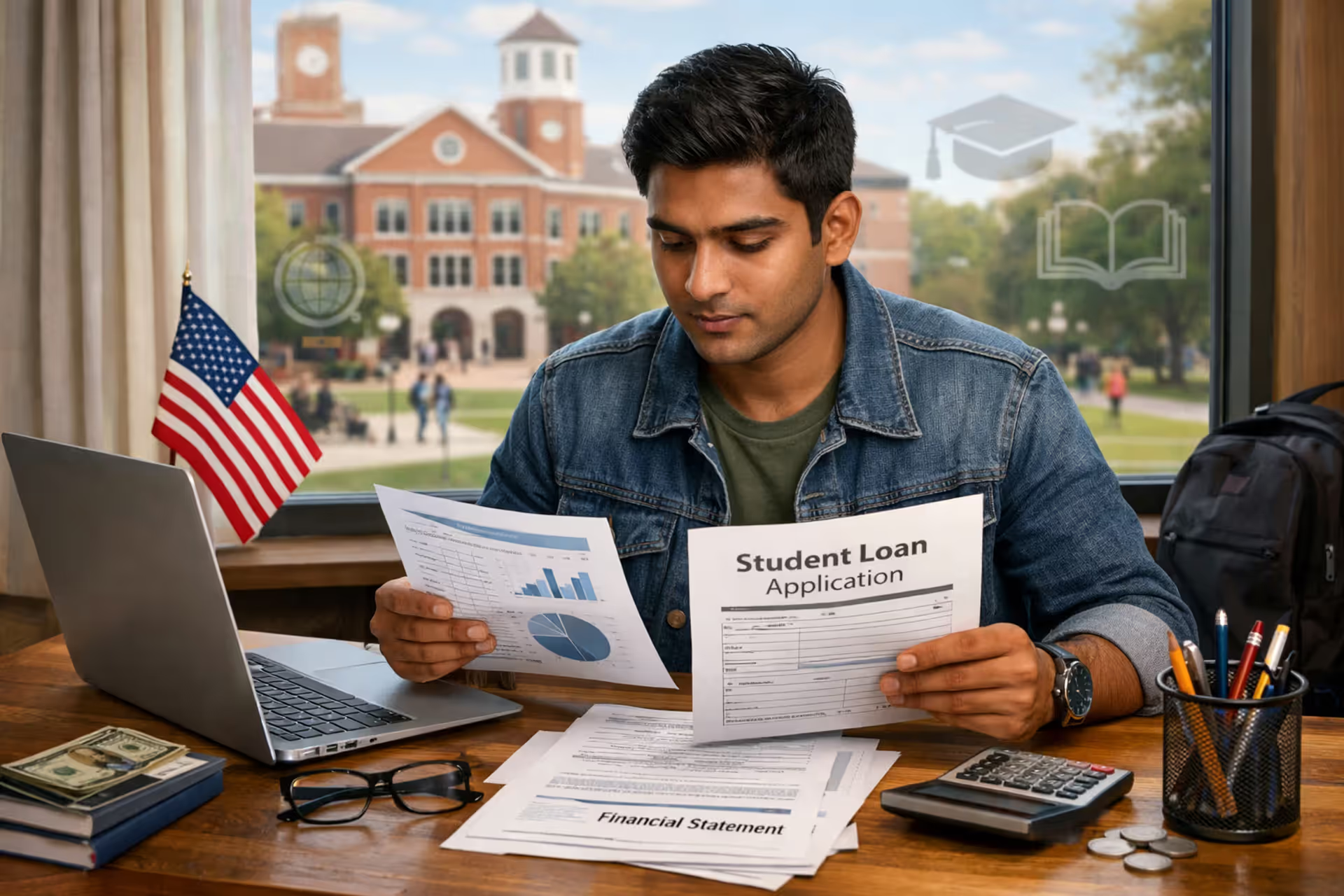
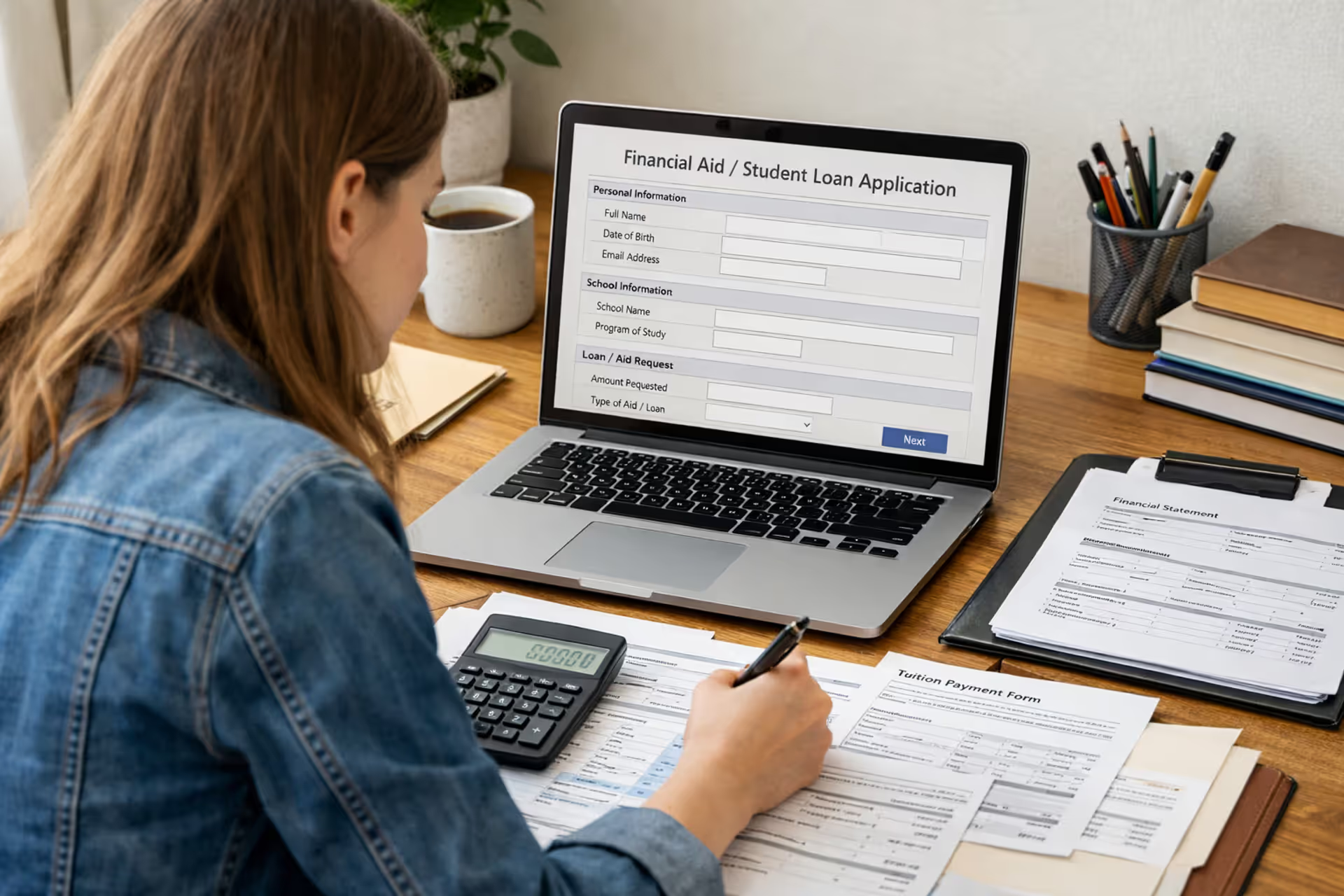
International student reviewing loan documents at desk with university campus in background
Student Loans for International Students Guide
American universities charge eye-watering amounts—think $25,000 at public schools, sometimes topping $80,000 at elite private institutions. Add rent, food, books, and health insurance, and you're looking at costs that would drain most families' savings in a single semester.
Here's the catch if you're coming from abroad: the federal loan system that props up millions of American students? Completely off-limits. No Direct Loans, no Pell Grants, nothing from the U.S. Department of Education. Your F-1 visa might get you into the classroom, but it won't get you a penny of federal financial aid.
What does that leave? Private lenders who'll want someone with American credit history to guarantee your loan. University programs with limited funding pools. Banks back home that might (or might not) lend for overseas education. You'll need to piece together financing like a puzzle, often from multiple sources, while juggling visa requirements and currency exchange headaches.
The good news? Thousands of international students figure this out every year. You just need to know where to look, what lenders actually want, and how to avoid the traps that catch unprepared borrowers.
Who Qualifies for International Student Loans in the US
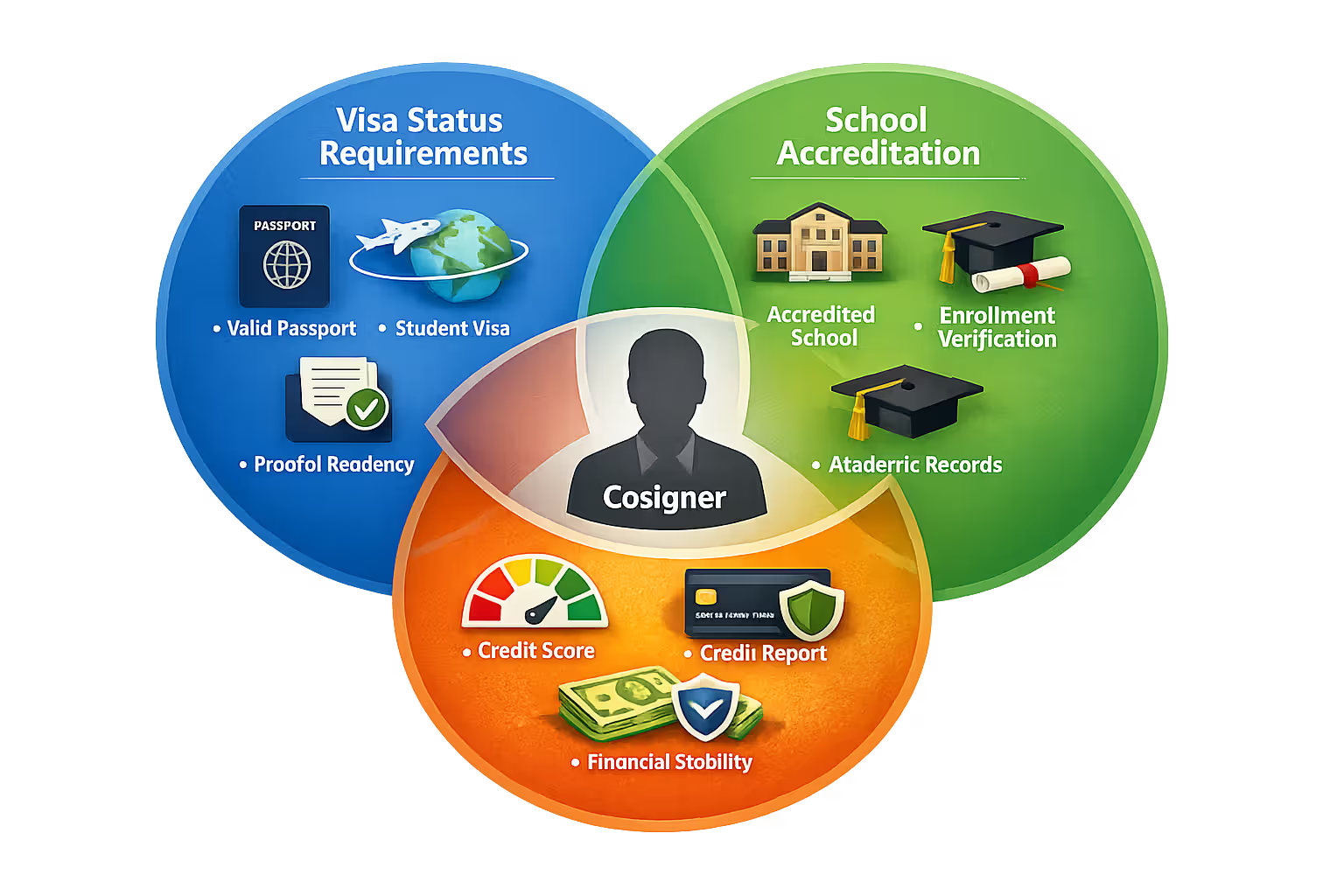
Getting approved comes down to checking specific boxes that lenders care about. Your visa status matters first—F-1 for academic programs or M-1 for vocational training. Immigration authorities need to see you're here legitimately, and lenders won't touch applications from students without proper documentation.
The school you're attending gets scrutinized too. Lenders work only with institutions that carry Title IV accreditation, which basically means the U.S. government recognizes them as legitimate. A for-profit school without proper accreditation? You'll get rejected before the application leaves your browser.
Credit history creates the real roadblock. American lenders pull reports from Equifax, Experian, and TransUnion—companies that have zero information about your flawless payment record in Jakarta or Buenos Aires. You could have a 800 credit score equivalent back home. Doesn't matter. In the U.S. system, you're invisible.
That's why approximately 9 out of 10 loans for international students require someone else to guarantee repayment. This person—your cosigner—needs citizenship or a green card, residence in the U.S. for at least two years, and established credit. Lenders will pull their credit report, verify their income, and calculate whether they could afford your loan payments on top of their existing bills.
Most lenders want cosigners with credit scores hitting 650 minimum. But here's what they don't advertise: 650 gets you approved, not good rates. You're looking at interest charges toward the higher end of their range. Scores above 700 unlock the preferential rates that lenders highlight in their marketing.
Income and debt ratios matter enormously. A cosigner earning $85,000 sounds solid until you realize they're already carrying a $450,000 mortgage, two car payments, and $15,000 in credit card balances. Lenders calculate debt-to-income ratios, and they want to see figures below 43% after adding your potential loan.
A handful of lenders have started accepting students without cosigners, but don't get too excited. These programs target graduate students in specific fields—MBA candidates, computer science Master's students, certain engineering specializations. You'll need stellar grades (often 3.5+ GPA), enrollment at a top-tier university, and sometimes they'll even evaluate credit reports from countries like Canada, UK, or Australia if you're coming from there.
Author: Marcus Bennett;
Source: sonicmusic.net
Types of Loans Available to International Students
Private International Student Loans
Banks, credit unions, and specialized education lenders fill the void left by federal programs. These companies operate in a competitive market, which means rates and terms vary wildly between them.
Interest charges span from around 4% to 14% annually, depending on whether you choose variable or fixed rates. Variable rates move with market conditions—they might start attractively low but climb if the Federal Reserve keeps raising rates. Fixed rates cost slightly more upfront but protect you from future increases. After LIBOR disappeared in 2023, most lenders switched to SOFR (Secured Overnight Financing Rate) as their benchmark for variable rates.
You can typically borrow up to the full cost your school certifies, which includes tuition, mandatory fees, room, board, books, transportation, and personal expenses. A student at NYU paying $65,000 for tuition alone might borrow $80,000+ when you factor in Manhattan rent and living costs.
Repayment timelines stretch from 5 to 20 years after you finish school. Longer terms mean smaller monthly bills but significantly more interest paid over the life of the loan. Borrow $60,000 at 7% and you'll pay roughly $680 monthly over 10 years, or about $465 monthly over 20 years—but that 20-year option costs you an extra $31,000 in total interest.
Getting approved requires assembling a document stack: your passport and visa paperwork, admission letter or current enrollment verification, your school's official cost breakdown, your cosigner's tax returns from the past two years, recent pay stubs, bank statements, and signed authorization for credit checks. Plan for the process to eat up two to eight weeks, sometimes longer if your school's financial aid office moves slowly.
School-Specific Loan Programs
Universities with deep endowments sometimes run their own lending programs for international students. These institutional loans often beat private market terms because schools aren't trying to maximize profit—they want to enroll talented students who need financial support.
Harvard, Yale, Stanford, and similar wealthy institutions occasionally offer zero-interest or minimal-interest loans. Even mid-tier schools might provide better terms than commercial lenders, though borrowing limits tend to be modest—perhaps $8,000 to $20,000 per year, which covers part of your costs but rarely everything.
Each university sets its own rules. One might restrict these loans to PhD candidates in the sciences. Another might offer them to undergraduates from specific developing countries. A third might prioritize students in their final year who've proven academic success.
You'll apply through your financial aid office using the same documentation required for scholarships—family income statements, bank balances, explanations of other funding sources. Schools with limited funds prioritize students with strong GPAs and demonstrated need, so a 3.8 student with minimal family resources gets preference over a 3.0 student whose parents could technically pay but don't want to.
Repayment terms tend to be forgiving. Grace periods might extend nine months to a year after graduation. Some schools implement income-based repayment where your monthly payment adjusts based on what you're earning—crucial if you return to a country with lower salary scales. Default consequences hit hard though: schools can withhold your diploma and transcripts, effectively making your degree worthless since you can't prove you earned it.
Home Country Education Loans
Governments and banks in many countries run programs specifically designed for citizens studying abroad. India's HDFC Credila program has funded thousands of students heading to American universities. Brazil's government education loans, Mexico's FINAE program, and similar initiatives in countries from China to Nigeria give students options beyond U.S. lenders.
These programs typically charge less interest than American private loans—sometimes significantly less if your government subsidizes rates. You might pay 3% to 7% fixed when U.S. lenders would charge 8% to 12% for an international borrower. The catch? Lower total loan limits in some cases, maybe capping at the equivalent of $25,000 to $40,000 total for your entire degree.
Applications happen in your home country through local banks or government agencies. You'll need your parents' financial documentation since most programs evaluate family creditworthiness. Some require collateral—a property deed, business assets, or guarantees from employers or local organizations. Processing crawls along bureaucratically, sometimes taking six to nine months, which means you need to start this before you've even received your acceptance letter.
Currency fluctuations create a hidden risk. Borrow 3 million pesos when the exchange rate is 20:1 against the dollar, and you've locked in a specific dollar-equivalent debt. If the peso weakens to 25:1, your debt just increased 25% in real terms if you're earning dollars post-graduation. Conversely, if you're earning in pesos while your debt is fixed in dollar terms, exchange rate movements can either ease or crush your repayment burden.

Author: Marcus Bennett;
Source: sonicmusic.net
How to Apply for an International Student Loan
Applying for a student loan for international students follows a sequence that you can't really shortcut, though understanding each step helps you avoid delays.
Start by researching which lenders actually work with students at your specific university. Not every lender partners with every school—some focus on certain regions or institution types. Build a comparison spreadsheet tracking interest rates (both variable and fixed options), origination fees, cosigner requirements, repayment term choices, and any borrower perks like autopay discounts.
Document gathering comes next and takes longer than you'd think. Your passport and visa papers are straightforward. The I-20 form from your school proves your student status. You'll need either your acceptance letter or current enrollment verification. Your school's financial aid office can provide an official cost of attendance breakdown showing tuition, fees, and estimated living expenses.
Your cosigner needs to dig up their financial life: Social Security number, federal tax returns from the previous two years, pay stubs from the last month or two, mortgage statements or lease agreements, and documentation of any other debts. If they're self-employed, expect lenders to request additional business financial statements.
Most lenders run online applications that take 25 to 50 minutes to complete. You'll input personal details, educational information, the amount you want to borrow, and your cosigner's details. Many perform a "soft" credit inquiry at this stage, which gives them a preliminary look without affecting credit scores.
Here's where the process can stall: your university must verify the loan amount you're requesting. The lender sends certification paperwork to your financial aid office asking them to confirm you're enrolled (or admitted), verify the cost of attendance, and make sure your requested loan amount doesn't exceed your costs minus any scholarships or other aid you've received. Some schools process these certifications in three business days. Others take three weeks. You cannot control this timeline, so build in buffer time before tuition payment deadlines.
After certification comes back approved, you and your cosigner sign final loan documents electronically. The promissory note legally obligates you to repay. The cosigner agreement makes your cosigner equally responsible. Read every word—these contracts specify your exact interest rate, any fees being charged, repayment terms, what constitutes default, and what happens if you can't pay.
Money doesn't hit your bank account. Lenders send funds directly to your school's student accounts office, typically five to ten business days after you sign final documents. The school deducts what you owe them for tuition and fees first, then disburses any remaining amount to you via check or direct deposit for living expenses. If you need first month's rent before the loan disburses, you'll need alternative funds to bridge that gap.
Approval odds hinge heavily on your cosigner's financial profile—that debt-to-income ratio we mentioned earlier, their credit score, employment stability. Lenders also consider your field of study (engineering and computer science generally perform better than liberal arts in their models) and your academic progress (junior and senior undergrads or second-year graduate students get viewed more favorably than freshmen).
Cosigner Requirements and Alternatives
Your cosigner essentially transfers their financial credibility to you. When lenders evaluate your application, they're really evaluating your cosigner's ability and willingness to repay if you don't.
This person must be either a U.S. citizen or permanent resident with sufficient time in-country to have built credit history—usually at least two years of U.S. residence. An American parent living abroad won't work. A family friend with a green card who's lived in the States for five years could work perfectly.
Lenders examine multiple aspects of your cosigner's financial situation. Credit scores above 720 typically unlock the best interest rates advertised. Scores between 670 and 720 still get approved but at moderately higher rates. Scores from 650 to 670 push you toward the upper end of a lender's rate range. Below 650, most lenders reject the application.
Income stability carries weight beyond just the dollar amount. A teacher earning $62,000 with ten years at the same school district looks more reliable than a consultant earning $95,000 but switching jobs every 18 months. Lenders want to see steady paychecks and low turnover.
Existing debt loads matter tremendously. Take two cosigners both earning $100,000 annually. The first has a $250,000 mortgage, a $15,000 car loan, and minimal credit card balances—total monthly debt payments around $2,200. The second has a $450,000 mortgage, two car loans totaling $40,000, student loans from their own education, and $20,000 across various credit cards—monthly obligations hitting $4,500. That second cosigner's debt-to-income ratio makes lenders nervous, even though the income matches.
The responsibility your cosigner accepts is serious and long-term. Miss a payment? It damages both credit scores. Default entirely? Lenders pursue your cosigner for the full remaining balance, potentially suing them and garnishing wages if they work in the U.S. This obligation doesn't end until the loan is paid off—possibly a decade or more down the road.
I've watched international students damage relationships because they didn't fully communicate the implications to their cosigner.Students need to have uncomfortable conversations upfront. What's your backup plan if you can't find work after graduation? What happens if you need to return home? Who's making payments during job searches? These discussions matter more than any loan document
— Maria Chen
Cosigner release provisions let you eventually remove your cosigner from the loan obligation. Lenders typically require you to make 24 to 48 consecutive on-time payments first. You'll need to demonstrate sufficient income—often $45,000 to $55,000 minimum annual salary. You'll undergo a fresh credit check showing you've built decent credit on your own. The lender reassesses whether you can handle the loan independently.
Reality check: only a small minority of borrowers—perhaps 10% to 20%—actually achieve cosigner release. The requirements are deliberately strict because lenders want that cosigner protection. Students struggle to meet income thresholds, or they miss payments occasionally, or they haven't built enough U.S. credit history to qualify independently.
Several lenders now offer limited no-cosigner options for international students, though these come with significant restrictions. You'll generally need enrollment in high-demand graduate programs—MBA, Master's in Computer Science, certain engineering fields. Expect minimum GPA requirements around 3.5. Your school typically needs to rank among top-tier universities. Interest rates run higher, often 8% to 13%, reflecting the increased risk lenders take without a cosigner. Borrowing limits might be capped lower too.
Beyond traditional lenders, some international students explore international student borrowing options like peer-to-peer lending platforms, though these rarely provide enough capital for full degree programs. Others negotiate payment plans directly with universities, breaking costs into monthly installments interest-free. Some combine strategies—borrowing what they can without a cosigner, covering gaps with savings, family support, or campus employment within their visa limitations.
Comparing International Student Loan Lenders
Choosing a lender requires looking past the interest rate advertised on their homepage. Multiple factors affect what you'll actually pay and how manageable repayment becomes.
Here's how major lenders stack up for international students in 2026:
| Provider | Borrowing Range | APR Spectrum | Cosigner Necessity | Programs Covered | Payback Duration |
| Sallie Mae | $1,000 to total certified costs | 4.50%–13.49% adjustable | Required for most (narrow exceptions exist) | Bachelor's, Master's, trade certificates | 5/10/15-year options |
| Discover | $1,000 to full school-certified amount | 4.99%–13.74% adjustable | Yes, mandatory | Undergraduate and graduate levels | 15 years standard |
| Prodigy Finance | $15,000–$150,000 cap | 6.25%–11.50% locked | Not required | Graduate programs only at partner schools | 7/10/15-year choices |
| MPower Financing | $2,001–$50,000 maximum | 7.99%–12.99% locked | No cosigner needed | Bachelor's and Master's at approved universities | 10 years fixed |
| Citizens Bank | $1,000 to school-verified costs | 5.24%–14.08% adjustable | Required | All degree levels | 5/10/15-year terms |
| Ascent | $2,001–$200,000 limit | 5.66%–14.72% adjustable | Required for most (some cosigner-free paths) | Undergraduate through graduate | 5/7/10/12/15-year selections |
These rate ranges combine both variable and fixed-rate products across different credit tiers. What you'll actually receive depends on your cosigner's credit score, the repayment timeline you select, and current market conditions when you apply. Shorter payback periods generally carry lower rates but demand higher monthly payments you need to afford.
Don't just compare monthly payment amounts between offers. Run calculations for total interest paid over the loan's life. A $50,000 loan at 7% over 15 years costs you roughly $31,500 in interest charges. That same loan at 8% over 10 years costs about $27,300 in interest—less total despite the higher rate, because you're paying it off faster. Financial calculators can model these scenarios and help you visualize the tradeoffs.
Fee structures vary between lenders and can add thousands to your actual cost. Some charge origination fees between 1% and 5% of your loan amount, deducted before money reaches your school. Borrow $30,000 with a 3% origination fee and you only receive $29,100, though you owe the full $30,000 plus interest. Other lenders skip origination fees but charge late payment penalties ($30 to $50 per occurrence) or returned payment fees if your bank account bounces.
Incentive programs can trim your effective interest rate if you meet certain conditions. Common ones include 0.25% rate reductions for setting up automatic monthly payments from your bank account. Some lenders give another 0.25% to 0.50% discount after you've made 36 or 48 consecutive on-time payments. A few offer small rate cuts if your cosigner already has other accounts with them or if you refinance existing education debt through their program.
Look at prepayment policies too. The best lenders allow you to pay extra toward principal anytime without penalties, which can save thousands in interest if you come into money later. A few lenders still charge prepayment penalties for paying off loans too early, though this has become rare.
Repayment Options and Terms for International Borrowers
Author: Marcus Bennett;
Source: sonicmusic.net
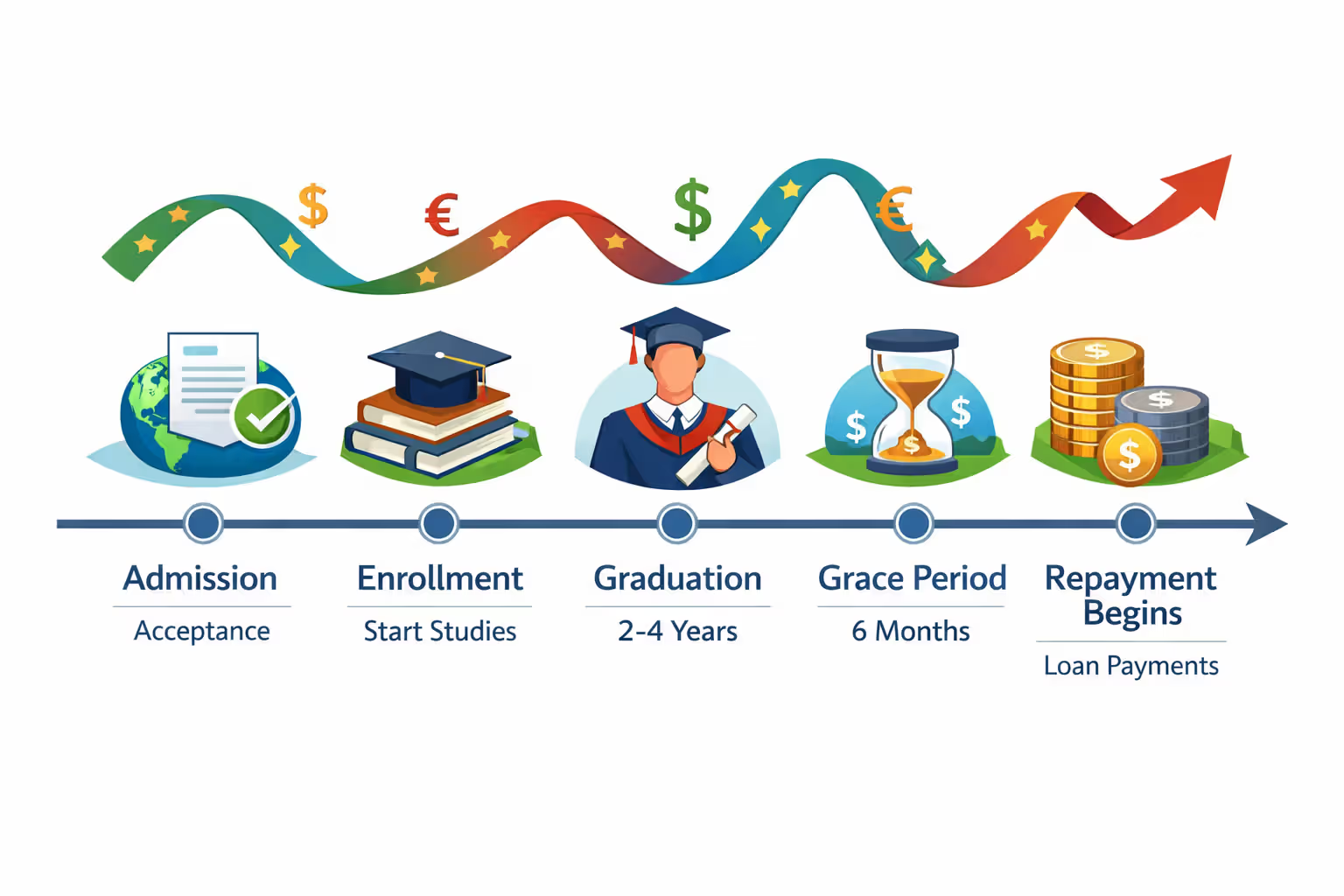
While you're in school, private lenders for international students typically offer three payment approaches. Immediate repayment starts full principal-and-interest payments right away—this minimizes your total interest cost but demands cash flow most students simply don't have. Interest-only payments during school keep your balance from growing while keeping monthly costs around $200 to $400 depending on loan size. Full deferment postpones all payments until graduation but lets interest compound and get added to your principal, substantially increasing what you'll owe.
After you graduate or drop below half-time enrollment, you'll typically get a grace period of six months before repayment obligations kick in. This breathing room lets you find employment, relocate if needed, set up your budget, and arrange automatic payments to avoid missed due dates. Your first bill depends on your total debt and chosen repayment term—$60,000 at 7.5% interest translates to roughly $715 monthly over 10 years or $560 monthly over 15 years.
Standard repayment schedules keep your payment amount consistent throughout the term. Some lenders offer graduated repayment structures where payments start lower and step up every two years. This makes sense if you're entering a career with predictable salary progression (think consulting or tech), but you'll pay significantly more total interest because early payments barely touch the principal.
If financial hardship hits—unemployment, medical issues, family emergencies—you can request deferment or forbearance. Deferment pauses your payment obligation for six to twelve months, though interest keeps accumulating. Forbearance provides similar relief and typically requires proving specific hardship circumstances. Neither happens automatically. You must apply, provide documentation, and receive approval. Use these options sparingly since your loan balance grows while you're not paying.
International borrowers face unique complications if they return home after graduation. Geographic location doesn't cancel your debt. You remain legally obligated to repay, and lenders increasingly pursue international collection actions. Some countries have reciprocal enforcement agreements allowing U.S. creditors to pursue judgments abroad, though this varies significantly by country.
Currency exchange rate volatility creates unpredictable costs for borrowers earning in their home currency while repaying dollar-denominated debt. Imagine graduating and earning 60,000 British pounds annually. When the exchange rate sits at 1.25 dollars per pound, your $600 monthly loan payment costs 480 pounds. If the pound weakens to 1.10 dollars per pound, that same $600 payment now costs 545 pounds—a 13.5% increase in your effective payment burden through no fault of your own. Budget cushion for this volatility or you'll face unexpected squeezes.
After building U.S. credit history and securing employment, refinancing becomes possible. Refinancing replaces your existing loan with a new one, potentially at significantly lower interest if your financial profile has improved since school. Many borrowers refinance specifically to remove their cosigner if they don't qualify through their original lender's release program. Be aware that refinancing resets your loan term, potentially extending your repayment timeline. You'll also lose any borrower benefits or rate discounts you accumulated with your original lender.
Default triggers devastating consequences you need to understand clearly. Lenders report delinquencies to all three credit bureaus, obliterating your U.S. credit score and your cosigner's. After 90 to 120 days of missed payments, loans go into default and lenders can pursue aggressive collection—lawsuits for the full balance plus accumulated interest and fees, wage garnishment if you work in the U.S., and international collection actions that follow you home. Your cosigner faces identical consequences, potentially destroying both their credit and your personal relationship. Collection judgments can last 20+ years in some states, following you through your professional life.
Frequently Asked Questions About International Student Financing
Financing American education as an international student demands navigating a financial landscape dramatically different from what domestic students face. Federal aid programs remain completely closed off, pushing you toward private lenders who'll likely require a creditworthy U.S. cosigner or toward the limited no-cosigner options serving specific graduate programs.
Begin your research nine to twelve months before you'll need funding—earlier if you're exploring home country loan programs with lengthy bureaucratic processes. Systematic comparison matters more than gut feeling. Build spreadsheets comparing not just interest rates but origination fees, repayment flexibility, borrower incentives, and total cost projections over different repayment timelines.
Develop realistic repayment projections before signing anything. Research typical starting salaries in your field, factor in living expenses for your likely post-graduation location, and stress-test scenarios including returning to your home country or facing currency exchange volatility. The temptation to borrow maximum amounts exists, but every additional dollar borrowed today multiplies through interest charges, potentially costing you double when you've finished repaying a decade later.
Treat your cosigner relationship with the seriousness it deserves. This person is putting their financial health at risk for you. Have explicit conversations about backup plans if you face unemployment, what happens if you return home, who makes payments during job searches, and how you'll communicate about payment status. Written agreements between you and your cosigner, separate from the lender's paperwork, can prevent misunderstandings that damage relationships.
Read every document completely before signing. Promissory notes and loan agreements contain crucial details about your exact interest rate, fee structures, repayment terms, what triggers default, and what consequences you'll face for missed payments. These aren't terms you can negotiate after signing—understand them upfront or don't borrow.
Your education represents a substantial investment with potential to reshape your career trajectory and earning potential. The loans financing that education will shape your financial reality for years or even decades. Make informed choices based on thorough research, honest assessment of your repayment capacity, and clear understanding of what you're committing to. When questions arise—and they will—lean on resources available through your school's financial aid office, international student advisors, and lender customer service teams before making decisions you can't easily reverse.
Related Stories

Read more

Read more



The content on this website is provided for general informational and educational purposes only. It is intended to offer guidance on student loan topics, including federal and private student loans, interest rates, repayment plans, loan forgiveness programs, deferment, forbearance, consolidation, and related financial matters. The information presented should not be considered legal, financial, tax, or professional lending advice.
All information, articles, explanations, and program discussions published on this website are provided for general informational purposes. Student loan programs, repayment options, forgiveness eligibility, and financial assistance policies may change over time and may vary depending on government regulations, loan servicers, lenders, borrower eligibility, income level, school status, and individual loan terms. Details such as interest rates, repayment schedules, eligibility for forgiveness programs, and application requirements may differ between federal and private lenders and may change without notice.
While we strive to keep the information accurate and up to date, this website makes no guarantees regarding the completeness, reliability, or accuracy of the content. The website and its authors are not responsible for any errors, omissions, or actions taken based on the information provided here.
Use of this website does not create a financial advisor–client, legal, or professional relationship. Visitors are encouraged to review the official documentation provided by the U.S. Department of Education, student loan servicers, and private lenders, and to consult with a qualified financial advisor, loan specialist, or legal professional before making decisions regarding student loans, repayment strategies, or financial obligations.