

Student reviewing tuition bill and loan options at desk
How Long Does It Take to Get a Student Loan?

You're staring at a tuition bill due in three weeks. Your savings won't cover it. So when does that loan money actually show up?
Here's what nobody tells you at orientation: federal student loans typically hit your account one to three weeks after classes start—not before. Private lenders? Their timelines swing wildly. I've seen some students get funding within 48 hours of approval. Others wait six full weeks because their school's financial aid office took forever to certify the paperwork.
The frustrating part isn't really the approval. Most applications get processed quickly. What kills you is the waiting periods Congress wrote into federal law, the speed (or lack of it) at your specific university's bursar office, and certification requirements that most campus tour guides conveniently forget to mention.
Federal vs Private Student Loan Timeline Overview
Here's the mistake that derails most students: thinking federal and private loans work the same way. They don't, and misunderstanding the differences means you might not have book money until week three.
Federal loans run on the government's schedule. FAFSA opens October 1st every year for the next academic year. If you're an undergraduate, they won't even check your credit. The Department of Education just runs your family's financial numbers, confirms you're enrolled at least half-time, and determines what you qualify for. From FAFSA submission to money in your account? Plan on two to ten weeks. Much of that involves waiting for calendar dates to arrive rather than actual processing.
Private lenders work more like car loan companies. They check credit—yours if you have any history, your cosigner's when you don't. They verify you're actually enrolled. They coordinate with your school's financial aid staff (and this coordination is where timelines fall apart). The fastest lenders deliver instant decisions and transfer funds within two days of certification. The slowest ones stretch things out to four weeks between your first click and final disbursement.

Author: Evan Thornton;
Source: sonicmusic.net
Student Loan Timeline Comparison: Federal vs Private Options
| Step | Federal Loans | Private Loans |
| Filling out the application | 30-60 minutes for FAFSA completion | 15-45 minutes per lender application |
| Getting your decision | Automatic once FAFSA processes (3-5 days) | Anywhere from instant to 2 weeks |
| School verification process | Typically 1-3 weeks at most universities | Usually 3-10 business days |
| Money transfer post-approval | Minimum 10 days pre-semester for first-timers; often not until day one of classes | 1-5 days after school finishes certification |
| Total start-to-finish time | 3-10 weeks from initial FAFSA | As quick as 5 days or as long as 6 weeks |
Federal Student Loan Processing Timeline
FAFSA Submission to Approval
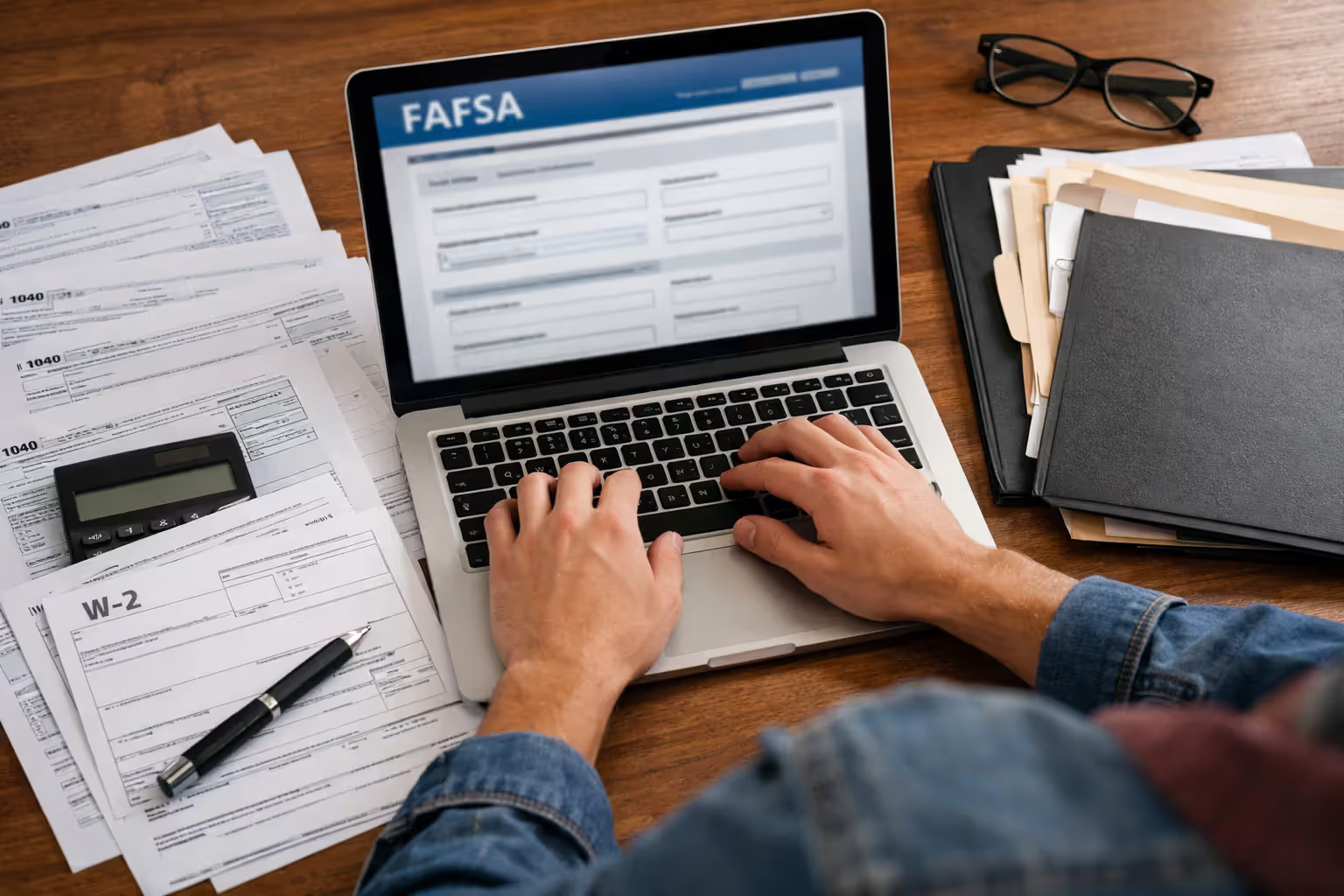
Set aside 30-60 minutes for FAFSA. Double that if you're hunting for tax documents at the last minute. You'll need Social Security numbers for yourself and your parents, last year's tax returns, W-2s from any jobs, bank account balances, and records of untaxed income (child support, veterans benefits, that sort of thing).
Submit electronically? Processing takes three to five days. Mail the paper version? Budget seven to ten days. You'll receive a Student Aid Report showing your Expected Family Contribution and what you qualify for. Your school gets the identical information at the same time.
But here's where expectations diverge from reality. Your financial aid office still has to build your personal aid package. At most schools, this takes two to four weeks. Submit during the January-March rush? Tack on extra time because they're drowning in applications.
Most students don't understand this part: processing your FASFA just establishes eligibility. That's it. Money stays frozen until your school certifies enrollment. You've got to formally accept the loans through your student portal. First-time borrowers complete entrance counseling and sign a Master Promissory Note. Every requirement eats additional days when you don't jump on them right away.
Award Letter to Disbursement
Award letters show up two to six weeks after FAFSA processes. They'll list what you can borrow. You log into your school's system and accept what you need. Simple enough, right?
First-timers face extra hoops. Entrance counseling takes about 30 minutes—basically mandatory education about borrowing responsibly. The Master Promissory Note is your actual loan contract, demanding another 15 minutes. These aren't optional. Schools legally can't release a dime until you complete both.
Federal law mandates a 10-day waiting period before first-time, first-year undergrads receive funding. Congress put this in place to stop students from borrowing thousands then dropping out during week one. Schools can disburse as early as 10 days before classes start, but most wait until day one or even week one's end.
Here's another surprise: that $5,500 freshman borrowing limit doesn't arrive as one chunk. Schools split annual loans across semesters—$2,750 for fall, another $2,750 for spring. Each disbursement happens when the semester begins.
Author: Evan Thornton;
Source: sonicmusic.net
Private Student Loan Processing Timeline
Application to Approval Decision
Some private lenders spit out decisions while you're still filling out the application. Others take a full week to review everything. Student loan approval time varies dramatically depending on who you apply with.
Digital-first companies like SoFi or College Ave use automated systems. Decent credit score plus reliable cosigner income? You'll see approval in under five minutes. Traditional banks often manually review applications, especially when cosigners are involved or financial situations get messy. Manual reviews burn three to seven business days.
Your credit gets checked the second you hit submit. Lenders examine your score, current debts, employment history (even that part-time retail gig counts), and cosigner financial strength when applicable. Most undergrads need cosigners—you probably don't have enough credit history otherwise.
Approval is just one milestone. It's not money in your pocket. Your school's financial aid office must certify the loan before lenders send anything. Staff verify enrollment, confirm total costs, and check what other aid you're getting. Federal rules prohibit schools from certifying loans that exceed your cost of attendance minus existing aid.
Approval to Fund Disbursement
School certification makes private student loan approval time wildly unpredictable. Some financial aid offices knock out certifications in two to three days. Others need two to three weeks, particularly during August and January when applications pile up. Large state universities with dedicated certification teams move faster than small liberal arts colleges where one person handles everything financial-aid-related.
Once school certification clears, most lenders wire funds within one to five business days. Money goes straight to your university bursar, never through your personal bank account. The bursar applies it to tuition, mandatory fees, maybe room and board if you're on campus. Leftover amounts become refunds—which typically take another 14 days to process, though some schools move faster.
A few private lenders offer rush processing when you're up against deadlines. They might squeeze the certification-to-disbursement window down to 24-48 hours. This only works when your financial aid office cooperates, and some lenders charge fees for expedited service.
Factors That Affect Student Loan Processing Time
Incomplete paperwork destroys more timelines than anything else. Forgot to sign your Master Promissory Note? Frozen. Your cosigner didn't finish their section? Dead stop. Uploaded a blurry tax return image? Expect an email requesting clearer copies, instantly adding another week.
Seasonal crushing happens like clockwork. Financial aid offices get buried in August (prepping for fall) and January (prepping for spring). Applications during these months can triple normal student loan processing time. The same application filed in June or November often breezes through because staff has breathing room.
Credit problems drag out private loans. Maybe your first application got rejected and now you're hunting for a cosigner. There goes a week. Your cosigner's credit report shows something requiring written explanation—add several more days for manual review. Some students apply to five or six lenders after rejections, stretching timelines into months.
About 18% of FAFSA submissions get flagged for verification—the Department of Education's way of double-checking information. You'll submit IRS tax transcripts, identity documents, household size proof, sometimes more. Verification adds two to four weeks to your federal loan timeline. Federal aid freezes until verification wraps up.
First-time borrower rules create mandatory delays nobody can shortcut. That 10-day waiting period for first-year undergrads? Completely non-negotiable. Add entrance counseling and Master Promissory Note requirements—fast tasks once you realize they're blocking your money, but tons of students stay oblivious until a financial aid email nudges them weeks later.

Author: Evan Thornton;
Source: sonicmusic.net
When Student Loan Funds Actually Reach You
Understanding the student loan disbursement timeline means knowing when your school receives money versus when you can actually spend it. These rarely happen simultaneously.
Universities receive federal loan funds electronically, usually one to three business days after official disbursement dates. Private lenders wire money similarly fast—one to two business days after initiating transfers. But your school doesn't immediately deposit anything into your checking account.
Everything hits your student account ledger first. Schools automatically apply financial aid toward tuition, mandatory fees, and campus housing if you're in a dorm. This happens within 24-48 hours of receiving funds. Only after covering those direct charges does anyone calculate your refund.
Refunds are whatever's left over. Tuition's $8,000 and you borrowed $12,000? You get $4,000 back. Federal regulations require schools to issue refunds within 14 days of disbursement. Many universities move faster, but 14 days is the legal maximum.
Your refund delivery method affects when you can spend money. Direct deposit typically appears in your bank one to three business days after the school processes it. Paper checks take five to ten business days accounting for mail delivery. Some schools push same-day refunds through campus debit card programs, though watch for transaction fees.
First-time borrowers face layered delays. Ten days before disbursement can occur. Then disbursement happens. Then the school's standard refund timeline kicks in—up to 14 days. You could be waiting nearly a month after classes start before money reaches your account.
Students walk into my office every semester thinking 'approved' means money will magically appear in their checking account tomorrow. Even when every piece moves smoothly, you're realistically looking at minimum two to three weeks before you're holding spendable cash. My advice? Create a backup plan for month one. Tap savings, arrange a payment plan with the bursar, get temporary help from family. Banking on loan refunds for immediate expenses is exactly how students wind up dropping classes or missing rent
— Maria Gonzalez
How to Speed Up Your Student Loan Approval
Submit your FAFSA on October 1st when it opens—not March when you suddenly remember. Early submissions get processed during quiet periods when financial aid offices can carefully review applications without drowning in backlogs. October filers often get award letters by December. March procrastinators? You might not hear back until May or June.
Gather required documents before touching any application. Tax returns, W-2s, bank statements, investment account records for FAFSA. Your cosigner's Social Security number, employment details, and credit check authorization for private loans. Advance prep transforms a two-hour frustration marathon into a 20-minute sprint—plus you avoid delays from missing information requests.
Complete entrance counseling and your Master Promissory Note the same day you accept federal loans. Don't wait for reminder emails. Both requirements take under an hour combined, yet they become bottlenecks when students forget. Disbursement literally freezes until these clear.
Respond to financial aid office and lender emails within 24 hours. They're usually requesting documentation or clarification. Every day you delay adds another day before money arrives. Set up mobile notifications and obsessively monitor email during application season.
Research which private lenders deliver the fastest turnarounds when time matters. Some lenders actually deliver on their 24-48 hour processing claims. Others consider 2-3 weeks normal. Read reviews from recent borrowers, browse financial aid forums, and ask your school's financial aid office which lenders they work with efficiently.
Communicate directly with your financial aid office when facing tight deadlines. Call them. Visit in person if possible. Explain your need for funds by a specific date and ask what's causing delays. Some schools expedite certification for students with documented urgent circumstances. At minimum, you'll discover exactly what's slowing things down and what you can do about it.
Start private loan applications 4-6 weeks before classes begin. This buffer absorbs unexpected complications—school certification delays, credit hiccups, random documentation requests. Students who apply 1-2 weeks before school? They're the ones panicking when normal processing exceeds their optimistic timeline.
Frequently Asked Questions About Student Loan Timelines
Securing student loans demands more patience than most students expect. You're coordinating among the Department of Education, your school's financial aid department, private lenders if you're going that route, and your own ability to complete requirements promptly. Everyone operates on their own timeline with their own rules.
Federal loans deliver predictability, but you've got to start early—FAFSA opens every October for the following academic year. Private loans can move faster in certain scenarios, but you're introducing variables like credit approval and cosigner coordination. Neither option produces instant money. Both require your school's certification before disbursement happens.
Launch applications 6-8 weeks before you need funds to absorb unexpected complications. Submit everything completely on the first attempt so you're not exchanging emails about missing documents. Respond immediately to any communication from financial aid offices or lenders.
The critical thing to understand: approval and disbursement are separate stages divided by certification requirements, waiting periods, and school processing schedules. Budget for your opening weeks without depending on loan refunds, because funds typically arrive 2-4 weeks into the semester even when everything moves smoothly.
Related Stories

Read more

Read more


The content on this website is provided for general informational and educational purposes only. It is intended to offer guidance on student loan topics, including federal and private student loans, interest rates, repayment plans, loan forgiveness programs, deferment, forbearance, consolidation, and related financial matters. The information presented should not be considered legal, financial, tax, or professional lending advice.
All information, articles, explanations, and program discussions published on this website are provided for general informational purposes. Student loan programs, repayment options, forgiveness eligibility, and financial assistance policies may change over time and may vary depending on government regulations, loan servicers, lenders, borrower eligibility, income level, school status, and individual loan terms. Details such as interest rates, repayment schedules, eligibility for forgiveness programs, and application requirements may differ between federal and private lenders and may change without notice.
While we strive to keep the information accurate and up to date, this website makes no guarantees regarding the completeness, reliability, or accuracy of the content. The website and its authors are not responsible for any errors, omissions, or actions taken based on the information provided here.
Use of this website does not create a financial advisor–client, legal, or professional relationship. Visitors are encouraged to review the official documentation provided by the U.S. Department of Education, student loan servicers, and private lenders, and to consult with a qualified financial advisor, loan specialist, or legal professional before making decisions regarding student loans, repayment strategies, or financial obligations.