

Student reviewing loan documents at a desk
Are Student Loans Secured or Unsecured Debt?

Student loans stand apart from most consumer debt. Unlike mortgages backed by homes or auto loans secured by vehicles, the vast majority of student loans operate without physical collateral. Understanding this distinction matters when you're managing repayment, facing financial hardship, or planning your broader financial strategy.
The classification of student loans as secured or unsecured debt determines what lenders can seize if you default, how interest rates are set, and what protections you have during financial struggles. For the 43 million Americans carrying student loan debt in 2026, this isn't academic—it shapes real consequences during repayment and default.
What Makes a Loan Secured or Unsecured
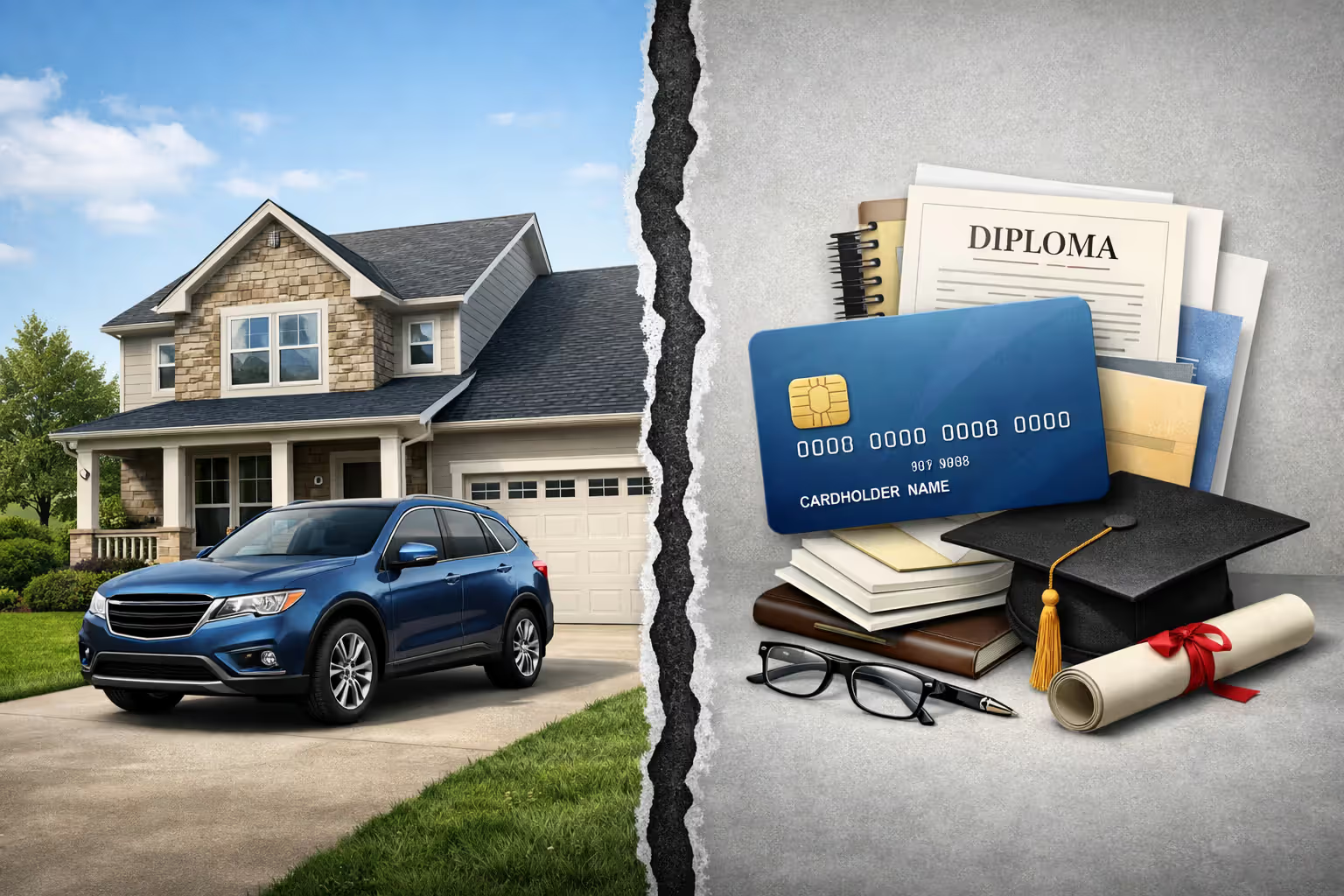
Lenders categorize loans based on collateral. Secured loans require borrowers to pledge an asset—a house, car, or savings account—that the lender can claim if payments stop. The collateral reduces lender risk, which typically translates to lower interest rates. If you default on a secured loan, the lender files paperwork, repossesses the asset, sells it, and applies proceeds to your balance.
Unsecured loans operate differently. No specific asset backs the debt. Instead, lenders rely on your creditworthiness, income, and promise to repay. Credit cards, personal loans, and medical debt fall into this category. Without collateral to seize, lenders must sue borrowers, win judgments, and pursue wage garnishment or bank levies to collect unpaid balances. This extra legal work makes unsecured debt riskier for lenders, which often results in higher interest rates.
The secured versus unsecured distinction affects three key areas: the approval process (secured loans are easier to qualify for), interest rates (secured loans typically cost less), and collection methods (secured lenders can repossess property faster). Most consumer debt splits clearly between these categories, but student loans occupy unusual territory.
Author: Danielle Pierce;
Source: sonicmusic.net
Federal Student Loans Are Unsecured Debt
Federal student loans—Direct Subsidized, Direct Unsubsidized, Direct PLUS, and Direct Consolidation loans—are unsecured debt. The Department of Education doesn't require collateral when you borrow. No property secures the loan, and the government can't seize your car or home directly if you stop paying.
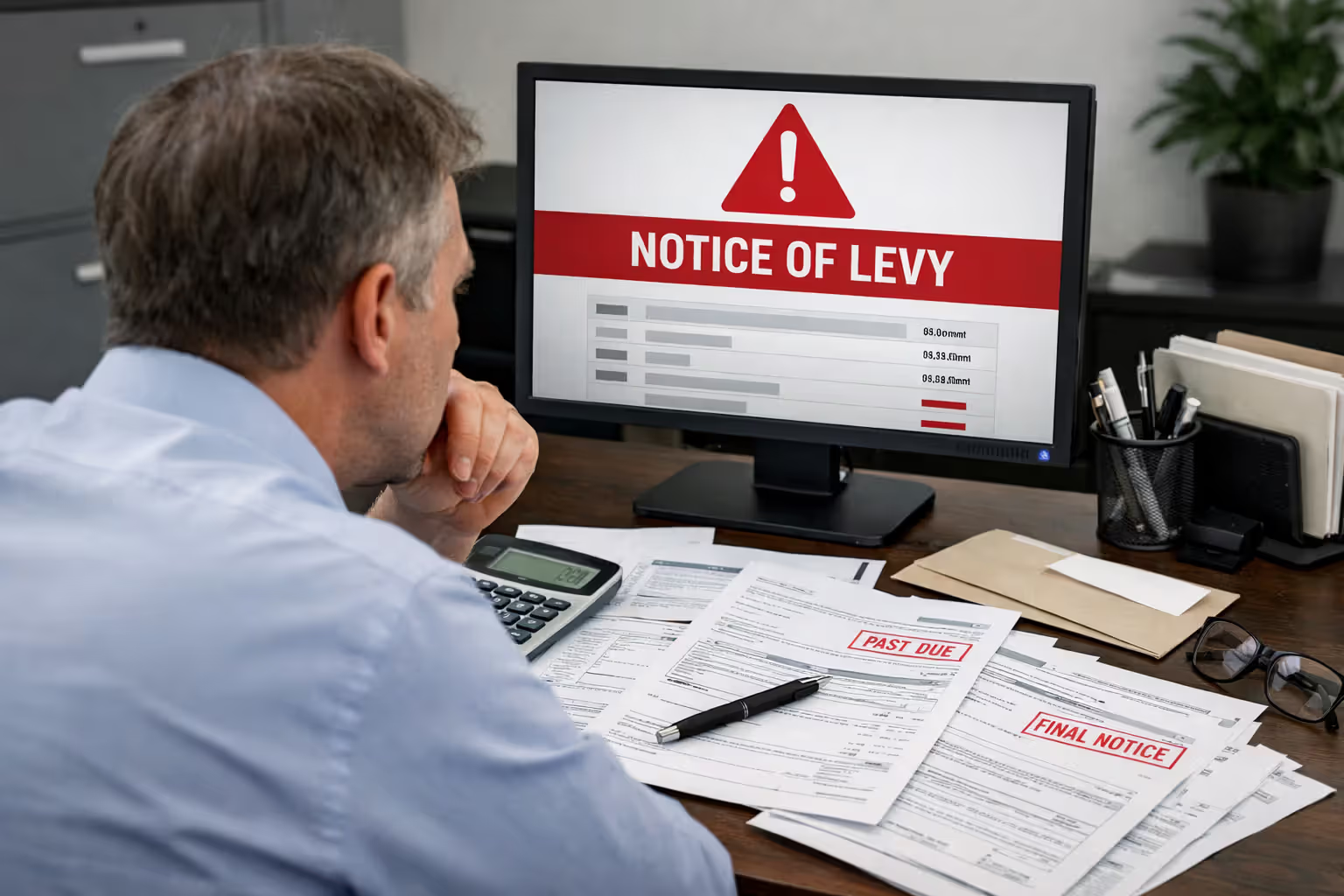
However, federal student loans carry enforcement powers that other unsecured debts lack. The government can garnish up to 15% of your disposable income without suing you first. Tax refunds can be intercepted through the Treasury Offset Program. Social Security benefits face garnishment of up to 15% once you're receiving them, though the first $750 monthly is protected as of 2026.
These collection powers exist because federal student loans are backed by the full faith and credit of the U.S. government rather than physical collateral. The government essentially substitutes its collection authority for traditional collateral requirements. You won't lose your house to a federal student loan default, but your wages and government payments remain vulnerable without any court proceeding.
Federal loans also carry unique protections. Income-driven repayment plans adjust payments based on earnings and family size. Deferment and forbearance options pause payments during unemployment or economic hardship. Public Service Loan Forgiveness erases remaining balances after 120 qualifying payments for government and nonprofit workers. These protections don't exist for most unsecured consumer debt.
Is a student loan secured or unsecured when the federal government is the lender? Technically unsecured, but with enforcement mechanisms that blur traditional categories. The government trades physical collateral for administrative collection powers that bypass normal legal processes.
Author: Danielle Pierce;
Source: sonicmusic.net
Private Student Loans and Collateral Requirements
Most private student loans from banks, credit unions, and online lenders are unsecured. Lenders evaluate your credit score, income, debt-to-income ratio, and often require a cosigner with strong credit. No property backs the loan, but approval depends heavily on creditworthiness rather than government guarantees.
Some private lenders offer secured student loan options, though these remain uncommon. A secured private student loan might require a savings account, certificate of deposit, or other financial asset as collateral. These products typically serve borrowers with poor credit who can't qualify for traditional student loans. Interest rates may be lower than unsecured alternatives, but you risk losing the pledged asset if you default.
Student loan collateral rules for private loans vary by lender. Most major student loan companies—Sallie Mae, Discover, College Ave—offer only unsecured products. Smaller regional banks or credit unions sometimes provide secured options, particularly for borrowers with limited credit history. Always read the promissory note carefully; it specifies whether collateral secures the debt.
Cosigners create confusion about collateral. When someone cosigns your student loan, they promise to repay if you don't. The cosigner's good credit helps you qualify and may reduce your interest rate. However, the cosigner hasn't pledged property as collateral—they've pledged their creditworthiness and repayment obligation. If you default, the lender pursues both you and the cosigner through normal collection processes, not by seizing specific assets.
Private student loans lack the repayment flexibility of federal loans. Few private lenders offer income-driven plans, and forbearance options are limited. Collection follows standard unsecured debt procedures: missed payments damage credit, the lender may sue after default, and wage garnishment requires a court judgment (unlike federal loans). Some private loans become dischargeable in bankruptcy if you can prove undue hardship, though courts set a high bar.

Author: Danielle Pierce;
Source: sonicmusic.net
Why Student Loans Don't Require Collateral
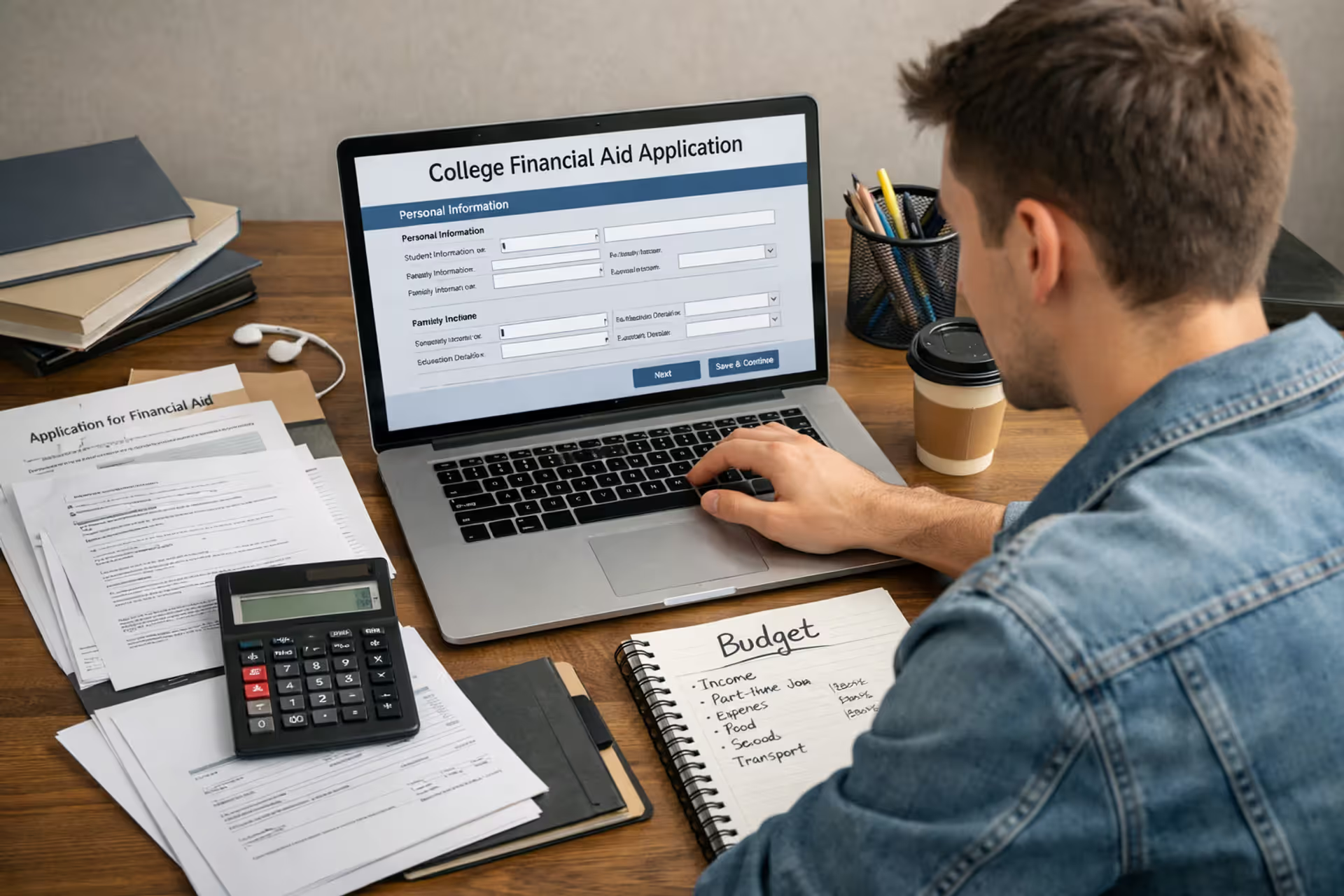
Student loans break the traditional lending model because borrowers typically lack assets when they borrow. An 18-year-old college freshman has no house to pledge, limited income history, and often no credit score. Traditional secured lending would make education financing impossible for most students.
Federal loans solve this problem through government backing. The Department of Education doesn't assess credit for Direct Subsidized and Unsubsidized loans (though PLUS loans require a credit check). The government absorbs default risk, betting that educated borrowers will earn enough to repay over time. When that bet fails, administrative wage garnishment and tax refund offsets recover funds without requiring collateral.
Private lenders approach unsecured debt student loans differently. They rely on credit scoring, cosigners, and higher interest rates to manage risk. A private lender might charge 8-12% interest on an unsecured student loan versus 4-6% on a secured auto loan. The interest rate premium compensates for increased default risk and collection costs.
The bankruptcy exception reinforces why lenders accept unsecured student loans. Since 2005, borrowers must prove "undue hardship" to discharge student loans in bankruptcy—a standard so strict that few succeed. Credit card debt, medical bills, and personal loans discharge easily in Chapter 7 bankruptcy, but student loans persist. This protection reduces lender risk despite the lack of collateral.
Are student loans secured or unsecured explained simply? They're unsecured by property but secured by aggressive collection powers and bankruptcy protections that other unsecured debts don't enjoy. This hybrid status lets lenders and the government extend credit without collateral while maintaining strong repayment incentives.

Author: Danielle Pierce;
Source: sonicmusic.net
How Unsecured Status Affects Borrowers
The unsecured classification of student loans creates specific consequences during repayment and default. Understanding these effects helps borrowers make informed decisions about payment strategies and financial planning.
Collection Powers Without Collateral
Federal student loan collectors can garnish wages, seize tax refunds, and offset Social Security payments without filing a lawsuit. This administrative garnishment starts after you've been in default (270 days of non-payment) and received proper notice. The 15% wage garnishment limit applies to disposable income—your pay after required deductions like taxes and Social Security.
Private student loan collectors must sue you, win a judgment, and obtain a court order before garnishing wages. This process takes months or years and gives you opportunities to negotiate, raise defenses, or settle. State laws limit wage garnishment—some states like Texas, Pennsylvania, and South Carolina prohibit wage garnishment for most consumer debts, though federal student loans override these protections.
Neither federal nor private student loan lenders can seize your home, car, or personal property without additional legal steps. Unlike mortgage foreclosure or auto repossession, student loan default doesn't directly threaten physical assets. However, judgment holders can place liens on property or levy bank accounts after winning lawsuits, and those liens must be satisfied before you can sell or refinance.
Interest Rates and Credit Impact
Unsecured loans typically carry higher interest rates than secured debt. Federal student loan rates for 2025-2026 range from 6.53% for undergraduate Direct Subsidized/Unsubsidized loans to 9.08% for Direct PLUS loans—higher than many mortgages but lower than credit cards. These rates are set by Congress and don't vary based on individual credit.
Private student loan rates span 4-14% depending on credit scores, loan terms, and whether you choose fixed or variable rates. Borrowers with excellent credit and cosigners qualify for the lowest rates, approaching secured loan territory. Those with fair credit pay premiums reflecting the unsecured nature of the debt.
Student loan delinquency damages credit scores similarly to other unsecured debt. A 30-day late payment drops your score 50-100 points. Default (270 days for federal loans) devastates credit, often reducing scores below 600. The damage persists for seven years from the delinquency date. Federal student loans in default also lose eligibility for deferment, forbearance, and income-driven repayment until you rehabilitate the loan.
Student loans occupy a unique space in consumer debt law. They're technically unsecured, but the combination of administrative collection powers and bankruptcy protections gives lenders security that rivals or exceeds traditional collateral. Borrowers often don't realize that the lack of physical collateral doesn't mean weak collection rights—it means different, often stronger collection mechanisms
— Leslie Tayne
Bankruptcy Limitations
Student loans stand nearly alone among unsecured debts in their bankruptcy treatment. Credit card balances, medical bills, and personal loans discharge easily in Chapter 7 bankruptcy, giving debtors a fresh start. Student loans require an adversary proceeding—a separate lawsuit within bankruptcy—where you must prove repaying the loan causes "undue hardship."
Courts apply the Brunner test in most jurisdictions: you must show (1) you can't maintain a minimal standard of living while repaying, (2) circumstances will persist for most of the repayment period, and (3) you've made good faith efforts to repay. This standard excludes most borrowers. Poverty alone doesn't suffice—courts typically require permanent disability or other extreme circumstances.
Some bankruptcy judges have begun applying more lenient standards, and the Department of Justice issued guidance in 2022 (still in effect in 2026) encouraging less aggressive opposition to discharge requests. Still, student loan discharge remains rare compared to other unsecured debt. This protection makes lenders more willing to extend unsecured student loans despite high default rates.
The are student loans secured or unsecured guide to bankruptcy is straightforward: they're unsecured debt with secured-debt-like protections. You keep your property through bankruptcy, but the loans usually survive.
Secured vs Unsecured Student Loans Comparison Table
| Feature | Secured Loans (General) | Unsecured Federal Student Loans | Unsecured Private Student Loans |
| Collateral Required | Yes (home, car, savings) | No | No (rare secured options exist) |
| Interest Rates (2026) | 3-7% typical | 6.53-9.08% (fixed by Congress) | 4-14% (credit-based) |
| Default Consequences | Repossession of collateral | Wage garnishment without lawsuit, tax offset, Social Security offset | Lawsuit required, then wage garnishment (state limits apply) |
| Bankruptcy Discharge | Easy (Chapter 7/13) | Extremely difficult (undue hardship) | Extremely difficult (undue hardship) |
| Credit Requirements | Moderate (collateral reduces risk) | None for Direct loans (except PLUS) | Moderate to excellent (or cosigner) |
| Examples | Mortgages, auto loans, secured personal loans | Direct Subsidized, Direct Unsubsidized, Direct PLUS, Direct Consolidation | Sallie Mae, Discover Student Loans, College Ave, Citizens Bank |
Common Questions About Student Loan Collateral
Student loans are unsecured debt—federal and private lenders don't require collateral when you borrow. This classification protects your physical assets from direct seizure if you default. Your house, car, and personal property remain safe from repossession based solely on student loan default.
However, unsecured status doesn't mean weak collection rights. Federal student loans carry administrative garnishment powers that bypass courts, while bankruptcy protections make discharge nearly impossible. Private student loans require lawsuits before garnishment but benefit from the same bankruptcy protections. The combination creates enforcement mechanisms that often exceed those of secured debt.
Knowing whether student loans are secured or unsecured helps you plan repayment strategies, understand default consequences, and protect your financial health. Federal loans offer income-driven repayment, deferment, and forgiveness programs that ease repayment burdens. Private loans require more aggressive negotiation and refinancing strategies. Neither type threatens your home or car directly, but both can damage credit, reduce take-home pay through garnishment, and persist through bankruptcy.
If you're struggling with student loan payments, contact your servicer immediately. Federal borrowers can switch to income-driven plans that cap payments at 5-10% of discretionary income. Private borrowers should explore refinancing, cosigner release, or hardship forbearance. Ignoring the problem leads to default, damaged credit, and aggressive collection—consequences that persist regardless of whether the debt is secured or unsecured.
Related Stories

Read more

Read more



The content on this website is provided for general informational and educational purposes only. It is intended to offer guidance on student loan topics, including federal and private student loans, interest rates, repayment plans, loan forgiveness programs, deferment, forbearance, consolidation, and related financial matters. The information presented should not be considered legal, financial, tax, or professional lending advice.
All information, articles, explanations, and program discussions published on this website are provided for general informational purposes. Student loan programs, repayment options, forgiveness eligibility, and financial assistance policies may change over time and may vary depending on government regulations, loan servicers, lenders, borrower eligibility, income level, school status, and individual loan terms. Details such as interest rates, repayment schedules, eligibility for forgiveness programs, and application requirements may differ between federal and private lenders and may change without notice.
While we strive to keep the information accurate and up to date, this website makes no guarantees regarding the completeness, reliability, or accuracy of the content. The website and its authors are not responsible for any errors, omissions, or actions taken based on the information provided here.
Use of this website does not create a financial advisor–client, legal, or professional relationship. Visitors are encouraged to review the official documentation provided by the U.S. Department of Education, student loan servicers, and private lenders, and to consult with a qualified financial advisor, loan specialist, or legal professional before making decisions regarding student loans, repayment strategies, or financial obligations.