
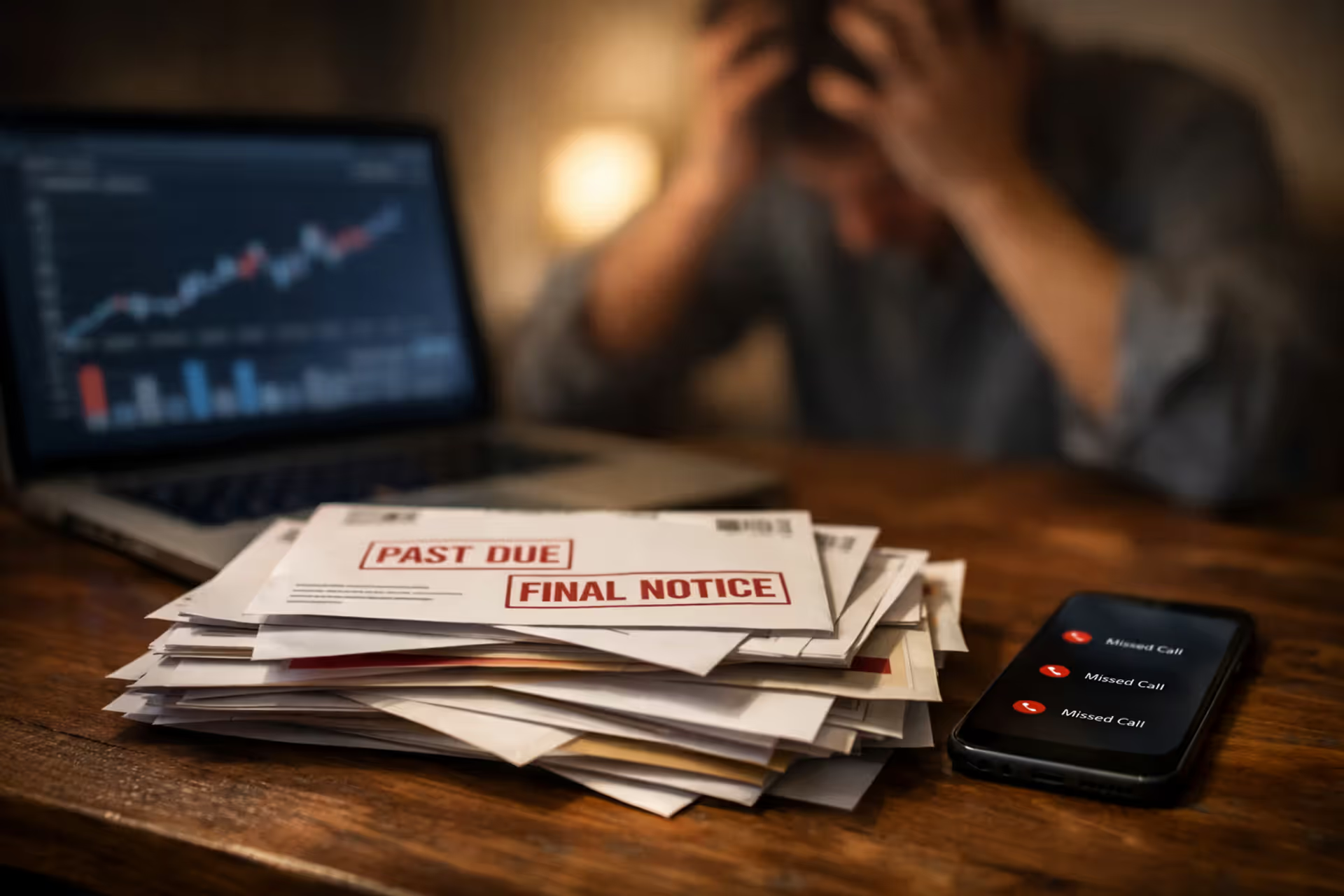
Stressed person at desk surrounded by past due collection notices and financial documents with laptop showing charts
Student Loans Debt Collection Guide

Content
Content
Missing student loan payments triggers a cascade of consequences that accelerate faster than most borrowers expect. Delinquency transforms into default, servicers hand off accounts to collection agencies, and suddenly you're dealing with wage garnishments, intercepted tax refunds, and devastating credit damage. Understanding the student loan debt collection process—and knowing your options—can mean the difference between years of financial struggle and a manageable path forward.
What Happens When Student Loans Go to Collections
The journey from a missed payment to active student loan collections follows a predictable timeline, but the specifics depend entirely on whether the federal government or a private institution issued your loan.
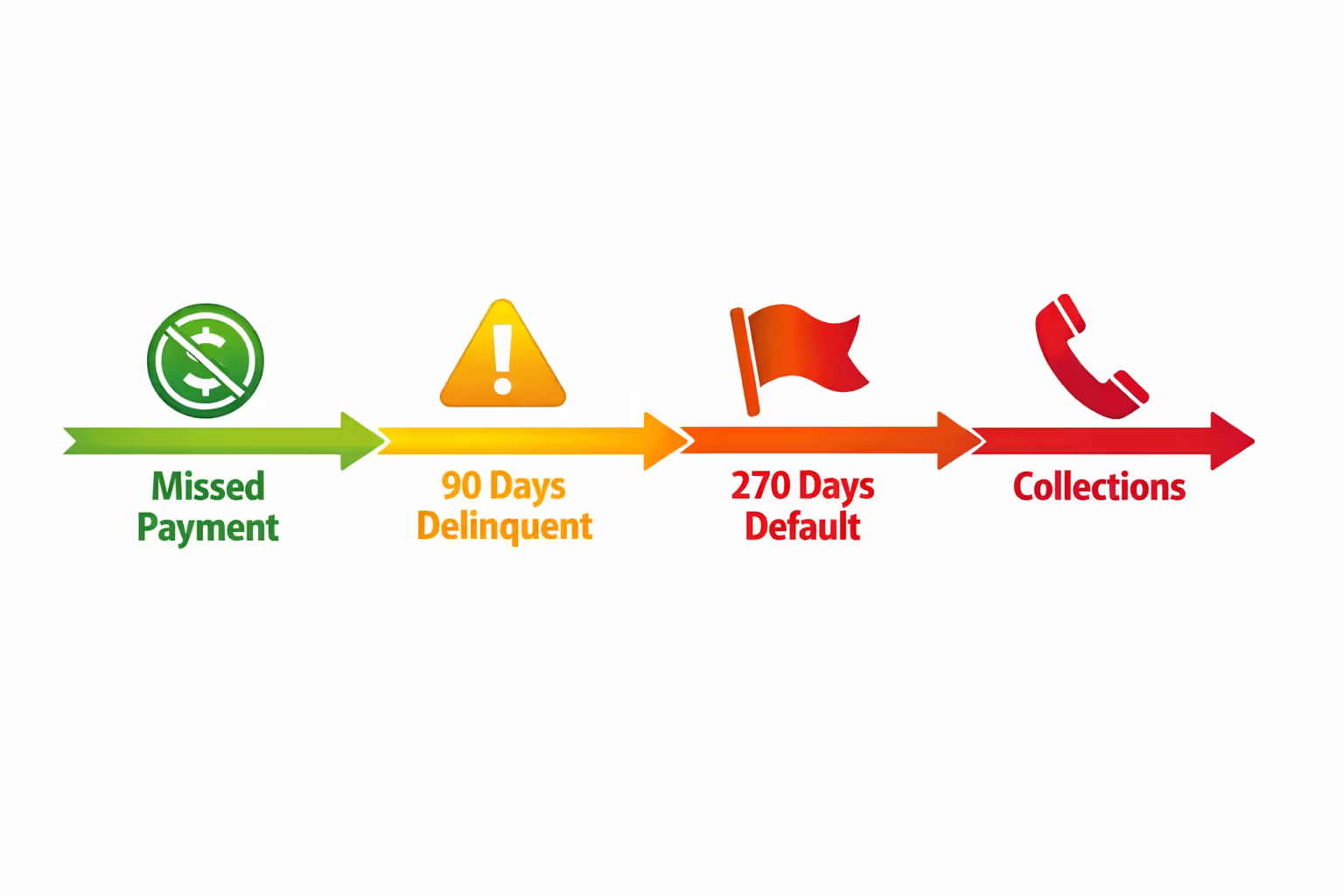
Federal borrowers enter delinquency status the moment they miss a payment due date. Your servicer won't immediately escalate the situation, but consequences start building. Once you've missed payments for 90 consecutive days, your servicer notifies all three major credit bureaus—Equifax, Experian, and TransUnion. Your credit score takes a significant hit. Continue missing payments until you reach 270 days without making a single payment? You've crossed into default territory. At this point, the Department of Education transfers your account away from your familiar servicer to a specialized collection agency. You're no longer working with the company that sent your monthly payment reminders—you're now dealing with student loans in collections, where the rules and approach change dramatically.
Private lenders operate under their own timelines, not federal regulations. Each financial institution writes its own default provisions into loan contracts, typically triggering default somewhere between 90 and 120 days after your last payment. Some aggressive lenders pull the default trigger at just 90 days. Others allow up to four months before declaring default. Once default occurs, lenders either contract with collection agencies to pursue the debt for a percentage of recovered funds or sell your entire obligation to debt-buying companies that purchase defaulted accounts in bulk. Regardless of which path your lender chooses, you'll soon receive calls from unfamiliar companies demanding payment.
Author: Danielle Pierce;
Source: sonicmusic.net
What changes when loans enter collections? Your debt moves from a servicer—which manages payments and account maintenance—to a recovery specialist whose entire business model centers on extracting payment. Federal loan collections involve private firms operating under Department of Education contracts with specific recovery mandates. Private loan collections might involve contingency agencies earning commissions on recovered amounts or debt buyers who purchased your account at a steep discount and keep everything they collect. Collection agencies employ significantly more aggressive contact strategies than servicers because recovery is their sole function, not just one aspect of servicing.
How Student Loans Go to Collections
Understanding exactly how student loans transition into collections requires knowing the precise payment thresholds and notification sequence that most borrowers overlook until it's too late.
Federal loans require exactly 270 consecutive days of zero payments before the Department of Education declares default. That's approximately nine months. Make even a single payment during this window? The countdown resets entirely to day one. Throughout these nine months of delinquency, your servicer attempts contact through multiple channels—phone calls, text messages, emails, physical letters. Expect warnings when you hit 90 days delinquent, additional notices at 180 days, and a final pre-default warning around day 240. These communications aren't friendly reminders. They explicitly outline what's coming: transfer to a collection agency, administrative wage garnishment without court orders, loss of access to forbearance and income-driven plans, and potential Social Security garnishment. Many borrowers dismiss these warnings as scare tactics, which is a catastrophic miscalculation.
Private student loan default timelines lack federal standardization. Your promissory note—the contract you signed when borrowing—dictates when your lender can declare default. Most contracts specify 90 to 120 days, but I've reviewed agreements allowing immediate default after one missed payment if you have prior defaults with that institution. Pull your loan documents and read the default provisions carefully. That language tells you precisely when default occurs. Federal regulations require private lenders to provide notice before declaring default, but the specific notice requirements vary significantly by state consumer protection laws and individual contract language.
Borrowers repeatedly make one critical mistake: assuming that avoiding phone calls somehow pauses or delays the collection timeline. It absolutely doesn't. Servicers and lenders document every attempted contact in your account file. When your loans transfer to collections for student loan debt, the agency receives complete records of every ignored call, every undelivered email, every returned letter. This documentation strengthens their position if they eventually file a lawsuit, demonstrating to judges that they attempted reasonable contact before escalating to legal action.
During delinquency but before formal default, borrowers retain access to valuable options. You can request temporary forbearance, apply for income-driven repayment plans that dramatically reduce monthly obligations, or negotiate modified payment schedules with your servicer. Once default occurs and collections begin, most of these preventive options vanish or become severely restricted, replaced by more limited remediation programs.
Who Collects on Defaulted Student Loans
The entities pursuing student loan debt collection operate under fundamentally different legal frameworks and possess vastly different enforcement powers depending on whether they're recovering federal or private debt.
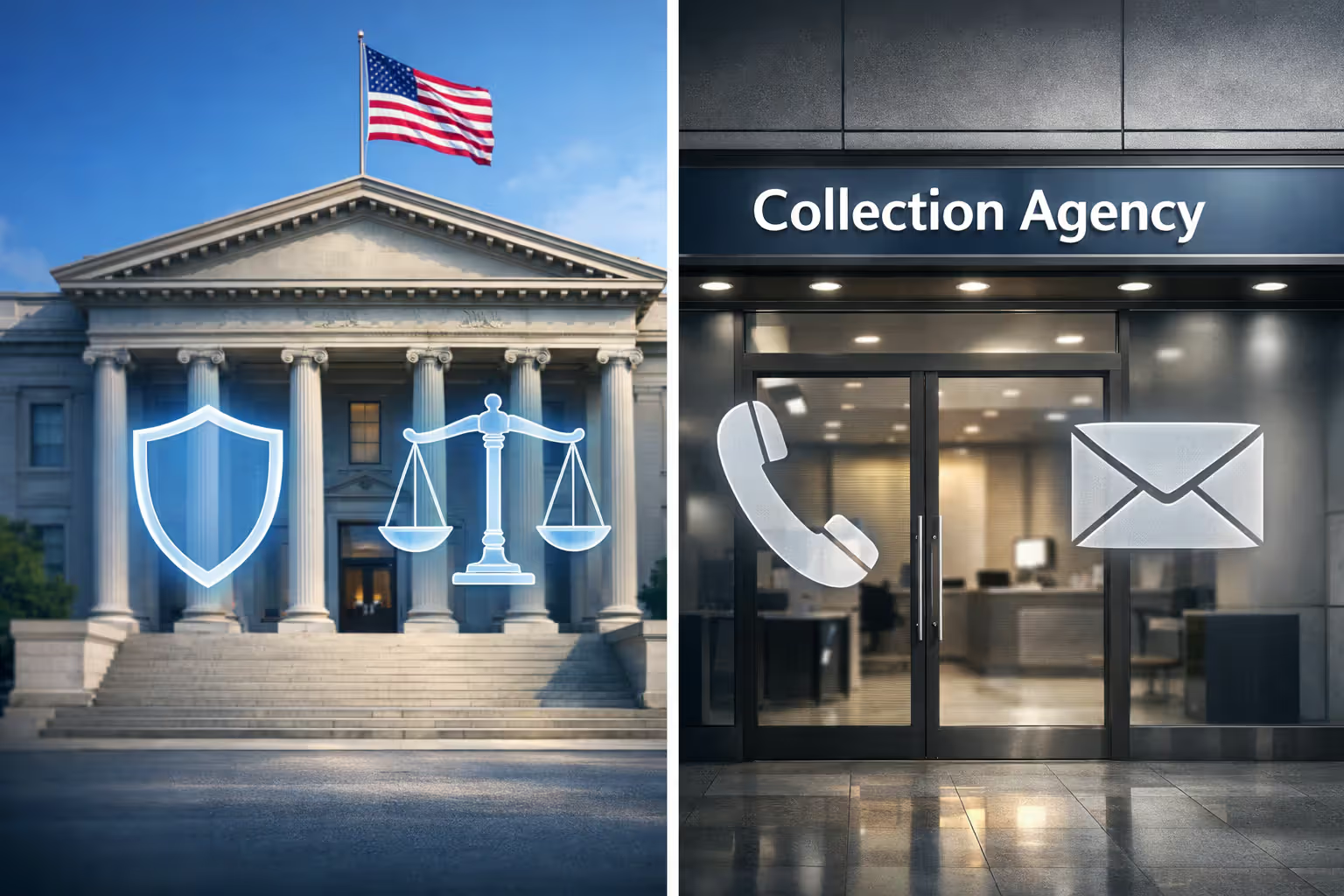
Federal student loans remain Department of Education property forever. The government never sells these loans. Instead, the Department contracts with private collection firms to recover defaulted amounts, but these companies function as federal agents, not independent businesses. The Department of Education currently maintains active contracts with multiple collection agencies and distributes defaulted accounts among them based on various factors including geographic location and agency performance metrics. Want to identify which agency currently holds your account? Access your loan information through the Federal Student Aid website's loan servicer lookup tool or contact the department's debt resolution helpline directly.
Author: Danielle Pierce;
Source: sonicmusic.net
These federally-contracted collectors wield extraordinary enforcement authority that goes far beyond typical debt collection powers. They can initiate wage garnishment through administrative proceedings without filing lawsuits. They can redirect your entire federal tax refund through Treasury offset programs. They can garnish Social Security retirement payments beyond the protected first $750 monthly—and they can execute all these actions without ever presenting evidence to a judge or obtaining court permission. This administrative enforcement authority flows directly from federal statutes and doesn't require proof through judicial process.
Private student loans follow completely different collection pathways. When you default, your lender decides whether to hire a collection agency on contingency or sell your debt to a purchasing firm. Hired agencies typically retain 25% to 40% of whatever they recover as their fee. When lenders sell debt, buyers pay dramatically reduced amounts—frequently just 10% to 30% of the outstanding balance—then keep everything they collect beyond that purchase price. This economic structure creates powerful incentives for aggressive recovery tactics.
Private loan collectors lack the administrative powers that federal collectors possess. They cannot garnish your paycheck, seize your tax refund, or touch your Social Security benefits without first filing a civil lawsuit, serving you with court papers, and obtaining a judicial judgment. However, dismissing this limitation would be a serious mistake—private collectors file thousands of lawsuits monthly, and once they secure a judgment, state law grants them garnishment authority comparable to any other creditor with a court order.
Identifying precisely who's collecting your debt matters tremendously because it determines their legal authority and reveals which resolution strategies will actually work in your situation.
What Debt Collectors Can and Cannot Do
Collection agencies pursuing student loan debt collection must comply with federal consumer protection statutes, though federally-contracted collectors possess special enforcement authorities unavailable to private agencies.
The Fair Debt Collection Practices Act establishes boundaries against abusive recovery tactics. Contact hours are restricted—collectors cannot call before 8 a.m. or after 9 p.m. in your local time zone. Once you inform them in writing that calls to your workplace violate employer policy, they must cease workplace contact. They cannot harass you through excessive repeated calls, use obscene language, or threaten enforcement actions they lack legal authority to execute. Every collector must disclose their identity as a debt collector during initial contact and must provide accurate balance information. Misrepresenting debt amounts or fabricating legal consequences violates federal law.
The Telephone Consumer Protection Act imposes additional restrictions on automated calling systems and prerecorded messages to cell phones without your explicit prior consent. When collectors violate these federal protections, you can file lawsuits seeking statutory damages—$500 per violation, escalating to $1,500 for willful violations.
Federal student loan collectors, however, operate under special statutory authorities that bypass typical court requirements. Administrative wage garnishment allows them to redirect up to 15% of your disposable income directly from your paycheck. They transmit garnishment orders straight to your employer, and you receive just 30 days to request a hearing objecting to the garnishment or demonstrating financial hardship. Through the Treasury Offset Program, they capture your complete federal tax refund without judicial approval. They can garnish Social Security retirement and disability benefits—though not Supplemental Security Income—by up to 15% beyond the protected initial $750 monthly amount.
Author: Danielle Pierce;
Source: sonicmusic.net
Private collectors must follow the traditional legal process before garnishing wages. They file a lawsuit, serve you with a complaint, allow you time to respond, and obtain a judgment proving you owe the debt. Only after securing this judgment can they pursue wage garnishment. State laws govern garnishment amounts—most states allow 25% of disposable earnings or the amount by which weekly income exceeds 30 times the federal minimum wage, whichever calculation produces a smaller garnishment. Some states provide stronger protections, capping garnishment at 10% or 15%, while a handful of states prohibit wage garnishment entirely for judgment creditors or exempt certain income types.
Both federal and private collectors report your default status to credit bureaus, where it remains visible for seven years measured from your original default date. This reporting typically slashes credit scores by 100 points or more.
Here's a critical distinction borrowers miss: federal student loans carry no statute of limitations whatsoever. The government can pursue collection indefinitely—20 years, 40 years, forever. Private loans generally face 3- to 10-year statutes of limitations depending on your state's laws governing written contracts, after which collectors lose their ability to sue you (though they can still contact you seeking voluntary payment).
How to Get Student Loans Out of Collections
Escaping student loan collections requires different approaches for federal versus private loans, but one principle applies universally: immediate action produces the best outcomes.
Federal Loan Rehabilitation
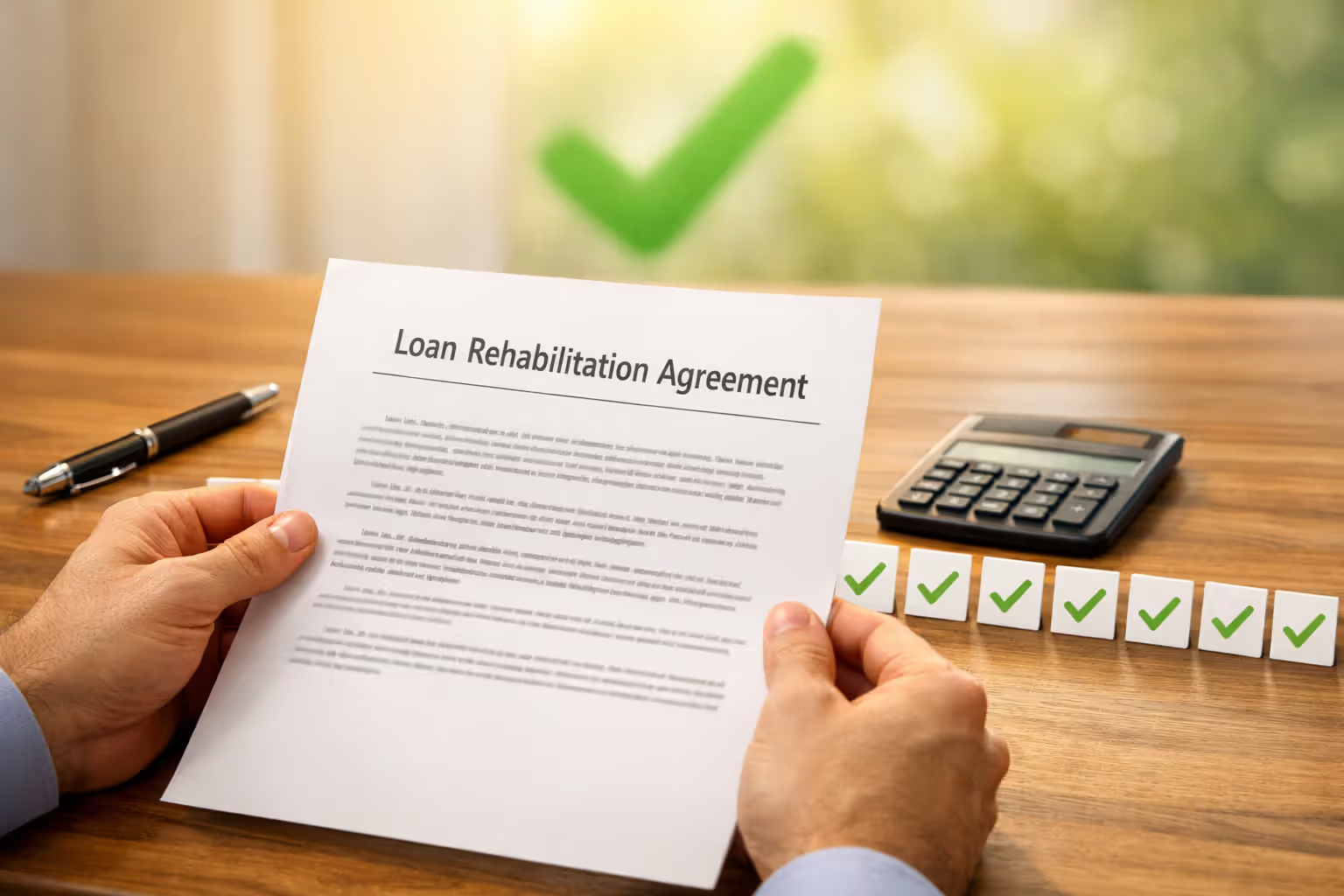
Rehabilitation represents the most powerful tool for eliminating federal default from your credit history. You must make nine consecutive monthly payments within a 10-month period. The Department of Education calculates payments as "reasonable and affordable"—typically 15% of your discretionary income divided by 12 months. For many borrowers, this calculation produces payments between $5 and $50 monthly, though amounts vary based on income and family size. Successfully complete rehabilitation, and your loan returns to regular servicing. The default entry gets completely deleted from your credit reports (though pre-default late payment entries remain for their full seven-year period).
You receive only one rehabilitation opportunity per loan. Default again after successfully rehabilitating? Rehabilitation becomes permanently unavailable for that loan. Additionally, collection costs up to 16% of your combined principal and interest balance get added to your total obligation, increasing what you ultimately owe.
Federal Loan Consolidation
Consolidating defaulted federal loans into a new Direct Consolidation Loan immediately removes them from collection status. You must meet one of two conditions: either make three consecutive voluntary payments on your defaulted loans first, or commit to repaying the consolidation loan through an income-driven repayment plan. Consolidation doesn't erase the default notation from your credit reports—it remains visible for the complete seven-year period—but it immediately halts wage garnishment and offset actions while restoring your eligibility for deferment, forbearance, and income-driven repayment options.
Income-Driven Repayment Plans
Following rehabilitation or consolidation, income-driven repayment plans can reduce your required monthly payment to $0 if your income falls below specific thresholds. These plans calculate obligations based on your discretionary income and family size, and they provide loan forgiveness for remaining balances after 20 to 25 years of qualifying payments, depending on the specific plan you select.
Private Loan Negotiation
Private loans in collections lack standardized federal remediation programs, but this limitation creates negotiation opportunities. Collection agencies and debt buyers routinely accept settlements for 40% to 60% of outstanding balances, particularly when debts are several years old. Because debt buyers purchased your account at steep discounts—sometimes 15 cents per dollar owed—any recovery beyond their purchase price represents profit, creating strong incentives to settle.
Negotiate strategically. Demand written settlement agreements before transmitting any payment. Verify that your payment fully resolves the obligation with no remaining balance. Never provide collectors with electronic access to your bank account or furnish them with post-dated checks they could deposit prematurely. When financially feasible, pay settlements in single lump sums rather than installment plans—collectors are more likely to report debts as "paid in full" or "settled" when they receive immediate complete payment.
Some private lenders offer proprietary rehabilitation programs, though specific terms vary dramatically by institution. Contact your lender or their contracted collection agency directly to inquire about structured repayment plans that could prevent lawsuit filings.
Loan Discharge Options
Both federal and private loans qualify for discharge under specific circumstances: total and permanent disability certification, school closure while you were enrolled or shortly after withdrawal, fraudulent loan certification by the school, unpaid refunds the school owed you, or borrower death. Federal loans additionally offer Public Service Loan Forgiveness for qualifying public sector workers and borrower defense to repayment when schools engaged in misconduct. These discharges eliminate your obligation entirely and remove loans from collection status.
Eliminating student loans through bankruptcy proceedings remains exceptionally challenging. You must prove "undue hardship" through an adversary proceeding—a demanding legal standard that historically few borrowers satisfied. Recent court rulings have shown marginally more flexible interpretations of hardship standards, making bankruptcy worth investigating if your financial circumstances are truly catastrophic and unlikely to improve.
How Collections Affect Your Credit and Finances
Student loans in collections create financial consequences extending far beyond the debt itself.
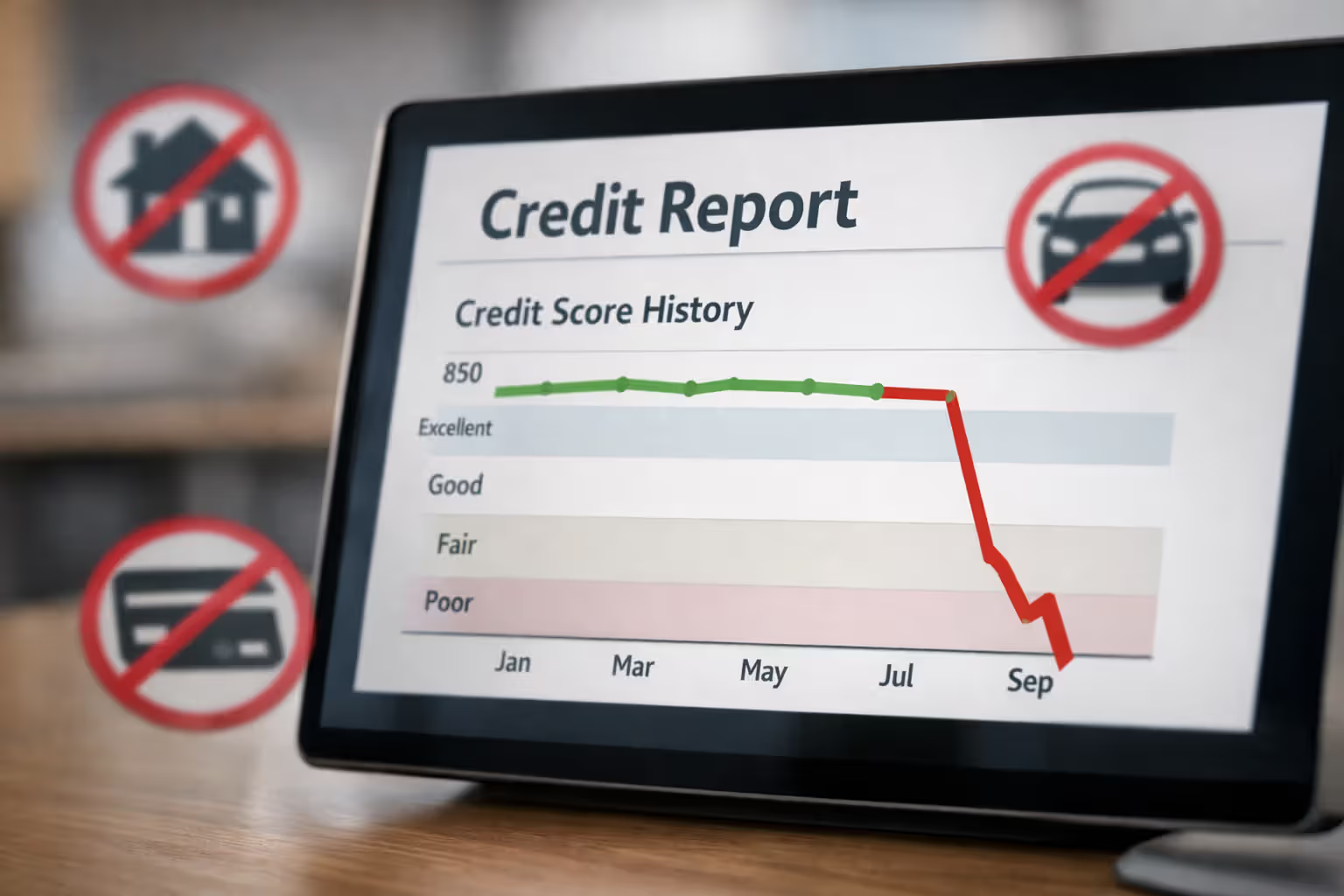
Default triggers severe credit score damage—typically reducing scores by 100 to 150 points or more. This damage begins before collection assignment, when your servicer reports 90-day delinquency to credit bureaus. By the time a collection agency receives your account, your credit has already sustained major harm. Default entries remain on your credit reports for seven years measured from the default date, persisting even after you've satisfied the debt or rehabilitated federal loans (rehabilitation uniquely removes default entries, unlike other resolution methods).
This credit damage affects virtually every aspect of financial life. Mortgage applications face rejection or require substantially higher interest rates, adding tens of thousands to lifetime costs. Auto loan approvals become difficult, and approved rates carry significant premiums. Credit card applications get denied or approved only with punitive interest rates. Landlords routinely screen credit reports, and many automatically reject applicants showing recent defaults. Even when you qualify for financing, you'll pay considerably more in interest charges across every category.
Author: Danielle Pierce;
Source: sonicmusic.net
Professional licensing consequences can devastate careers. Various states deny, suspend, or refuse to renew professional licenses when applicants or licensees default on federal student loans—potentially affecting nurses, teachers, attorneys, accountants, and other licensed professionals. Recent federal legislation prohibits license denial based exclusively on default, but some states continue considering default in comprehensive licensing determinations. Private employers increasingly conduct credit checks during hiring processes, particularly for positions involving financial responsibilities, access to sensitive data, or fiduciary duties.
Federal loan defaults trigger immediate financial enforcement. Administrative wage garnishment diverts 15% of your disposable income before you receive your paycheck, reducing take-home pay and potentially creating secondary financial crises. Tax refund offsets seize your entire federal refund, including valuable credits like the Earned Income Tax Credit that many lower-income families depend on. Social Security garnishment reduces monthly benefit payments, potentially pushing retirees below subsistence income levels.
Collection activity creates psychological and practical stress beyond direct financial impacts. Persistent collection calls disrupt your work and home environment. Lawsuit threats generate ongoing anxiety and uncertainty. Many borrowers develop avoidance responses, ignoring collection notices and letting interest charges and collection fees compound unchecked, which progressively worsens the debt burden and makes eventual resolution increasingly overwhelming.
These consequences aren't permanent fixtures. Rehabilitating federal loans completely removes default entries from credit files. Paying or settling private loans terminates collection activity. Credit scores gradually recover as defaults age and you establish positive payment history on other accounts. Taking quick action minimizes long-term damage and accelerates financial recovery.
Expert Perspective
The single most damaging mistake borrowers make is avoiding collection notices.Federal collectors possess extraordinary enforcement powers that function without any judicial oversight. By the time borrowers understand the seriousness of their situation, they're already experiencing wage garnishment and tax refund seizures. Responding promptly—even when you cannot pay the full balance—preserves access to rehabilitation and repayment options that halt collections and begin rebuilding your credit profile
— Heather Jarvis
Frequently Asked Questions About Student Loan Collections
Student loans debt collection creates serious financial disruption, but recovery paths exist. Federal loans provide structured rehabilitation and consolidation programs that can restore your financial stability. Private loans, despite lacking standardized relief programs, frequently settle for substantially less than full balances.
Avoiding the problem represents your worst possible strategy. Collection agencies wield powerful enforcement mechanisms—wage garnishment, credit destruction, lawsuits—that become progressively harder to reverse as time passes. Contact your collection agency immediately to explore available options. With federal loans, inquire specifically about rehabilitation or consolidation programs. With private loans, ask about settlement offers or structured payment arrangements.
Document every collector interaction meticulously: dates, times, representative names, conversation summaries. Understand your legal protections under the Fair Debt Collection Practices Act and Telephone Consumer Protection Act. When collectors violate these protections, file complaints with the Consumer Financial Protection Bureau and your state attorney general's office.
Your loans entered collections, but this situation doesn't define your financial future permanently. Thousands of borrowers successfully resolve collection accounts annually, rehabilitate their loans, and rebuild damaged credit. Armed with accurate information and immediate action, you can resolve collections and progress toward financial stability.
Related Stories

Read more

Read more



The content on this website is provided for general informational and educational purposes only. It is intended to offer guidance on student loan topics, including federal and private student loans, interest rates, repayment plans, loan forgiveness programs, deferment, forbearance, consolidation, and related financial matters. The information presented should not be considered legal, financial, tax, or professional lending advice.
All information, articles, explanations, and program discussions published on this website are provided for general informational purposes. Student loan programs, repayment options, forgiveness eligibility, and financial assistance policies may change over time and may vary depending on government regulations, loan servicers, lenders, borrower eligibility, income level, school status, and individual loan terms. Details such as interest rates, repayment schedules, eligibility for forgiveness programs, and application requirements may differ between federal and private lenders and may change without notice.
While we strive to keep the information accurate and up to date, this website makes no guarantees regarding the completeness, reliability, or accuracy of the content. The website and its authors are not responsible for any errors, omissions, or actions taken based on the information provided here.
Use of this website does not create a financial advisor–client, legal, or professional relationship. Visitors are encouraged to review the official documentation provided by the U.S. Department of Education, student loan servicers, and private lenders, and to consult with a qualified financial advisor, loan specialist, or legal professional before making decisions regarding student loans, repayment strategies, or financial obligations.