
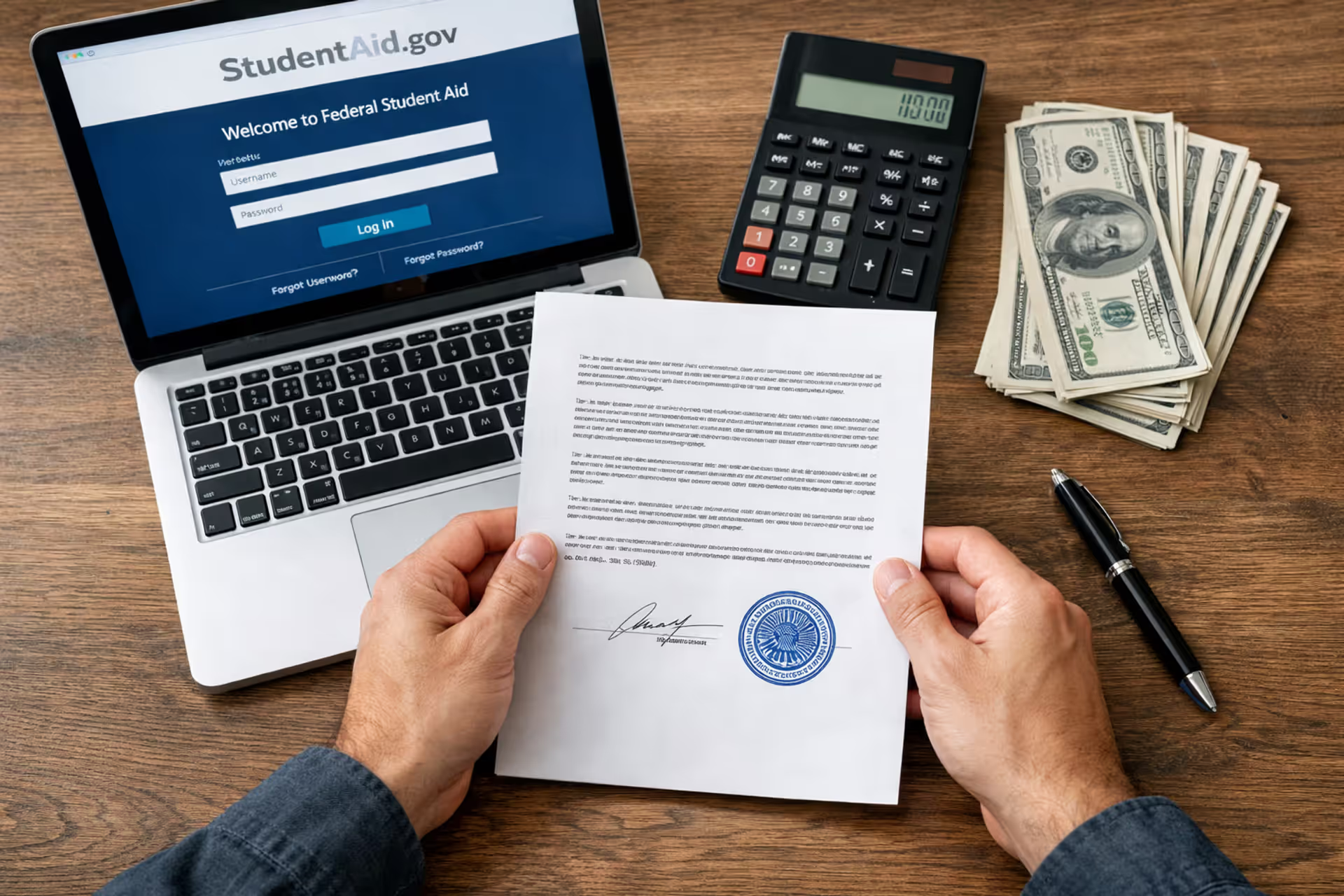
Overhead view of a person holding an official loan document at a desk with a laptop, calculator, and dollar bills representing student loan rehabilitation process
Student Loan Rehabilitation Guide for Defaulted Loans

When federal student loans hit default status, borrowers face immediate problems: paychecks shrink from wage garnishment, tax refunds vanish, credit scores plummet, and the full loan balance becomes due. About 7 million Americans currently deal with defaulted federal student loans. Student loan rehabilitation creates a specific, government-backed method to escape default—though it comes with strict rules and works only once in your lifetime per loan.
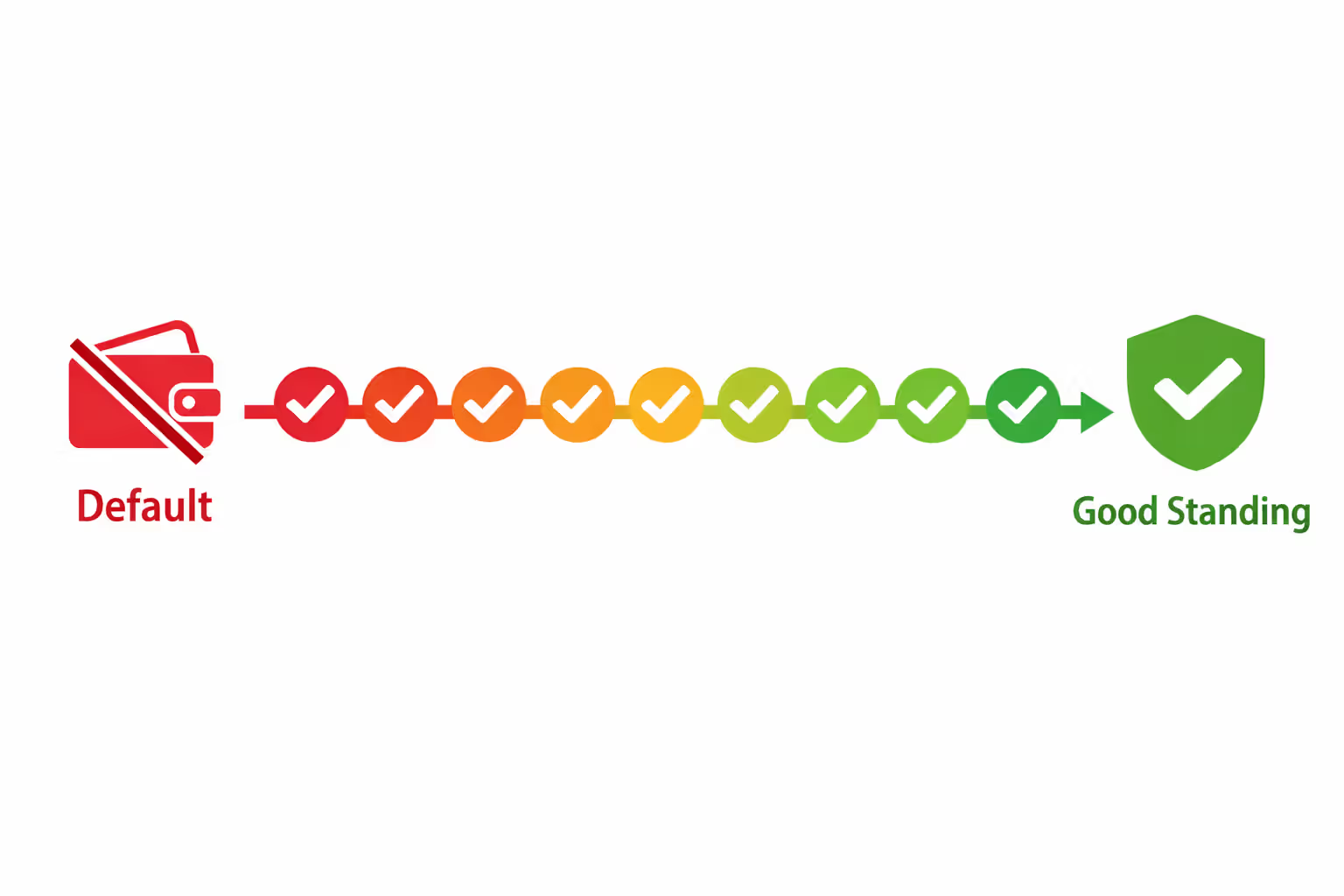
This isn't debt forgiveness. It's not a settlement where you pay less than you owe. Rehabilitation is a nine-month process that, when completed correctly, erases the default mark from your credit file and restores your loan to normal status. Miss the requirements by even one payment? You start over from month one.
What Is Student Loan Rehabilitation
The Department of Education created rehabilitation as a one-shot deal for borrowers whose federal loans have defaulted. You'll work with either your loan servicer or the collection agency now handling your account—not with the Department of Education directly.
This program covers only federal student loans sitting in default. Default happens after you've skipped payments for 270 days on most federal loan types. Why does this program exist? The government found that keeping borrowers stuck in permanent default hurts everyone. Borrowers can't recover financially, and taxpayers end up covering more losses. Offering an exit ramp gets people paying again instead of hiding from collectors for decades.
Complete rehabilitation successfully, and the default mark disappears from your credit report. Your loan goes back to normal repayment. Wage garnishments end. You can access deferment, forbearance, and income-driven plans again. But here's what stays: every late payment that happened before default remains on your credit report for seven years from when you first missed payments.
Author: Evan Thornton;
Source: sonicmusic.net
Your balance doesn't shrink through rehabilitation. Actually, it grows. Interest keeps piling up during the nine months you're rehabilitating. Collection agencies can tack on costs up to 16% of what you owe. So if you started with $30,000 in loans, you might finish rehabilitation owing $34,800. What you're buying is the removal of default status—which matters tremendously for your credit and future borrowing ability.
How Student Loan Rehabilitation Works
Three pieces make up the rehabilitation puzzle: the payment schedule, how your monthly amount gets calculated, and what changes after you finish.
The 9-Month Payment Process
You need nine monthly payments within a 10-month window. Each payment must arrive within 10 days of its due date. That structure gives you one month where a payment can run slightly late without killing your progress. These nine payments don't have to fall in consecutive calendar months, but each one must happen within 20 days of the previous payment.
Every payment must be voluntary—meaning you choose to send it. Payments grabbed through wage garnishment don't count. Tax refund offsets don't count. If the government is already taking money from you through collections, those seizures won't satisfy your rehabilitation requirement. Currently getting garnished? You'll need to contact your loan holder, stop the garnishment, and set up rehabilitation payments instead.
Here's where borrowers crash: miss one payment deadline, and your progress resets to zero. Many people think they're just one payment behind. Wrong. You're back to needing nine payments again. If you made six successful payments, missed the seventh, then made two more—you've only completed two qualifying payments, not eight.
Payment Calculation Method
Your rehabilitation payment equals 15% of your discretionary income, split across 12 months. Discretionary income means how much your adjusted gross income exceeds 150% of the federal poverty guideline for your state and family size.
Most borrowers end up paying between $5 and $200 monthly, depending on earnings and household size. Let's say you're single, living in California, earning $38,000 yearly. After calculating 150% of the poverty line for one person ($22,590), your discretionary income is about $15,410. Fifteen percent of that is $2,311, divided by 12 months equals roughly $192 per month.
You'll submit income proof to get your payment set. Recent pay stubs work. Last year's tax return works. If you're unemployed with zero income, you sign a statement confirming that fact. Zero income might qualify you for the minimum $5 monthly payment. Your loan holder recalculates your payment each year if rehabilitation somehow extends past 12 months—though the standard nine payments usually wrap up faster.

Author: Evan Thornton;
Source: sonicmusic.net
What Happens After Completion
Make that ninth qualifying payment, and several things happen at once. Your loan leaves default and transfers from the collection agency back to a regular loan servicer. The default notation gets removed from your credit report—though this removal takes 60 to 90 days to show up across Experian, Equifax, and TransUnion.
You regain eligibility for all federal student aid. Need more loans for school? You can borrow again. Wage garnishments stop. The government can't offset your tax refunds or Social Security payments for this loan anymore. Your loan enters standard 10-year repayment automatically, though you can immediately request an income-driven plan if that standard payment is unaffordable.
Those collection costs added to your balance? They stay. Your loan holder must reduce collection costs to 16% of outstanding principal and interest if they were higher, but they don't forgive them. All interest that built up during default gets capitalized—added to your principal so you're now paying interest on that interest going forward.
Student Loan Rehabilitation Requirements
Rehabilitation has specific eligibility rules and significant limitations that disqualify some borrowers.
You can rehabilitate Direct Loans, FFEL Program loans, and Perkins Loans that the Department of Education holds. Parent PLUS loans qualify. Graduate PLUS loans qualify. Your loan must actually be in default—merely being 120 days late doesn't count because you haven't hit the 270-day default threshold yet.
The biggest restriction: you get one rehabilitation per loan, ever. Used rehabilitation on a loan before? That loan can never be rehabilitated again, even if you default a second time. Even if 20 years pass. One rehabilitation per loan for your entire lifetime. This single-use rule applies to each individual loan, not each default period. After using your one chance, your only options become Direct Consolidation or staying in default.
Loans stuck in active bankruptcy proceedings usually can't enter rehabilitation until the bankruptcy concludes. If a court judgment exists against you for the defaulted loan, some collection agencies require you to sign paperwork agreeing to vacate that judgment before rehabilitation begins.
You don't have to rehabilitate all defaulted loans simultaneously. Three different loans in default with three different collection agencies? You can rehabilitate them separately. But each loan needs its own nine-payment agreement, potentially creating multiple rehabilitation plans with different due dates and payment amounts to track.
Steps to Rehab Student Loans
Rehabilitating defaulted student loans demands active participation and careful record-keeping. Nothing starts automatically—you launch the process.
Find out who holds your defaulted loans. Start with the National Student Loan Data System at studentaid.gov or check recent collection letters. Once you identify the collection agency, call them directly. Tell them explicitly that you want to rehabilitate your loans. Don't wait for them to call you. Collection agencies must offer rehabilitation when asked, but they won't necessarily volunteer it.
Submit your income proof. The agency mails forms requesting income verification and family size information. Pull together recent pay stubs covering 30 days, your latest tax return, or benefit award letters if you receive government assistance. Unemployed with no income? You'll sign a statement declaring this. Missing or incomplete paperwork delays everything and prevents your payment calculation.
Read your rehabilitation agreement carefully. After calculating your payment, you receive a written agreement listing your monthly payment amount, due date, and rehabilitation terms. Verify the payment amount matches your income. Confirm the due date fits your budget cycle. Understand clearly that missed payments erase all your progress.

Author: Evan Thornton;
Source: sonicmusic.net
Establish automatic payments if the option exists. Not mandatory, but automatic bank withdrawals eliminate forgotten payments. Most collection agencies offer auto-pay, and some knock a small percentage off your interest rate as incentive. Paying manually? Set phone or email reminders five days before each due date to account for processing delays.
Make all nine payments on schedule. Each payment must arrive within 10 days of its due date. Save confirmation receipts for every single payment—online confirmations, phone payment reference numbers, check copies. If a payment gets lost or doesn't process correctly, you need proof you submitted it on time.
Report significant income changes immediately. Lost your job? Got a substantial raise? Your household size changed? Contact your loan holder. They can recalculate your payment to match your current financial situation, preventing you from defaulting on the rehabilitation agreement itself.
Get written confirmation when you finish. After payment nine, request written documentation that rehabilitation is complete. Ask which servicer receives your loan next and when your first regular payment becomes due. Borrowers often miss payments during this handoff because they don't know where to send money.
Rehabilitation vs. Consolidation vs. Repayment Plans
Borrowers mix up rehabilitation with other default-escape options. Each path offers different benefits and drawbacks.
| Feature | Rehabilitation | Direct Consolidation | Income-Driven Repayment |
| Timeframe | Minimum 9 months | 1-2 months typically | Available immediately if loans aren't defaulted |
| Credit impact | Erases default notation completely | Default notation stays on credit report | Prevents default if you enroll before hitting 270 days delinquent |
| Eligibility | One-time use only; loans must be in default | Can use multiple times; works even after rehabilitation | Requires good standing loans or active deferment/forbearance |
| Cost | Adds collection costs up to 16%; capitalizes interest | Capitalizes all interest and collection costs | No extra costs; may capitalize interest when entering the plan |
| Pros | Only method that removes default from credit; restores all federal benefits | Quick default exit; stops garnishment fast; no usage limits | Bases payments on current income; offers potential forgiveness after 20-25 years |
| Cons | Single lifetime use per loan; requires 9-month commitment; increases balance | Default remains on credit 7 years; significantly increases total balance | Not accessible once default hits; requires annual income recertification paperwork |
Which option fits your situation? Choose rehabilitation if this is your first default and repairing your credit matters most. Pick consolidation if you already used rehabilitation once on these loans or need to stop garnishment immediately—like next month. Income-driven repayment plans should be your target after rehabilitation completes to prevent future default, but you can't access them while currently in default.
Some borrowers think they can rehabilitate and consolidate the same loan simultaneously. You can't. Pick one path. However, after finishing rehabilitation, you can immediately apply for an income-driven repayment plan to keep future payments affordable.
Impact on Credit Score and Loan Status
Rehabilitation affects your credit in specific ways, with important limitations borrowers should understand upfront.
When rehabilitation finishes, your loan servicer reports the resolved default status to Experian, Equifax, and TransUnion. This reporting removes "defaulted" from your student loan tradeline. But those late payments before default? They stay on your report for seven years from the original delinquency date.
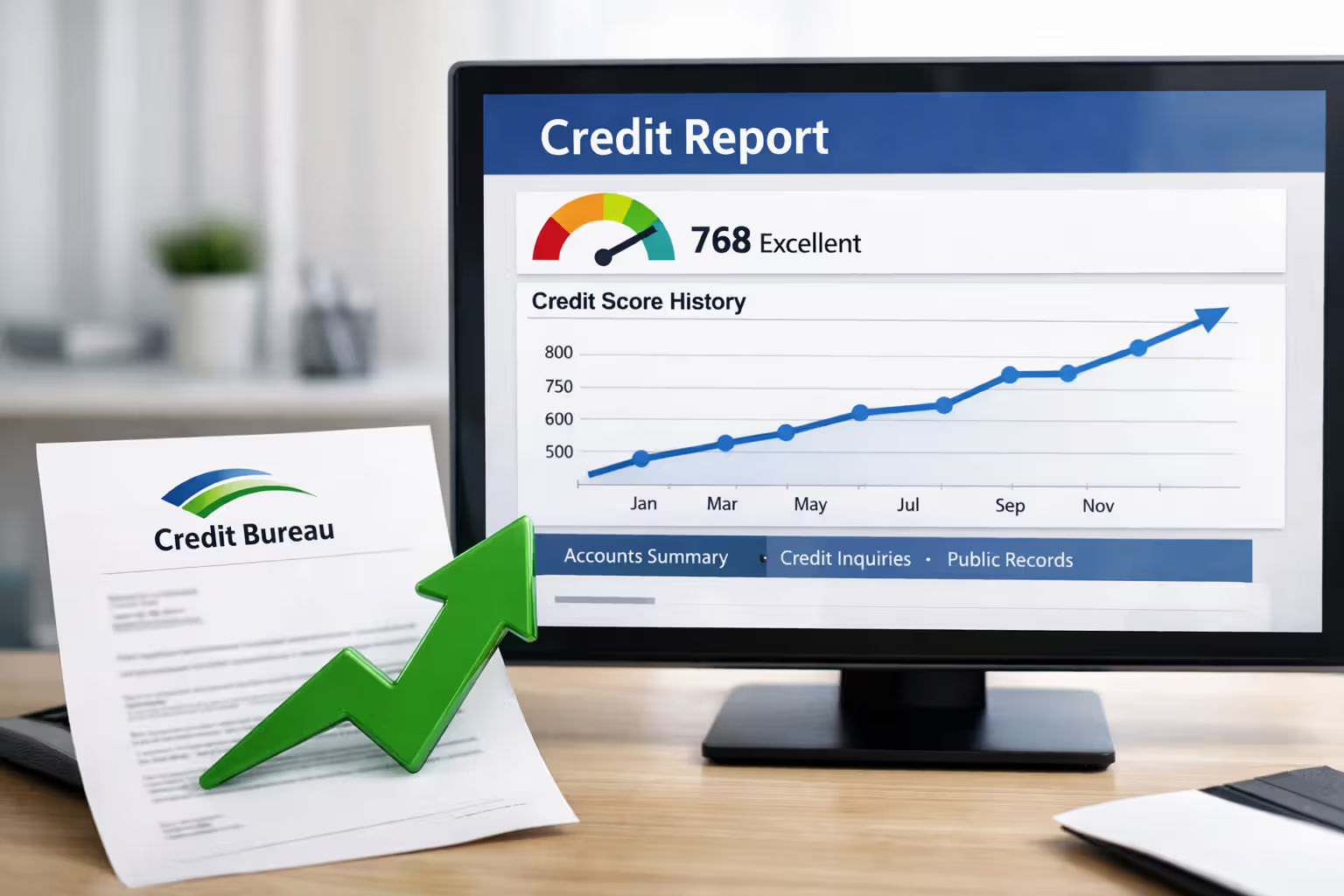
Credit score improvements vary widely. Someone whose only negative mark was student loan defaults might see scores jump 50-100 points. Multiple negative items on your report? Expect modest improvement because the default was just one problem among several. Rehabilitation helps most with loan applications that automatically reject anyone carrying defaulted student loans—you'll qualify again for mortgages, auto loans, and credit products that disqualify defaulted borrowers regardless of other factors.
Author: Evan Thornton;
Source: sonicmusic.net
Collection accounts tied to the defaulted loan get deleted from your credit report after successful rehabilitation. If your loan transferred to a collection agency and that agency reported the debt as a separate tradeline, that entry vanishes. This matters significantly because collection accounts tank credit scores harder than almost anything except bankruptcy.
Interest capitalization increases what you'll repay long-term. Say you started with $25,000 in principal before default, and $3,500 in unpaid interest accumulated. That $3,500 becomes part of your new principal balance after rehabilitation. You now owe $28,500 in principal, and future interest accrues on this inflated amount. Add collection costs up to 16%, and your balance might grow by 20-25% through rehabilitation.
Default removal isn't instant. Allow 60 to 90 days after your ninth payment before all three credit bureaus show the change. During this transition, you might pull one credit report showing the default removed while another still lists it. Check reports from all three bureaus three months after completion to verify accuracy and dispute any lingering errors.
Common Mistakes When Rehabilitating Defaulted Student Loans
Borrowers repeatedly make the same preventable mistakes that derail their rehabilitation. Knowing these pitfalls improves your success odds.
Misunderstanding the 10-day payment window. The requirement says payments must arrive "within 10 days of the due date." Some borrowers read this as 10 business days or 10 days after the due date. Actually, it means within 10 calendar days of the assigned due date—payments can be up to 10 days late and still qualify. A payment due March 15th must be received by March 25th. Relying on this grace period is risky, though, because processing delays can push you past the cutoff.
Ignoring income changes during rehabilitation. You lose your job three months into rehabilitation. That $150 monthly payment becomes impossible. Many borrowers simply stop paying instead of contacting their loan holder for recalculation. Your payment can drop to $5 if your income falls to zero, but only if you submit updated documentation. Staying silent leads to missed payments and restarted timelines.
Believing rehabilitation reduces or erases the debt. This misconception creates sticker shock when borrowers finish rehabilitation and see their new balance. Rehabilitation is not forgiveness. It's not settlement. It's not debt reduction. Your balance increases through capitalized interest and collection costs. The benefit is restored good standing and credit repair, not a smaller debt.
Attempting rehabilitation on loans already rehabilitated once. Borrowers who previously rehabilitated a loan, then defaulted again, sometimes try for a second rehabilitation. They discover they're ineligible. These borrowers should have chosen Direct Consolidation, which has no usage limits. Before starting rehabilitation, confirm whether you've already used it on these specific loans.
Skipping income-driven enrollment after completing rehabilitation. Rehabilitation puts your loan into standard 10-year repayment automatically. That payment amount is often identical to what caused the original default. Borrowers who complete rehabilitation without immediately applying for income-driven repayment frequently re-default within 12 months. The student loan rehabilitation guide published by the Department of Education specifically recommends switching to income-driven repayment if standard payments exceed 10% of your gross income.
The student loan rehabilitation guide published by the Department of Education specifically recommends switching to income-driven repayment if standard payments exceed 10% of your gross income
— U.S. Department of Education
Thinking garnished payments count toward rehabilitation. If wage garnishment continues during early rehabilitation, those seized payments don't count toward your nine required payments. Some borrowers figure they can let garnishment continue and it'll satisfy the requirement automatically. Wrong. You must make voluntary payments—garnishment must stop and you must actively submit payments to receive credit toward rehabilitation.
Frequently Asked Questions About Student Loan Rehabilitation
Student loan rehabilitation creates a legitimate exit from default, but success requires understanding both the process and its limitations. The program's primary value lies in credit repair—removing the default notation opens doors to mortgages, employment opportunities requiring credit checks, and financial products that automatically reject applicants with defaulted student loans. Rehabilitation increases your loan balance through collection costs and interest capitalization, though, and works only once per loan.
The nine-month commitment requires consistency and proactive communication. Borrowers who treat rehabilitation as autopilot often fail. Those who actively manage payments, update income documentation when circumstances shift, and plan post-rehabilitation repayment strategy succeed at higher rates.
After rehabilitation, preventing re-default becomes your top priority. Enroll in an income-driven repayment plan immediately if standard payments would strain your budget. Arrange automatic payments to remove the risk of forgotten due dates. Monitor your loan servicer assignment during the transition period so you know exactly where to send payments.
Rehabilitation isn't ideal for everyone. Borrowers who previously used the program must pursue Direct Consolidation instead. Those needing to exit default immediately to stop garnishment might find consolidation's faster timeline more suitable. But for first-time defaulters who prioritize credit repair and can commit to nine months of consistent payments, rehabilitation remains the most effective tool for restoring federal student loans to good standing.
Related Stories

Read more

Read more




The content on this website is provided for general informational and educational purposes only. It is intended to offer guidance on student loan topics, including federal and private student loans, interest rates, repayment plans, loan forgiveness programs, deferment, forbearance, consolidation, and related financial matters. The information presented should not be considered legal, financial, tax, or professional lending advice.
All information, articles, explanations, and program discussions published on this website are provided for general informational purposes. Student loan programs, repayment options, forgiveness eligibility, and financial assistance policies may change over time and may vary depending on government regulations, loan servicers, lenders, borrower eligibility, income level, school status, and individual loan terms. Details such as interest rates, repayment schedules, eligibility for forgiveness programs, and application requirements may differ between federal and private lenders and may change without notice.
While we strive to keep the information accurate and up to date, this website makes no guarantees regarding the completeness, reliability, or accuracy of the content. The website and its authors are not responsible for any errors, omissions, or actions taken based on the information provided here.
Use of this website does not create a financial advisor–client, legal, or professional relationship. Visitors are encouraged to review the official documentation provided by the U.S. Department of Education, student loan servicers, and private lenders, and to consult with a qualified financial advisor, loan specialist, or legal professional before making decisions regarding student loans, repayment strategies, or financial obligations.