

Young graduate in cap and gown standing at a crossroads holding a diploma and a bill envelope with a city skyline in the background
How Student Loan Repayment Works?

Content
Content
So you've finished school—congratulations! Now comes the part nobody talks about during orientation: actually paying back those student loans. Here's the thing: you've got options, and the choices you make in these first few months can save you thousands of dollars (or cost you just as much if you're not careful).
Federal loans from the Department of Education and private loans from banks play by completely different rules. Your repayment timeline, available plans, and safety nets when money gets tight all depend on which type you borrowed. Getting a handle on this now, before your first bill shows up, means you won't be scrambling later when autopay drains your checking account unexpectedly.
Let's break down exactly how this works—from day one to your final payment—so you can make smart decisions instead of expensive mistakes.
When Does Student Loan Repayment Start?
Federal student loans typically give you six months after graduation before bills start arriving. Drop below half-time enrollment or leave school altogether? That six-month countdown begins immediately. This breathing room—called your grace period—exists so you can land a job and set up your budget before payments hit.
Direct Subsidized Loans and Direct Unsubsidized Loans follow this standard six-month waiting period. The older Federal Stafford Loans (both subsidized and unsubsidized versions) work the same way.
PLUS Loans tell a different story. If you're a graduate student who borrowed Grad PLUS Loans, or a parent who took out Parent PLUS Loans, repayment technically starts the moment your school receives the final loan disbursement. The workaround? Request a deferment while you're enrolled at least half-time, plus another six months after. Just remember: interest keeps piling up during this time unless you chip away at it.

Author: Olivia Harrington;
Source: sonicmusic.net
Private lenders write their own rules. Some match the federal six-month grace period. Others want payments while you're still in school. A few demand immediate repayment the second money hits your account. You'll find these details in your promissory note—that document you probably signed without reading during financial aid season. Dig it up now, or call your lender directly. Assuming you've got a grace period when you don't? That's how people trash their credit scores before they even buy their first car.
Watch out for these repayment triggers that catch borrowers off guard:
- Dropping from full-time to part-time status midway through a semester
- Withdrawing completely from all classes
- Finishing your degree earlier than planned
- Losing your deferment eligibility for any reason
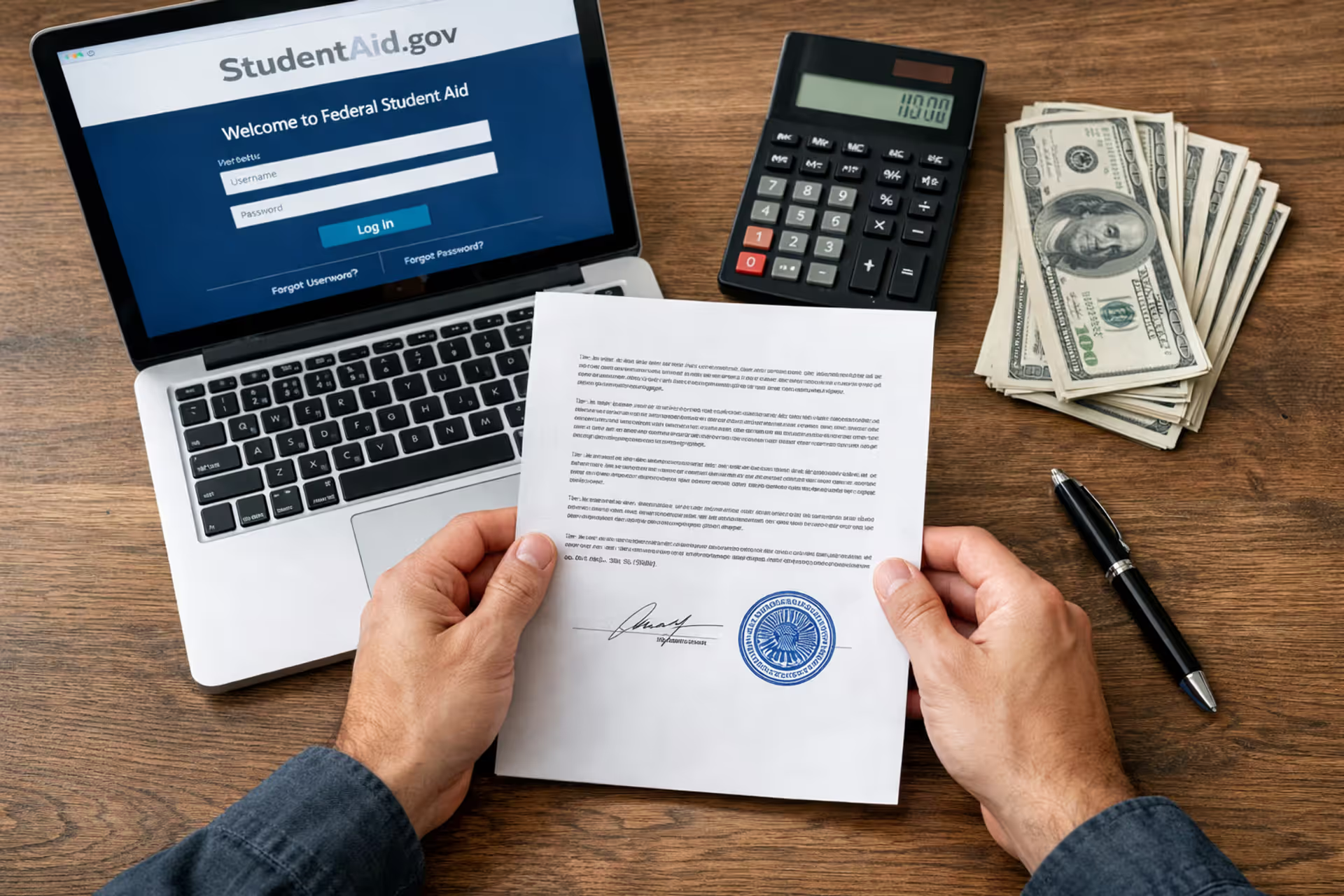
Your loan servicer (the company that sends your bills) should notify you before repayment kicks in. But should isn't the same as will. Take responsibility yourself. Head to StudentAid.gov, log in, and check your exact repayment start dates for each loan. You'll also see which servicer handles your account and their contact information.
Federal Student Loan Repayment Plans Explained
The Department of Education doesn't just hand you one repayment option and call it a day. You've got choices—ten years, twenty-five years, fixed payments, graduated payments, income-based calculations. Your job is figuring out which one matches your current salary and long-term goals.
The Standard Repayment Plan splits your balance into equal monthly chunks over a decade. You'll pay less interest overall because you're knocking out principal quickly. Payments stay predictable, which makes budgeting simple. The downside? Those monthly bills can feel crushing if you're earning $40,000 in your first job but owe $60,000 in loans.
The Graduated Repayment Plan starts you off easy with lower payments that climb every two years, still wrapping up in 10 years (or up to 30 years if you've consolidated). It assumes you'll earn more as your career progresses—a reasonable bet for some fields, wishful thinking for others. You'll shell out more in interest because those early payments barely dent the principal, leaving more balance to accumulate interest charges.
The Extended Repayment Plan stretches everything across 25 years, shrinking your monthly obligation but ballooning your total interest costs. You'll need at least $30,000 in Direct Loans or FFEL Program loans to qualify. This makes sense when you need immediate cash flow relief but don't meet the requirements for income-driven plans.
Income-Driven Repayment (IDR) Plans calculate what you owe based on your discretionary income and household size. Whatever's left after 20 or 25 years gets forgiven. Four variations exist as of 2026:
Income-Based Repayment (IBR) takes 10% of your discretionary income if you borrowed after July 1, 2014, or 15% if you borrowed earlier. You'll recalculate annually based on updated income information. Forgiveness arrives after 20 or 25 years, depending on when you first borrowed.
Pay As You Earn (PAYE) also charges 10% of discretionary income but caps your payment at what you'd pay under the Standard Plan—even if your income jumps. You must demonstrate partial financial hardship to qualify. Remaining balance disappears after 20 years.
Saving on a Valuable Education (SAVE) is the newest option, replacing REPAYE in 2024. Undergraduate loans cost 5% of discretionary income; graduate loans run 10%. If you've got both, you'll pay a weighted average. The plan significantly raises the income threshold before payments kick in. You'll reach forgiveness in 20 or 25 years depending on your loan types. Best part? Unpaid interest doesn't get added to your principal balance.
Income-Contingent Repayment (ICR) charges whichever is less: 20% of discretionary income, or what you'd pay on a 12-year fixed plan adjusted for your income. Forgiveness comes after 25 years. This plan matters most for Parent PLUS borrowers who consolidate, since it's often their only income-driven option.
IDR plans require annual recertification. Miss that deadline and your payment could revert to what you'd pay under the Standard Plan—potentially jumping from $150 to $600 overnight.
Here's how federal repayment plans stack up:
| Plan | How Monthly Payments Work | Timeline | Who Qualifies | Forgiveness Available |
| Standard | Same amount every month | 10 years | Everyone with federal loans | No |
| Graduated | Low at first, increases every 2 years | 10 years (30 for consolidated loans) | Everyone with federal loans | No |
| Extended | Smaller fixed or graduated amounts | 25 years | Borrowers owing $30,000+ | No |
| IBR | 10-15% of discretionary income | 20-25 years | Most federal loans; must show financial hardship | Yes |
| PAYE | 10% of discretionary income | 20 years | Direct Loan borrowers with financial hardship; first borrowed after Oct 2007 | Yes |
| SAVE | 5-10% of discretionary income | 20-25 years | Most federal loans | Yes |
| ICR | 20% of discretionary income or 12-year adjusted amount | 25 years | Direct Loans (Parent PLUS if consolidated) | Yes |
You're trading off between low monthly payments and total cost. Income-driven plans cut your monthly bills and eventually forgive remaining balances, but you'll pay interest for decades. However, if you work in public service, pairing an IDR plan with Public Service Loan Forgiveness (PSLF) could erase your entire balance after just 120 qualifying payments—way better than waiting 20 years.
How to Start Your Student Loan Repayment
Don't wait for bills to show up in your mailbox (do they even send paper bills anymore?). Taking action now prevents missed deadlines and helps you lock in the best repayment option.
Find out who's servicing your loans. Between 2020 and 2025, federal loan servicers changed hands constantly due to contract shuffling. Log into StudentAid.gov and click the "My Aid" section. You'll see which company handles your loans, plus their contact details and website. Private loan borrowers: check your original paperwork or pull your credit report if you've lost track.
Create your online account immediately. Head to your servicer's website and set up login credentials. This dashboard shows your exact balance, current interest rate, which repayment plan you're on, and when payments are due. Turn on email and text alerts for upcoming payments and account changes.
Pick your repayment plan now. Your servicer automatically drops you into the Standard Plan unless you actively choose something else. For federal loans, submit your repayment plan request through your servicer's website or mail in the appropriate form. Income-driven plans need tax returns or pay stubs uploaded as proof of income. Give yourself 2-4 weeks for processing before that first payment hits.
Turn on autopay and grab the discount. Most federal servicers knock 0.25% off your interest rate when you set up automatic bank withdrawals. Private lenders sometimes offer up to 0.50%. Beyond the savings, autopay eliminates the risk of forgetting a payment and wrecking your credit.
Confirm your first payment processes correctly. Your servicer mails a billing statement at least three weeks before your due date. Double-check the amount, the date it's due, and verify your bank information looks right. If you enabled autopay, check your bank account after the due date to confirm the withdrawal went through.
Still can't swing the payments after selecting a plan? Call your servicer before the due date passes. Reaching out early keeps options on the table that slam shut once you're already delinquent.

Author: Olivia Harrington;
Source: sonicmusic.net
Private Student Loan Repayment Process
Private student loans don't follow federal guidelines. Every bank, credit union, and online lender sets its own policies for interest rates, repayment schedules, and hardship assistance.
When you originally borrowed, you probably selected a 5-, 10-, 15-, or 20-year repayment term. Unlike federal loans where you can switch plans freely, private loans lock you in unless you refinance with a different lender. A few lenders let you pay interest-only during school or offer brief grace periods, but plenty expect full principal-and-interest payments from day one.
Private loan interest rates come in two flavors: fixed or variable. Fixed rates never change, giving you payment certainty but potentially higher initial rates. Variable rates fluctuate with market indexes like SOFR (Secured Overnight Financing Rate), meaning your monthly bill could climb by $50 next quarter or drop by $30—you won't know until it happens.
Private loans lack the safety features built into federal ones. No income-driven repayment. No loan forgiveness programs. Limited deferment options. If money gets tight, your lender might grant temporary forbearance—usually capped at 12 months total across the life of your loan—but interest keeps accumulating. Some lenders consider short-term payment reductions or custom graduated schedules if you ask, but they're not advertising these options publicly.
Refinancing means taking out a brand-new private loan that pays off your existing loans, ideally at a lower interest rate or better term. Borrowers with credit scores above 700 and stable incomes often qualify for rates several percentage points lower than their original loans. This shrinks monthly payments or total interest paid. Critical warning: refinancing federal loans into private loans permanently erases federal protections like income-driven repayment, PSLF eligibility, and generous forbearance options. Only do this if you're absolutely certain you won't need those lifelines down the road.
When dealing with private loans, communicate early and often with your lender. They've got more flexibility than federal servicers in how they handle payment problems. Explaining your situation before you're 90 days behind opens doors that stay locked if you go silent.
Common Student Loan Repayment Mistakes to Avoid
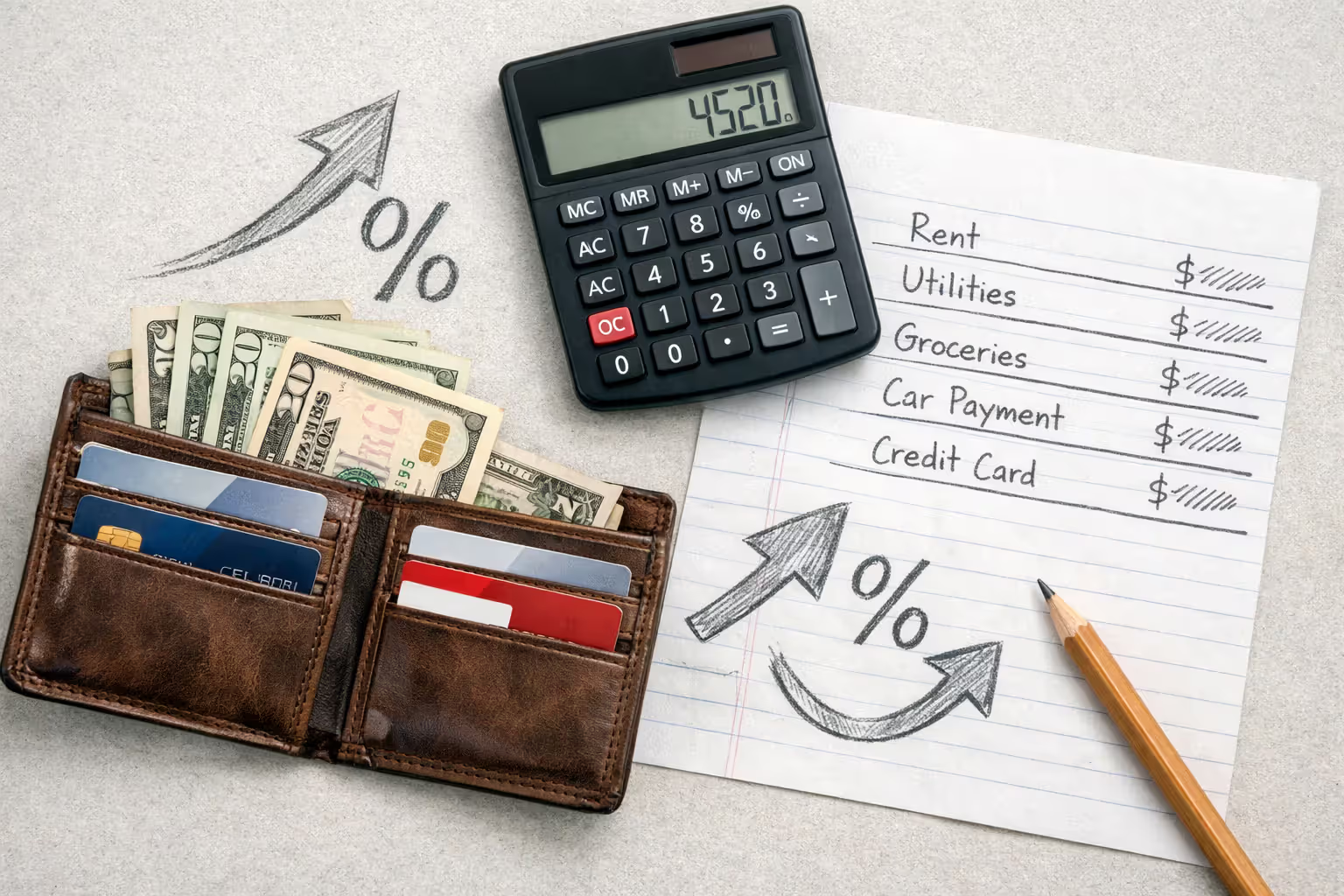
Little mistakes during repayment snowball into thousands of extra dollars paid or credit damage that haunts you for years. Here's what trips up first-time borrowers most often.
Losing track of when the grace period ends. You know you've got six months, but have you actually circled the date on your calendar? Borrowers forget, miss that first payment, and immediately fall into delinquency. Credit bureaus start tracking the late payment after 90 days. Set three reminders: 60 days out, 30 days out, and one week before your first payment.
Author: Olivia Harrington;
Source: sonicmusic.net
Accepting the Standard Plan without exploring alternatives. The Standard Plan works great if you're earning decent money and carrying manageable debt. But thousands of borrowers struggle with payments that eat up 20% of their take-home pay without realizing they qualify for income-driven plans charging 5-10%. Even if you plan to pay extra every month, enrolling in an IDR plan as your base gives you a cushion if your income tanks.
Letting your contact information go stale. Move to a new apartment? Change your phone number? Your loan servicer can't reach you. Critical notices about due dates, servicer transfers, or mandatory recertification vanish into the void. Update your information the same day you change it—both at StudentAid.gov and directly with your servicer.
Burning through forbearance and deferment too quickly. Pausing payments feels like a lifesaver when you're broke. But interest usually keeps running (except subsidized loans during deferment). That unpaid interest gets tacked onto your principal when forbearance ends—a process called capitalization—increasing your total balance. Income-driven plans offering $0 monthly payments based on low income beat forbearance because those $0 payment months still count toward PSLF and eventual forgiveness.
Ignoring forgiveness programs you qualify for. Public Service Loan Forgiveness wipes out remaining balances after 120 qualifying payments while working full-time for government agencies or 501(c)(3) nonprofits. Teacher Loan Forgiveness provides up to $17,500 for educators who complete five consecutive years in low-income schools. Borrowers lose out because they don't submit annual employment certification forms or assume they're ineligible without actually checking requirements.
Sending extra payments without clear instructions. Pay $100 more than your minimum and your servicer might advance your next due date by a month instead of reducing principal. This leaves more principal sitting there accumulating interest. When making extra payments, specifically tell your servicer (in writing or through their online system) to apply overpayments to principal immediately while keeping your next due date unchanged.
What to Do If You Can't Make Payments
Job losses happen. Medical emergencies drain savings accounts. Economic downturns slash incomes. When you genuinely can't afford your student loan payment, acting fast protects your credit and keeps loans in good standing.
Deferment temporarily stops payments, and here's the key difference: subsidized loans don't accumulate interest during approved deferment periods. Unsubsidized loans and private loans keep racking up interest charges. Common deferment categories include unemployment (up to three years), returning to school at least half-time, active military duty, or undergoing cancer treatment. Economic hardship deferments cover situations where your income falls below 150% of the poverty guideline for your state and family size.
Forbearance also pauses or reduces payments, but interest accrues on everything—subsidized, unsubsidized, all of it. General forbearance is discretionary, meaning your servicer can approve or deny your request, typically for 12 months at a time up to three years total. Mandatory forbearance gets approved automatically if you meet specific criteria: serving in a medical or dental residency, working in AmeriCorps, or having monthly student loan payments exceeding 20% of your gross monthly income.
Income-driven repayment plans beat both options for long-term affordability problems. Your payment could calculate to $0 if your income is low enough, but those $0 months still move you toward 20- or 25-year forgiveness and count for PSLF if you're working in public service. You'll recertify income every year to keep that $0 payment.

Author: Olivia Harrington;
Source: sonicmusic.net
Default consequences get ugly fast. Federal loans default after 270 days without payment (about nine months). Private loans default sooner based on individual lender policies—often 90 to 120 days. Defaulted loans crater your credit score, making it nearly impossible to rent apartments, finance cars, or get approved for mortgages at reasonable rates. The federal government can garnish up to 15% of your disposable wages, intercept tax refunds, and offset Social Security benefits—all without taking you to court.
Loan rehabilitation rescues defaulted federal loans. Make nine affordable monthly payments within ten months (amounts based on your income), and your loan exits default status. The default notation gets scrubbed from your credit report, though the delinquencies before default stick around for seven years. You get one shot at rehabilitation per loan—blow it and you're out of options.
Consolidation offers another path out of default for federal loans. A Direct Consolidation Loan pays off your defaulted loans and starts fresh. To qualify, you'll either make three consecutive on-time monthly payments on the defaulted loan or agree to repay the new consolidation loan under an income-driven plan. Unlike rehabilitation, consolidation leaves the default on your credit history.
Call your servicer the instant you realize a payment won't happen. Silence guarantees disaster. Most servicers staff entire departments focused on financial hardship solutions, but they can't help if you ghost them.
The biggest mistake borrowers make is going silent when they hit financial trouble. Loan servicers have tools to help, but they can't assist if you don't reach out. A phone call before you miss a payment opens doors that close after you default
— Mark Kantrowitz
Frequently Asked Questions About Repaying Student Loans
Student loan repayment stretches across years—sometimes decades—but understanding how the system works from day one puts you in the driver's seat. You'll know when bills arrive, which repayment plan actually fits your budget, and what moves to make when money gets tight. That knowledge prevents expensive mistakes and keeps both your loans and credit in good standing.
Federal loans provide flexibility: multiple repayment plans, income-driven options that adjust to your earnings, and legitimate forgiveness programs. Private loans offer fewer safety nets, demanding careful budgeting and proactive communication with lenders. Whichever type you're carrying, staying engaged matters more than anything else—tracking deadlines, recertifying income annually, updating contact information whenever it changes, and reaching out during hardship before problems spiral.
Your early repayment decisions ripple into your financial future for years. Choose a plan that balances affordable monthly payments against your bigger goals, whether that means aggressively paying down loans to minimize interest or pursuing forgiveness through public service work. Student loans financed your education; managing repayment wisely ensures that investment pays off without wrecking your financial health along the way
Related Stories

Read more

Read more



The content on this website is provided for general informational and educational purposes only. It is intended to offer guidance on student loan topics, including federal and private student loans, interest rates, repayment plans, loan forgiveness programs, deferment, forbearance, consolidation, and related financial matters. The information presented should not be considered legal, financial, tax, or professional lending advice.
All information, articles, explanations, and program discussions published on this website are provided for general informational purposes. Student loan programs, repayment options, forgiveness eligibility, and financial assistance policies may change over time and may vary depending on government regulations, loan servicers, lenders, borrower eligibility, income level, school status, and individual loan terms. Details such as interest rates, repayment schedules, eligibility for forgiveness programs, and application requirements may differ between federal and private lenders and may change without notice.
While we strive to keep the information accurate and up to date, this website makes no guarantees regarding the completeness, reliability, or accuracy of the content. The website and its authors are not responsible for any errors, omissions, or actions taken based on the information provided here.
Use of this website does not create a financial advisor–client, legal, or professional relationship. Visitors are encouraged to review the official documentation provided by the U.S. Department of Education, student loan servicers, and private lenders, and to consult with a qualified financial advisor, loan specialist, or legal professional before making decisions regarding student loans, repayment strategies, or financial obligations.