

Judges gavel on legal documents next to graduation cap and dollar bills in a courtroom setting
Can Private Student Loans Be Discharged in Bankruptcy?

Content
Content
Drowning in private student loan debt? You're not alone—over 14 million Americans carry private education loans, and many are desperate for relief. Here's what most borrowers don't realize: bankruptcy can wipe out these loans. The catch? You'll face one of the toughest legal challenges in consumer bankruptcy law.
Think of it this way. Credit card companies pursue you for unpaid bills, medical providers send collection notices, and what happens when you file bankruptcy? Those debts vanish. Student loans? They stick around unless you can prove something courts call "undue hardship"—and judges don't hand out that finding easily.
This guide breaks down exactly what you're up against: the legal tests courts use, the evidence you'll need, and realistic odds of success. Whether you're considering bankruptcy or just exploring options, understanding these rules helps you make smarter decisions about your financial future.
Understanding Private Student Loan Bankruptcy Discharge
When bankruptcy discharges a debt, here's what happens: you're legally off the hook. Collectors must stop calling. Lawsuits get dismissed. Wage garnishments end. For most debts—think credit cards, personal loans, even some tax obligations—this relief comes automatically once your bankruptcy case wraps up.
Student loans work differently. Congress carved out special protection for educational debt back in the 1970s, and private lenders successfully lobbied to receive the same treatment as federal loans in 2005. Now Section 523(a)(8) of the Bankruptcy Code treats both identically: neither type disappears without proving undue hardship.
What does "undue hardship" actually mean? The law doesn't spell it out, which creates problems. Courts developed their own definitions, and they've historically set the bar incredibly high. We're not talking about regular financial difficulty—plenty of people struggle with debt. The hardship must be severe, long-lasting, and essentially unavoidable despite your best efforts.
You can pursue discharge through either Chapter 7 (liquidation) or Chapter 13 (repayment plan) bankruptcy. The chapter you choose doesn't matter nearly as much as building a rock-solid undue hardship case. That means gathering evidence, filing a separate lawsuit within your bankruptcy, and often spending months or years battling your lenders in court.
Here's a reality check: most borrowers who file bankruptcy don't even attempt to discharge their student loans. They assume it's impossible, or their lawyers discourage trying. But courts are showing new openness to legitimate hardship claims, especially post-2022. Success rates remain low—somewhere between 15-40% depending on your circuit and circumstances—but for borrowers facing truly hopeless situations, those odds beat continuing to drown in unpayable debt.

Author: Marcus Bennett;
Source: sonicmusic.net
The Undue Hardship Test Explained
Federal law doesn't explain what "undue hardship" means. That vague phrase launched decades of court battles, resulting in different standards depending on where you live. Two main approaches emerged.
Brunner Test Requirements
Most federal courts follow a standard created by the Second Circuit in Brunner v. New York State Higher Education Services Corp. (1987). Judge Brunner probably didn't expect his name would haunt student borrowers for the next 35+ years, but here we are.
This test creates three hurdles you must clear:
First Hurdle: You Can't Maintain Basic Living Standards – Can you cover rent, groceries, utilities, and transportation while making loan payments? If the answer is no—not just "it would be tight" but genuinely impossible—you've cleared hurdle one. Courts examine your income against necessary expenses. A single mother earning $32,000 while raising three kids will satisfy this element. A healthy 28-year-old with a computer science degree who chooses to work 20 hours weekly at a coffee shop won't.
Real example: In a 2019 Kansas case, the court granted discharge to a borrower earning $1,200 monthly from disability benefits with $84,000 in student debt. That math simply didn't work. Contrast that with a 2018 case where a borrower earned $45,000 but claimed he couldn't live on less than $4,200 monthly (including a $900 car payment). The court wasn't buying it.
Second Hurdle: Your Situation Won't Improve – This might be the toughest prong. Courts want proof that your financial struggles will continue throughout most of the repayment period—often 10, 20, or 30 years. Temporary setbacks don't count. You lost your job? That's rough, but you'll probably find another one. You're dealing with depression? Courts view mental health issues skeptically unless they're severe and permanent.
What works? Permanent disabilities with medical documentation. Caring for a severely disabled child. Being 62 years old with no retirement savings and limited work history. Chronic conditions requiring expensive ongoing treatment that prevents full-time work. Courts need evidence—not just your testimony—that circumstances won't meaningfully change.
Third Hurdle: You Genuinely Tried to Pay – Judges get suspicious when borrowers never made a single payment. They want to see good faith: payment history (even small amounts), communication with lenders, applications for hardship programs, efforts to increase income. Filing for discharge six months after graduation raises red flags. Filing after ten years of struggle while making whatever payments you could manage tells a different story.
All three prongs must be satisfied. Passing two isn't enough. This rigid structure explains why so many discharge attempts fail under Brunner.
Totality of Circumstances Test
Borrowers in the Eighth Circuit (Arkansas, Iowa, Minnesota, Missouri, Nebraska, North Dakota, South Dakota) get a slightly better deal. Instead of three separate boxes to check, courts examine your entire situation holistically, weighing factors like:
- What you earn now versus what you might earn in the future
- Education level and whether you're using your degree
- Physical and mental health limitations
- Age and how many working years you have left
- Dependents who rely on you financially
- Whether you've made genuine attempts to repay
- Assets and ability to fund repayment from other sources
This approach offers more flexibility. Maybe your circumstances don't perfectly fit one Brunner prong, but the overall picture screams "this person will never repay these loans." A judge can grant discharge based on the totality rather than getting hung up on technicalities.
That said, don't assume Eighth Circuit judges just hand out discharges. They still maintain high standards—the totality test just allows for more nuanced analysis of your specific situation.
Most borrowers live in Brunner circuits. The First, Second, Third, Fourth, Fifth, Sixth, Seventh, Tenth, and Eleventh Circuits all use this test. The Ninth Circuit technically uses Brunner but interprets it more generously. Only the Eighth Circuit explicitly adopted the totality approach. Knowing your circuit's standard is step one in evaluating your chances.
How to File for Student Loan Discharge in Bankruptcy
Discharging student debt isn't part of the standard bankruptcy process. You can't just check a box on your petition. Here's the actual roadmap:
Step One: Choose Your Bankruptcy Chapter and File – Start with either Chapter 7 or Chapter 13. Chapter 7 liquidates assets (most people keep everything due to exemptions) and finishes in four to six months. Chapter 13 sets up a payment plan lasting three to five years. For student loan discharge purposes, Chapter 13 offers one advantage: you can demonstrate good faith by making plan payments before seeking discharge. On the other hand, Chapter 7 resolves faster and costs less if you're not trying to save a house or catch up on secured debts.
Filing fees run $338 for Chapter 7 and $313 for Chapter 13. You'll complete credit counseling, submit detailed financial statements, and list all debts including student loans.
Step Two: File Your Adversary Proceeding Complaint – Here's where most borrowers trip up. Student loans require a separate lawsuit—called an adversary proceeding—within your bankruptcy case. You're essentially suing your lenders, arguing that enforcing the debt creates undue hardship.
This complaint must be filed before your bankruptcy case closes. In Chapter 7, that might mean filing within four months of your initial petition. Missing this deadline means your loans survive bankruptcy completely untouched. Your complaint should detail your financial situation, explain why repayment is impossible, and explicitly request discharge under Section 523(a)(8).
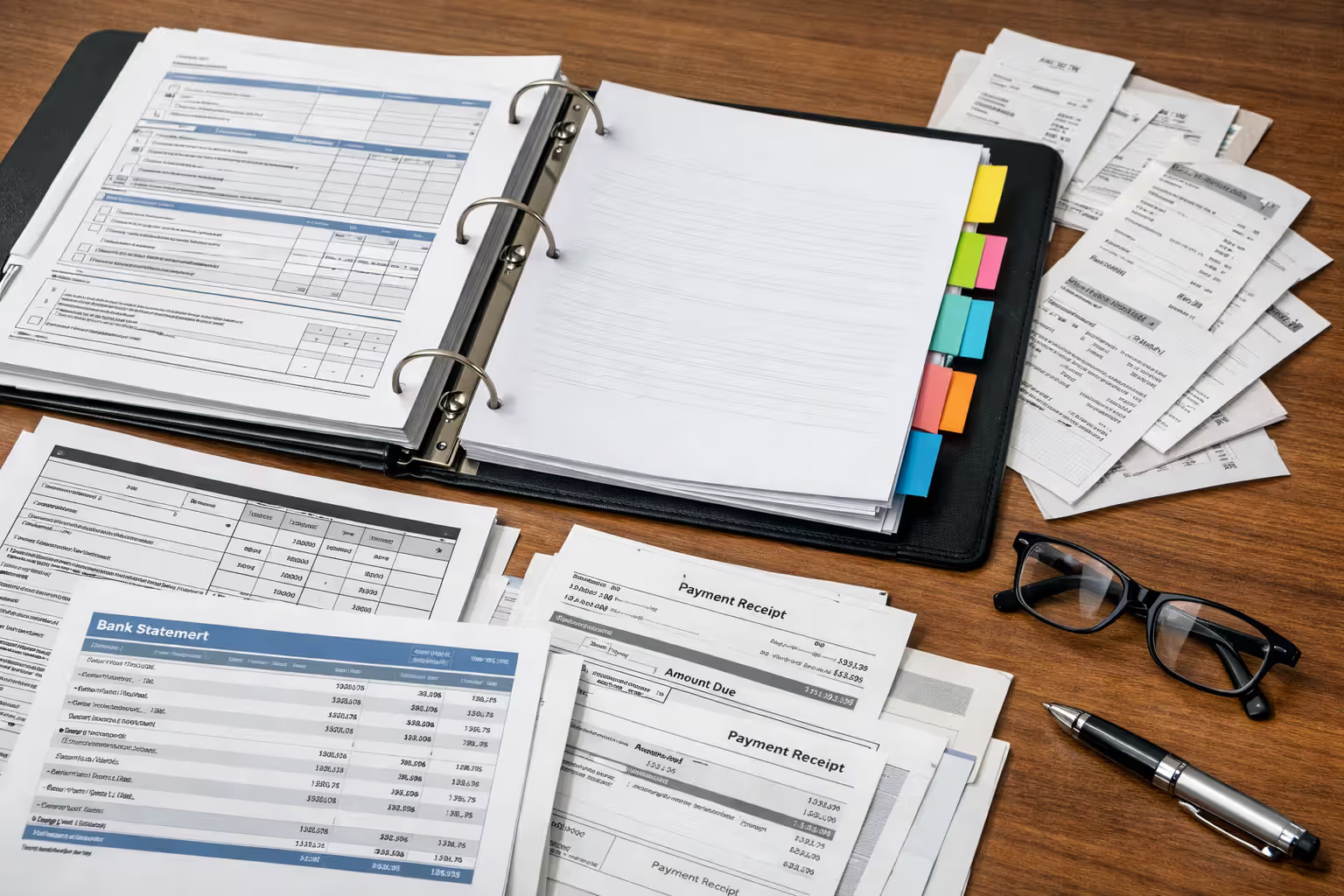
Step Three: Build Your Evidence File – Winning requires documentation, not just testimony. Start gathering:
- Three years of tax returns and pay stubs
- Bank statements showing expenses
- Medical records proving disabilities or chronic conditions
- Letters from doctors explaining work limitations
- Employment history and proof of job searches
- Evidence of prior payments or forbearance attempts
- Budget breakdowns showing necessary expenses
- Vocational expert reports (if applicable) assessing future earning capacity
Author: Marcus Bennett;
Source: sonicmusic.net
Think like a prosecutor building a criminal case. Every claim needs backup. Say you can't work full-time due to fibromyalgia? You'll need doctor's notes, medication records, maybe even an expert witness explaining how the condition limits employment. Claims without evidence get dismissed.
Step Four: Survive Discovery and Depositions – Your lenders won't roll over. They'll request documents, send written questions (interrogatories), and probably depose you under oath. They might hire their own vocational expert to argue you're capable of earning more. This process can drag on for months.
Lenders scrutinize everything. They'll examine your social media for evidence you're not really disabled. They'll question expense choices. They'll challenge your payment history. Having an attorney guide you through discovery is crucial—one wrong statement can torpedo your case.
Step Five: Negotiate or Go to Trial – Many adversary proceedings settle. Lenders face litigation costs too, and older loans or strong hardship cases might prompt settlement offers. You might negotiate a partial discharge (say, 60% of the balance eliminated) or modified payment terms.
If settlement fails, you're heading to trial. The bankruptcy judge hears testimony, reviews evidence, and applies the undue hardship test. Trials can last hours or days depending on complexity. Expect your lender to argue aggressively that you can repay—they'll highlight any inconsistencies in your testimony or gaps in your evidence.
Step Six: Receive the Judge's Decision – The judge might grant full discharge (your loan obligation disappears entirely), partial discharge (you owe some reduced amount), or deny your claim (you still owe everything). Full discharge offers complete relief. Partial discharge at least reduces your burden. Denial means you spent months and thousands on legal fees without benefit—though your other bankruptcy debts are still discharged.
If you win, the court issues a discharge order. This legally binds your lenders—they cannot pursue collections on discharged debt. Violations can result in contempt sanctions.
Attorney Costs and Considerations – Basic bankruptcy representation runs $1,500-$3,500. Adversary proceedings cost an additional $3,000-$10,000 depending on complexity and whether you reach trial. These fees seem steep, but consider the alternative: $50,000, $100,000, or more in permanent debt.
Some attorneys offer payment plans. Others reduce fees for genuinely indigent clients. Legal aid organizations occasionally take student loan cases, though resources are limited. Going pro se (representing yourself) rarely succeeds—these cases involve complex evidence rules and persuasive presentation skills that non-lawyers typically lack.
Bottom line: expect to invest $5,000-$15,000 total for bankruptcy plus adversary proceeding representation. That investment only makes sense if you're seeking to discharge substantial debt and have a legitimate hardship case.
Private vs Federal Student Loans in Bankruptcy
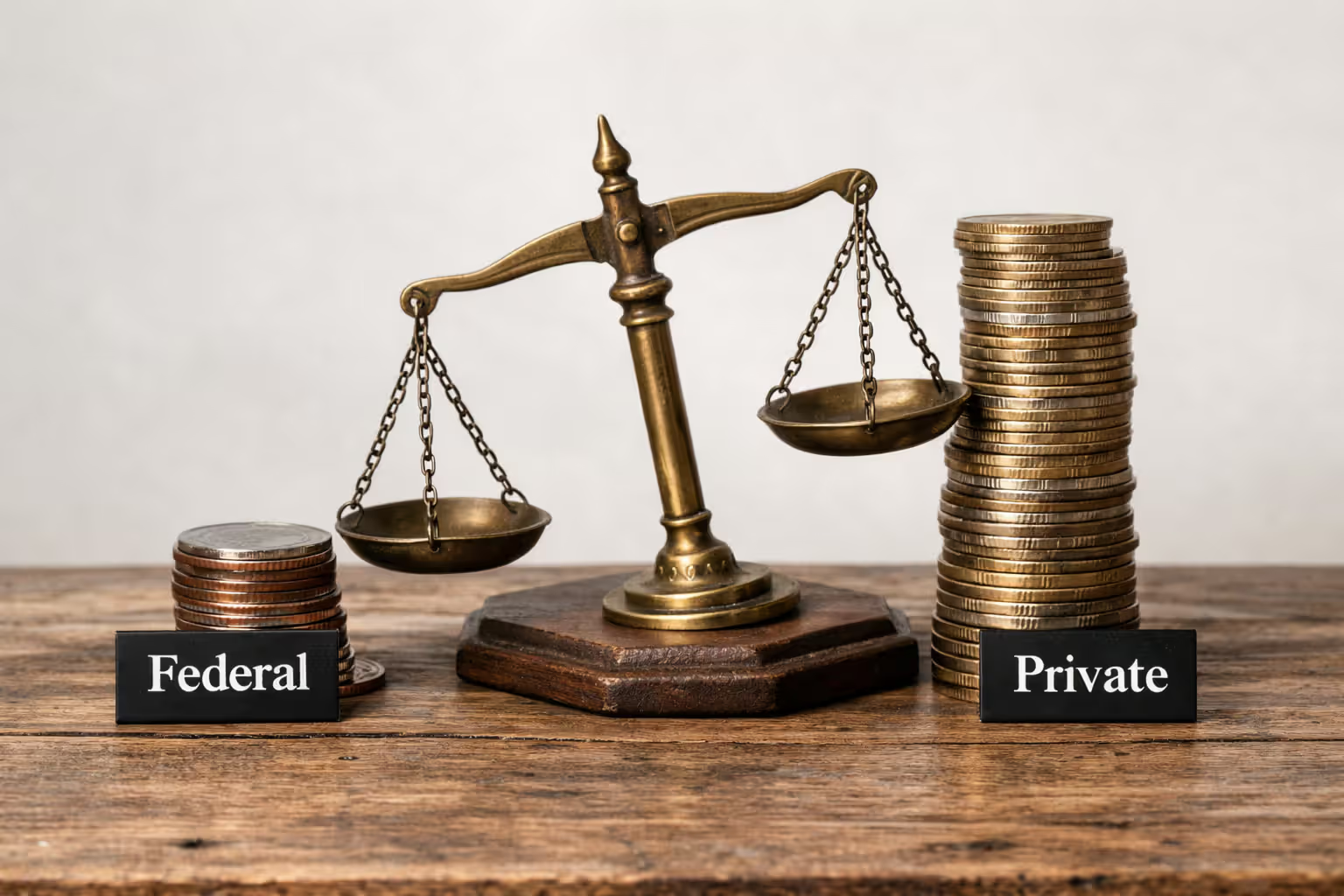
Both loan types face identical discharge standards legally, but practical differences affect your strategy and likely outcomes.
| Feature | Private Student Loans | Federal Student Loans |
| Legal Standard for Discharge | Must prove undue hardship using Brunner or totality test | Must prove undue hardship using Brunner or totality test |
| Separate Legal Filing Required | Yes—adversary proceeding complaint mandatory | Yes—adversary proceeding complaint mandatory |
| How Creditors Typically Respond | Banks and servicers defend aggressively; may settle to avoid trial costs, especially on older loans | Education Department defends but shows increased settlement willingness post-2022 guidance |
| Alternative Repayment Options | Very limited; some forbearance or interest-only periods but no income-based plans | Multiple income-driven plans capping payments at 10-20% of discretionary income with forgiveness after 20-25 years |
| Collection Time Limits | State statute of limitations applies (ranges from 3 years in some states to 10+ in others); can't sue after deadline passes | No statute of limitations—federal government can pursue collections indefinitely |
| Estimated Success Rates | Full discharge: 15-25%; Partial discharge or settlement: 30-40% | Full discharge: 10-20%; Partial discharge or settlement: 25-35% |
Private loans sometimes offer better discharge prospects for certain borrowers. Why? Private lenders can't offer income-driven repayment, making it harder for them to argue you have alternatives to discharge. A judge might reason: "This borrower could enroll federal loans in an income-driven plan paying $0 monthly, but the private loans have no such option—discharge is the only solution."
Private lenders also calculate litigation costs. Defending an adversary proceeding costs $10,000-$25,000 in legal fees. For a $30,000 loan approaching the state statute of limitations anyway, settlement might make financial sense for the lender. Federal loans don't face collection deadlines, reducing government motivation to settle.
However, federal loans' income-driven options might eliminate bankruptcy's necessity entirely. If you qualify for $0 monthly payments under an IDR plan, proving undue hardship becomes nearly impossible. Courts ask: "How does a loan requiring $0 monthly payment create hardship?" After 20-25 years, remaining federal loan balances get forgiven (though that forgiveness may be taxable).
Strategic borrowers sometimes pursue bankruptcy specifically for private loans while maintaining federal loans on income-driven plans. This approach targets inflexible debt while preserving federal protections. One borrower in 2021 successfully discharged $126,000 in private loans while keeping $43,000 in federal loans on PAYE (Pay As You Earn)—the judge ruled the private loans created hardship since no income-driven alternative existed, but federal loans offered reasonable repayment options.
The Department of Education issued guidance in November 2022 instructing its attorneys to evaluate discharge claims more carefully rather than automatically fighting every case. This policy shift led to increased settlement discussions. One attorney reported that DOE offered to discharge federal loans entirely in three 2023 cases involving borrowers with severe disabilities who previously would have faced years of litigation.
Your specific debt mix matters. Carrying $80,000 in private loans and $20,000 federal might warrant pursuing discharge on the private debt only. Owing $100,000 federal and $10,000 private probably doesn't justify adversary proceeding costs for the private loans—focus on income-driven repayment instead.
Author: Marcus Bennett;
Source: sonicmusic.net
Factors That Improve Your Discharge Chances
Courts weigh your complete financial and personal situation. While no magic formula guarantees discharge, certain circumstances substantially strengthen your position:
Documented Permanent Disability – This represents the single strongest factor. Blindness, paralysis, severe traumatic brain injury, advanced multiple sclerosis, late-stage cancer—conditions preventing substantial gainful employment give judges clear reason to grant discharge. You'll need comprehensive medical documentation: records from treating physicians, statements explaining work limitations, evidence of disability benefit applications or awards.
Example: A 2020 Florida case involved a borrower with severe rheumatoid arthritis preventing him from working more than 15 hours weekly. Medical records, prescription history, and testimony from his rheumatologist convinced the judge that his $71,000 in loans would never be repaid. Full discharge granted.
Age Plus Limited Remaining Career – Borrowers in their late 50s or 60s face compressed timelines. A 59-year-old with $95,000 in student debt, minimal retirement savings, and declining health can credibly argue they'll never repay before death. Courts recognize that someone with six working years remaining can't pay off massive debt loads.
Contrast that with a 32-year-old with 30+ working years ahead. Even with current struggles, courts expect younger borrowers' situations to potentially improve over three decades.
Ongoing Dependent Care Obligations – Caring for a disabled child or elderly parent reduces both available income and employment flexibility. These aren't temporary situations—a severely autistic 8-year-old will require care for decades. Document medical needs, care costs, and how these responsibilities restrict your ability to work or increase income.
One 2019 case involved a single mother caring for two children with special needs requiring constant supervision. Her $38,000 annual income covered living expenses but left nothing for her $68,000 loan balance. The judge found undue hardship based largely on her unchangeable caregiving situation.
Extensive Payment History Despite Hardship – Courts reward persistence. Making $50 monthly payments for ten years while earning poverty wages proves good faith more effectively than never paying anything. Even irregular payments demonstrate effort. Document every payment, forbearance application, and communication with lenders.
A borrower who paid $200-$300 monthly for seven years, then fell into hardship and continued trying to pay $50-$100 monthly presents a compelling narrative. Someone who immediately stopped paying after graduation faces skepticism.
Maximized Income Within Your Constraints – Judges expect reasonable income efforts, but "reasonable" accounts for individual limitations. Working full-time at Target for $29,000 annually might satisfy this element if health issues prevent physically demanding work and caregiving duties eliminate evening/weekend availability. Document job searches, applications, and barriers to advancement.
Courts get suspicious about underemployment without explanation. A lawyer working as a barista by choice won't get sympathy. A lawyer unable to pass the bar after six attempts who's working the best job they can obtain might.
Bare-Bones Budget – Your expense breakdown must show essentials only. Modest rent, basic food, necessary transportation, required medical care, dependent costs. Courts will grill you on any discretionary spending. One case got denied partially because the borrower had a $180 monthly gym membership and $250 monthly restaurant habit—the judge calculated that money could go toward loans.
The judicial landscape is shifting. Five years ago, judges often seemed to view discharge requests with automatic skepticism—there was an attitude of 'everyone can repay if they just try harder.' Now we're seeing more nuanced analysis. Judges increasingly recognize that economic realities don't match the old assumptions. I've won cases recently that would've been dismissed outright in 2018. The key is presenting airtight documentation and a genuinely sympathetic fact pattern
— Sarah Martinez
Multiple factors combining create stronger cases than any single element. A 36-year-old borrower earning moderate income might not seem like an obvious candidate. But add Type 1 diabetes with complications preventing physical labor, two dependent children, and twelve years of partial payment history—suddenly the case becomes compelling.
Common Mistakes When Seeking Discharge
Many borrowers undermine their own cases through easily avoidable errors:
Forgetting to File the Adversary Proceeding – This mistake is shockingly common. Borrowers assume listing student loans in their bankruptcy schedules automatically addresses them. Wrong. Without a formal adversary proceeding complaint filed before your bankruptcy closes, loans survive completely unchanged. Some borrowers only discover this when collection calls resume post-bankruptcy.
Your attorney should catch this, but if you're pro se or have an inexperienced lawyer, you might miss the deadline. Set calendar reminders. In Chapter 7, you often have just 60-90 days from filing to initiate your adversary proceeding.
Showing Up Without Proper Documentation – Testimony alone won't win. Courts demand concrete proof. Borrowers who appear without medical records, expense receipts, payment history, or employment documentation struggle to prove hardship. Start building your evidence file months before filing—obtaining medical records alone can take weeks.
One borrower claimed disability prevented work but brought no medical records to trial. His testimony wasn't enough. Case dismissed.
Filing Too Soon After Graduation – Seeking discharge six months after leaving school signals you never intended to repay. Courts want to see genuine repayment attempts over years, not immediate surrender. Temporary post-graduation financial struggles affect everyone—that's not undue hardship.
Most successful discharge cases involve borrowers who've been in repayment five, ten, or fifteen years. If you're recently graduated and facing hardship, explore deferment, forbearance, or income-driven plans first. Let time pass while documenting your struggles.
Exaggerating Your Financial Struggle – Judges review bank statements, credit card bills, and spending patterns carefully. Claiming poverty while funding expensive hobbies, maintaining premium cable packages, or taking vacations destroys credibility. One borrower argued he couldn't afford $150 monthly loan payments while spending $300 monthly on craft beer and concerts. The judge wasn't sympathetic.
Be scrupulously honest. If you have $200 in discretionary spending monthly, acknowledge it—then explain why redirecting that toward a $50,000 loan balance accomplishes nothing.
Ignoring Reasonable Income Opportunities – Voluntarily working part-time when full-time positions exist, refusing available jobs, or choosing low-paying work in unrelated fields without justification undermines hardship claims. Courts expect you to maximize reasonable earning potential.
If legitimate reasons limit your work—health issues, caregiving needs, geographic isolation—document them thoroughly. "I don't feel like working more" won't fly. "I can't work more than 20 hours weekly due to documented chronic fatigue syndrome, as confirmed by my physician" might.
Attempting Pro Se Representation – Some borrowers skip legal representation to save money. Bad idea. Student loan discharge law involves complex evidence rules, persuasive presentation, and detailed procedural requirements. Lenders bring experienced attorneys. You're unlikely to match their expertise without legal training.
The $5,000-$10,000 in attorney fees stings, but represents a worthwhile investment when seeking to discharge five or six figures of debt. Poor representation or self-representation usually results in denial, wasting whatever money you did spend on filing fees and court costs.
Never Attempting Repayment – Zero payment history raises immediate red flags about good faith. Even if you could only afford $25 monthly, making those payments demonstrates effort. Document all communication with lenders—forbearance applications, hardship plan requests, settlement negotiation attempts.
A borrower who never paid anything, never contacted lenders, and immediately filed for discharge after default will face hostile questioning. Someone who paid what they could for years, exhausted all alternatives, and finally sought discharge as a last resort tells a more compelling story.
Strategic preparation prevents these mistakes. Not everyone qualifies for discharge—pursuing an adversary proceeding with weak facts wastes time and money. Schedule a consultation with a bankruptcy attorney experienced in student loan discharge to honestly assess your situation before proceeding.
Frequently Asked Questions
Yes, private student loans can be wiped out in bankruptcy—but you'll need to clear significant legal hurdles. The undue hardship standard requires proving that repayment prevents maintaining basic living standards, that your situation will persist long-term, and that you've genuinely tried to repay. Courts historically granted discharge sparingly, though recent years show increased receptiveness to legitimate hardship claims.
Success requires filing a separate adversary proceeding within your bankruptcy, building comprehensive evidence, and often enduring months of litigation or settlement negotiations. Attorney representation significantly improves your odds but costs $5,000-$15,000 when combined with bankruptcy fees. That investment makes sense when pursuing discharge of substantial debt loads with strong hardship circumstances.
Private and federal loans face identical discharge standards legally, but differences in repayment flexibility and creditor behavior affect strategic decisions. Evaluate your complete situation, including alternatives like income-driven repayment for federal loans, before committing to bankruptcy.
For borrowers facing genuine financial catastrophe with no realistic repayment path, bankruptcy discharge offers legitimate relief—potentially life-changing debt elimination and a true fresh start. Not everyone qualifies, but those who do can finally escape crushing debt burdens that might otherwise follow them for decades. The key lies in understanding requirements, building strong evidence, avoiding common pitfalls, and maintaining realistic expectations about outcomes.
If you're considering this path, schedule consultations with bankruptcy attorneys experienced in student loan discharge. They'll honestly assess your chances and help determine whether pursuing discharge makes sense for your specific circumstances. Sometimes the answer is yes—and sometimes alternatives serve you better. Either way, understanding your options beats continuing to drown in debt without exploring every available lifeline.
Related Stories

Read more

Read more




The content on this website is provided for general informational and educational purposes only. It is intended to offer guidance on student loan topics, including federal and private student loans, interest rates, repayment plans, loan forgiveness programs, deferment, forbearance, consolidation, and related financial matters. The information presented should not be considered legal, financial, tax, or professional lending advice.
All information, articles, explanations, and program discussions published on this website are provided for general informational purposes. Student loan programs, repayment options, forgiveness eligibility, and financial assistance policies may change over time and may vary depending on government regulations, loan servicers, lenders, borrower eligibility, income level, school status, and individual loan terms. Details such as interest rates, repayment schedules, eligibility for forgiveness programs, and application requirements may differ between federal and private lenders and may change without notice.
While we strive to keep the information accurate and up to date, this website makes no guarantees regarding the completeness, reliability, or accuracy of the content. The website and its authors are not responsible for any errors, omissions, or actions taken based on the information provided here.
Use of this website does not create a financial advisor–client, legal, or professional relationship. Visitors are encouraged to review the official documentation provided by the U.S. Department of Education, student loan servicers, and private lenders, and to consult with a qualified financial advisor, loan specialist, or legal professional before making decisions regarding student loans, repayment strategies, or financial obligations.