
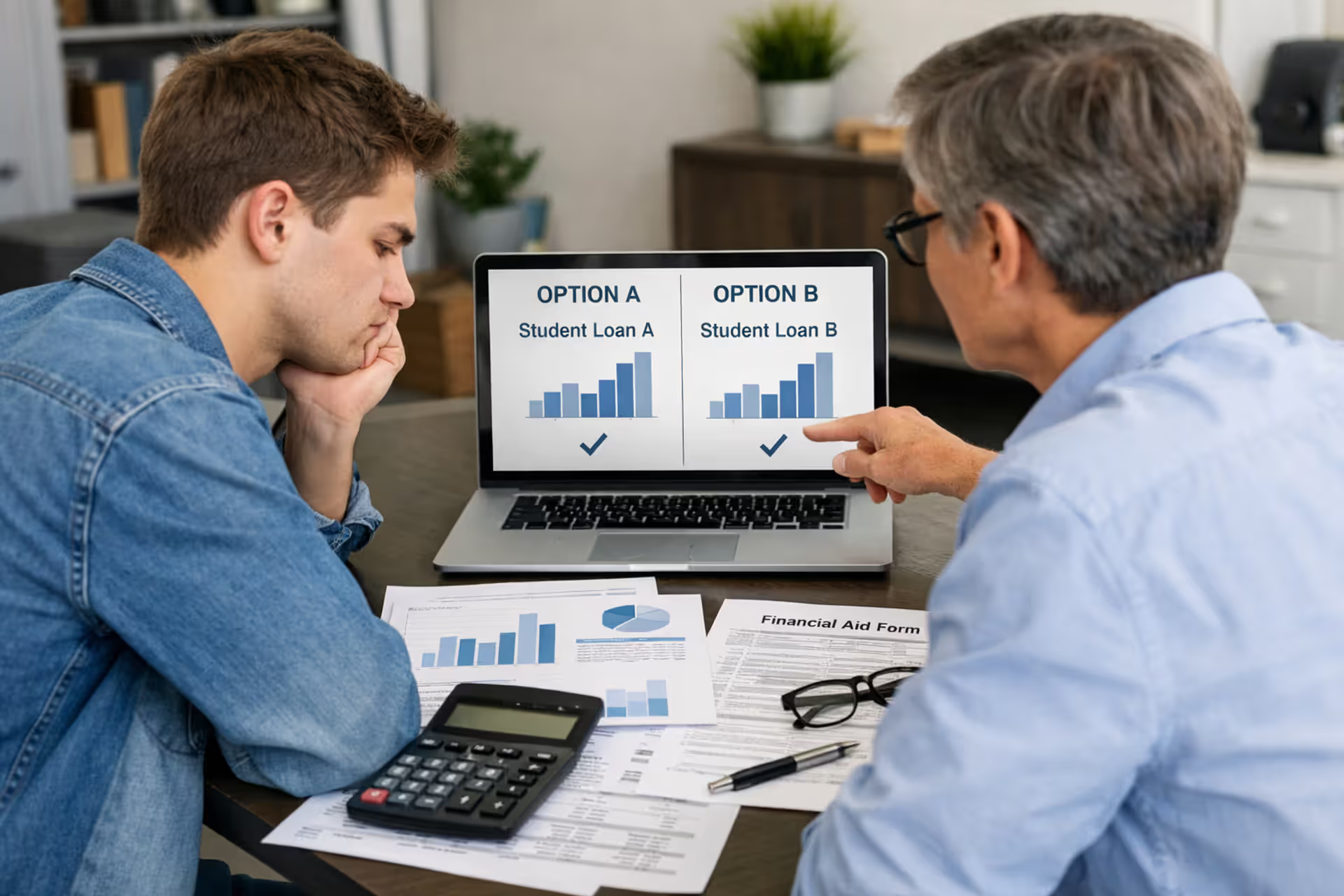
Student and parent comparing college loan options at a table with laptop and paperwork
Types of Student Loans Explained for US Borrowers
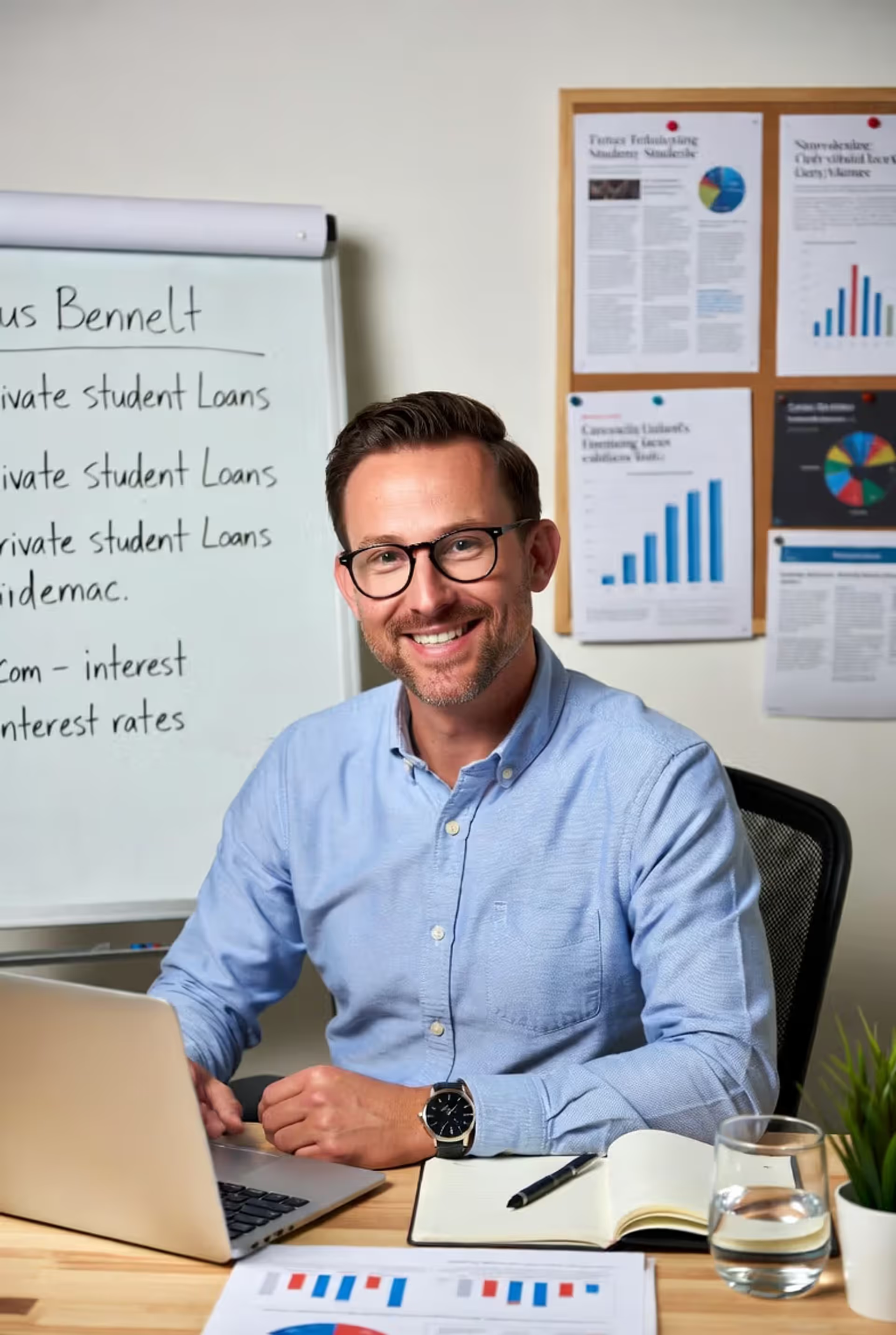
Financing a college education means wading through a maze of borrowing products, each with its own rulebook. Most American families patch together a mix of loans to cover what scholarships, grants, and savings can't reach. Getting familiar with these financial tools—what separates one from another—can mean the difference between manageable debt and a decades-long burden that derails your financial goals.
America's student lending ecosystem divides into two main camps: government-sponsored programs run through the Department of Education, and commercial products from financial institutions like banks and credit unions. Within these camps you'll find multiple products, each with unique qualification requirements, interest calculations, and payback features. Pick the wrong one and you might end up paying thousands more or losing access to critical safety nets when money gets tight.
This guide examines every major borrowing option available to US students in 2026, lays out their distinguishing characteristics in plain language, and gives you a clear roadmap for making choices that fit your specific circumstances.
Federal Student Loans Overview
Government-backed student loans control most of the market because they deliver consistent terms written into law, skip credit checks for the majority of programs, and include safety features that commercial lenders typically don't provide. The Department of Education becomes your creditor, and the application process starts with completing the Free Application for Federal Student Aid (FAFSA) annually.
Getting approved depends mainly on your enrollment—you need to be attending an eligible school at least half-time—and keeping up academically. Where private lenders dig into your credit report and paycheck stubs, federal programs either look at demonstrated need (for subsidized products) or just verify you're a student (for unsubsidized products). Congress sets the annual interest percentages using a formula tied to Treasury note auctions, then locks that number for the duration of your loan rather than letting it bounce around.
Starting with federal options makes sense in nearly every situation. These loans unlock repayment plans that adjust your monthly bill based on what you actually earn, and working in qualifying public service fields can erase your remaining debt after ten years of payments. Commercial lenders don't build in these escape hatches.
Author: Marcus Bennett;
Source: sonicmusic.net
Here's a mistake families make all the time: they assume their household income disqualifies them from federal help and never file the FAFSA. Even high earners can tap unsubsidized federal loans, so submit that application regardless of your bank balance.
Direct Subsidized and Unsubsidized Loans
These two products handle most undergraduate borrowing. The Department of Education issues both through the William D. Ford Direct Loan Program, but the question of who covers interest during your studies creates a massive difference in final cost.
Who Qualifies for Subsidized Loans
Direct Subsidized Loans go exclusively to undergraduates who can show financial need through FAFSA calculations. The federal government picks up your interest tab while you're taking at least half a course load, throughout the half-year grace window after you finish school, and whenever you qualify for deferment. That subsidy typically translates to thousands of dollars you won't have to repay compared to the same amount borrowed unsubsidized.
First-year students can take up to $3,500 in subsidized funds, rising to $5,500 for juniors and seniors, with a $23,000 lifetime ceiling for dependent undergrads. Students classified as independent or whose parents get denied for PLUS loans can access larger amounts. The catch: your subsidized borrowing can't exceed your calculated need figure, even when you're below the annual maximum.
How Unsubsidized Loans Work
Direct Unsubsidized Loans open up to undergraduates and graduate students across the board—need doesn't factor into approval. Interest starts piling up the day your school receives the money, and you're on the hook for every penny of it, though you can postpone payments until graduation. Skip paying that interest during school and it rolls into your principal balance when repayment kicks off, expanding the total you'll ultimately pay back.
Students whose parents claim them as dependents can take $5,500 to $7,500 yearly based on their year in school, topping out at $31,000 total. Independent undergrads and graduate students get steeper allowances: $20,500 per academic year and $138,500 across all degrees (counting any undergraduate debt). Graduate borrowers also pay roughly 1.5 percentage points more interest than undergrads in the current rate environment.
Here's how this plays out in real numbers: borrow $10,000 unsubsidized as a college freshman at 5.5% annual interest and make zero payments for four years, and you'll graduate owing approximately $12,400 once that unpaid interest gets folded in. The identical loan in subsidized form would still sit at $10,000.

Author: Marcus Bennett;
Source: sonicmusic.net
PLUS Loans for Parents and Graduate Students
PLUS loans bridge the funding shortfall when Direct Subsidized and Unsubsidized products don't stretch far enough. Unlike those other federal options, PLUS programs run a credit review and let you borrow up to the school's published cost of attendance minus whatever other aid you've already secured.
Parent PLUS loans allow parents of dependent undergrads to borrow in their own name for their child's education. The parent signs the promissory note and handles all payments—the debt never transfers to the student after commencement. Graduate students can take Grad PLUS loans personally to cover expenses beyond what Direct Unsubsidized limits allow.
The credit screening for PLUS products uses a lighter touch than commercial loan underwriting. Rather than demanding a minimum score, the Department looks for recent negative marks—bankruptcy filings, foreclosures, defaulted debts, or collections activity within the past few years. Applicants with those red flags can still qualify by bringing on an endorser (essentially a cosigner) or explaining special circumstances that caused the credit problems.
PLUS rates run roughly two percentage points above Direct Subsidized and Unsubsidized offerings in 2026. They also hit you with a 4.228% origination charge subtracted from each payment to your school. Request $10,000 and your school gets $9,577, yet you're repaying the full ten grand. Interest begins accumulating right away, and while PLUS loans do qualify for Public Service Loan Forgiveness, you need to consolidate them into a Direct Consolidation Loan first and they don't work with the full menu of income-driven plans that other federal products do.

Author: Marcus Bennett;
Source: sonicmusic.net
Parents sometimes sign up for PLUS loans without realizing these debts follow the same strict bankruptcy rules as other student loans—nearly impossible to discharge unless you can prove undue hardship—and forgiveness based on retirement or disability requires meeting narrow total-and-permanent-disability standards.
Private Student Loans and How They Differ
Commercial student loans originate from banks, credit unions, and digital lenders working outside the federal framework. They evaluate you the traditional way: your approval and rate reflect your credit score, income level, existing debt obligations, and frequently a cosigner's financial standing if you're a student with a thin credit file.
You'll choose between rates that stay level throughout repayment or rates that shift based on a benchmark index like SOFR plus the lender's markup. Spring 2026 market conditions put well-qualified borrowers with cosigners in the ballpark of 4% variable or 5.5% fixed, while students applying solo often see double-digit rates. Lenders usually structure repayment across five to twenty years.
Commercial loans make strategic sense in narrow circumstances: you've hit your federal borrowing ceiling but still need money, or you're refinancing existing federal debt to capture a lower rate (understanding you're surrendering federal protections in the trade). Some families with sterling credit choose private products for rate savings, but that swaps flexibility for a modest cost edge.
The downsides cut deep. Private lenders rarely offer income-adjusted repayment, forbearance comes with tight restrictions and lender discretion, and there's zero loan forgiveness for public service work or other federal programs. Hit a financial rough patch and your options narrow considerably. Policies around death and disability discharge differ wildly between lenders and carry no guarantees.
A trap students fall into regularly: taking private loans for rent and groceries when they haven't tapped out federal options, then discovering they can't convert those private debts back to federal programs later. Federal loans represent a one-shot deal tied to active enrollment.
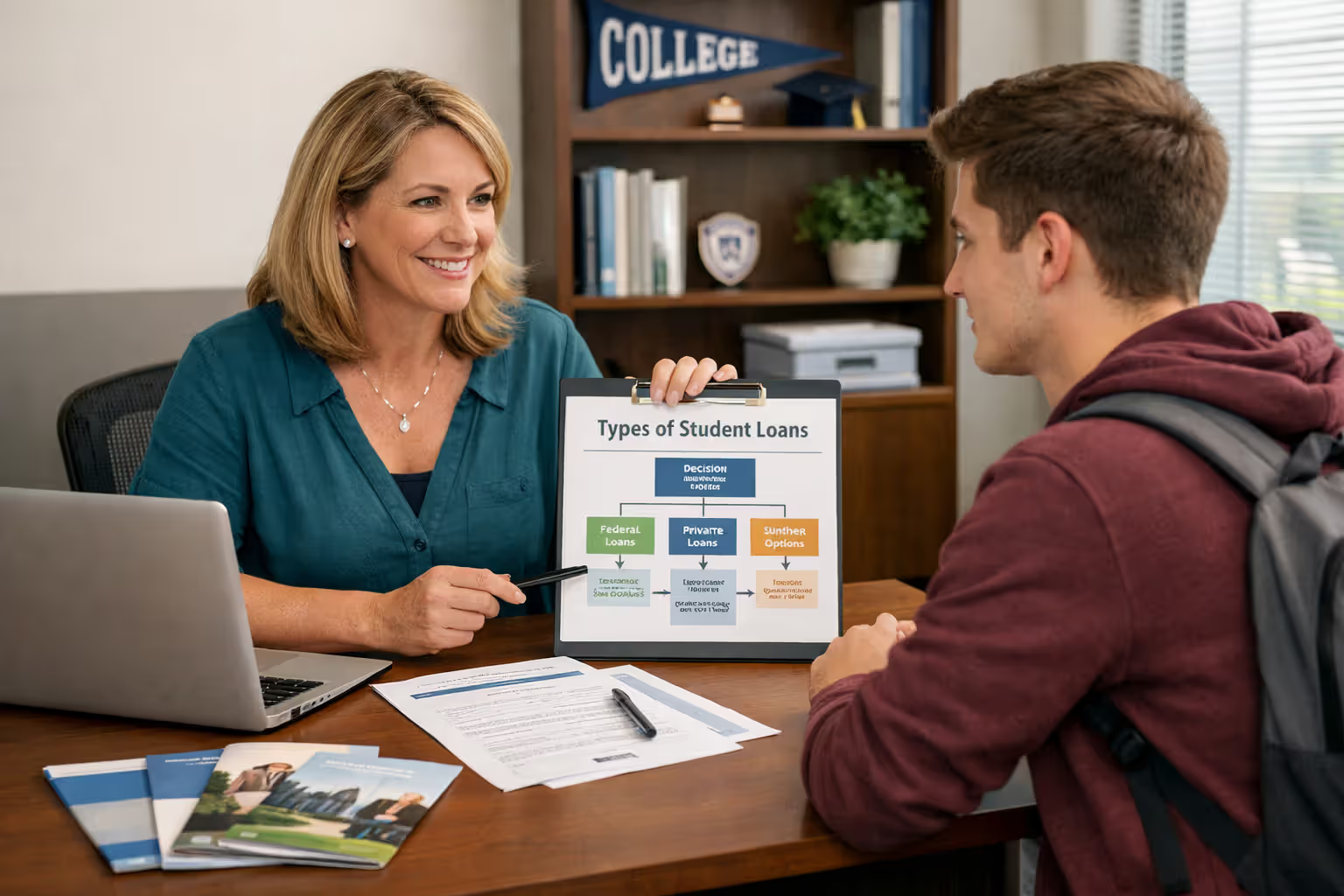
Comparing Federal and Private Student Loan Features
Grasping the real-world distinctions between loan products prevents costly errors. This chart breaks down critical characteristics across major borrowing options in the current lending landscape:
| Loan Product | Rate Structure | Credit Review Needed | Income-Based Repayment Option | Forgiveness Program Access |
| Direct Subsidized | Stays constant | Not required | Available | Qualifies |
| Direct Unsubsidized | Stays constant | Not required | Available | Qualifies |
| Parent PLUS | Stays constant | Required (relaxed standards) | Restricted options* | Qualifies after consolidation |
| Grad PLUS | Stays constant | Required (relaxed standards) | Restricted options* | Qualifies after consolidation |
| Private | Constant or fluctuating | Required (rigorous) | Not offered | Does not qualify |
*PLUS borrowers can access income-contingent repayment but not the more generous income-based plans or Pay As You Earn unless they consolidate first.
While Treasury rate increases have tightened the interest spread between federal and commercial products lately, the repayment flexibility gap remains enormous. Federal programs deliver at least four income-tied repayment plans stretching 20-25 years with remaining balances wiped clean afterward (though forgiven amounts might trigger taxes). Commercial lenders occasionally grant temporary payment breaks during hardship, but these aren't guaranteed and typically let interest keep growing.
Federal borrowing also includes automatic forbearance during unemployment or financial distress for up to three years total, plus deferment for scenarios like returning to school or military deployment. Private lenders write their own policies, and many cap forbearance around twelve months across your loan's entire lifespan.
We hammer this message home every orientation: drain your federal eligibility before you even glance at private products. The distinction goes way beyond interest percentages—it's about the safety infrastructure underneath you. I've watched graduates navigate job losses and career pivots successfully because income-driven plans kept their obligations affordable. Borrowers who went private don't get that security blanket
— Sarah Martinez
How to Choose the Right Student Loan Type
Your selection process should march through these stages in order:
First step: Submit your FAFSA each year you're taking classes. This opens the door to every federal borrowing option plus numerous state grants. File it whether or not you expect need-based assistance.
Second step: Accept Direct Subsidized Loans up to whatever you qualify for. These deliver unbeatable terms—zero interest growth during school and the best available rates.
Third step: Layer in Direct Unsubsidized Loans if you need more money. Interest will accumulate, but you hang onto federal repayment safeguards.
Fourth step: Weigh Parent PLUS or Grad PLUS products if you've exhausted Direct Loan maximums. Calculate the impact of elevated interest and origination fees. Parents should honestly assess whether they can handle the payments alongside existing expenses and retirement contributions.
Fifth step: Explore private options only once federal borrowing is completely maxed out. Request quotes from several lenders, study the fixed-versus-variable choice carefully, and recognize you're trading away income-driven repayment and forgiveness opportunities. Planning a career path with Public Service Loan Forgiveness potential? Private borrowing rarely makes sense.
Your educational level shapes the equation. Undergraduates should lean heavily toward federal products because borrowing caps stay relatively modest and subsidized options exist. Graduate students access larger unsubsidized allowances ($20,500 yearly) and can deploy Grad PLUS for remaining costs, but the steeper interest makes it worth price-checking private alternatives if your credit is solid.
Your credit profile creates a decision fork. Students carrying no credit history or bruised scores will face rejection from private lenders without bringing a cosigner aboard, and rates will sting. Federal Direct Subsidized and Unsubsidized programs ignore credit entirely, making them your automatic choice. Borrowers sporting excellent credit (typically graduates refinancing existing debt) might find private rates competitive, but need to measure rate savings against vanishing federal safeguards.
Author: Marcus Bennett;
Source: sonicmusic.net
A useful benchmark: keep your total student debt below your anticipated first-year earnings. Studying to become a teacher expecting $45,000 starting salary? Holding total borrowing under that threshold keeps repayment reasonable even without income-driven plans.
Frequently Asked Questions About Student Loan Types
Selecting among the various kinds of student loans means weighing immediate affordability against long-term maneuverability. Federal options—especially Direct Subsidized and Unsubsidized products—form the bedrock for most students because they marry reasonable rates with repayment protections that commercial lenders simply won't match. PLUS programs extend federal borrowing reach for parents and graduate students, albeit with higher price tags.
Private products function as a fallback position or a refinancing mechanism for creditworthy borrowers who've already finished their degrees. That interest rate might catch your eye, but you're surrendering income-driven repayment, loan forgiveness pathways, and forgiving forbearance rules.
The sharpest strategy treats borrowing as a sequence: begin with the most protective, cheapest options and progress toward pricier, less-flexible products only when unavoidable. Your future self—the one cutting monthly payment checks—will value the breathing space that federal loan protections deliver when life throws curveballs.
Related Stories

Read more

Read more




The content on this website is provided for general informational and educational purposes only. It is intended to offer guidance on student loan topics, including federal and private student loans, interest rates, repayment plans, loan forgiveness programs, deferment, forbearance, consolidation, and related financial matters. The information presented should not be considered legal, financial, tax, or professional lending advice.
All information, articles, explanations, and program discussions published on this website are provided for general informational purposes. Student loan programs, repayment options, forgiveness eligibility, and financial assistance policies may change over time and may vary depending on government regulations, loan servicers, lenders, borrower eligibility, income level, school status, and individual loan terms. Details such as interest rates, repayment schedules, eligibility for forgiveness programs, and application requirements may differ between federal and private lenders and may change without notice.
While we strive to keep the information accurate and up to date, this website makes no guarantees regarding the completeness, reliability, or accuracy of the content. The website and its authors are not responsible for any errors, omissions, or actions taken based on the information provided here.
Use of this website does not create a financial advisor–client, legal, or professional relationship. Visitors are encouraged to review the official documentation provided by the U.S. Department of Education, student loan servicers, and private lenders, and to consult with a qualified financial advisor, loan specialist, or legal professional before making decisions regarding student loans, repayment strategies, or financial obligations.