

Student reviewing tuition bills and planning college finances at a desk
Student Loans for College Guide

Content
Content
You're staring at tuition bills that rival a mortgage payment. Your savings account? Nowhere close to covering four years of college costs. Welcome to the reality facing 43 million Americans who've borrowed to fund their degrees.
How Do Student Loans for College Work?
Think of a student loan for college as an IOU to pay educational expenses—except this IOU comes with interest charges and legally binding repayment terms. You're not receiving gift money like scholarships. You're entering a contract to return every borrowed dollar plus interest fees.
Here's the typical journey: First, you establish your borrowing eligibility. Then you submit applications through the proper channels. Your school receives the money directly (it never hits your bank account first). After you graduate or drop your enrollment status to less than half-time, the repayment clock starts ticking.
Federal programs offer fixed interest rates that Congress determines annually. A loan you take out in September 2025 will carry the same rate for its entire existence—no surprises. Private lenders work differently. They'll examine your credit profile and current market conditions before setting your rate. Most undergrads can access federal borrowing without credit checks or requiring a family member to co-sign, which explains why students with zero credit history can still qualify.
You'll typically get six months after leaving school before your first payment comes due, though interest might start piling up the moment you receive funds. When student loans for college are explained in plain terms, the sequence looks like this: money gets borrowed during fall and spring semesters → those funds pay for approved college expenses → interest starts growing based on your specific loan category → you begin repayment during your grace period.

Author: Danielle Pierce;
Source: sonicmusic.net
What sets these loans apart from your average credit card debt? They're nearly impossible to erase through bankruptcy, and they'll follow you for 20+ years if you let them spiral out of control. But federal loans come with safety nets—income-based repayment adjustments and temporary payment pauses—that traditional consumer debt never provides.
Types of College Student Loans Available
College loan options split into two main camps: federal programs backed by U.S. government guarantees, and private products from banks, credit unions, and fintech companies. The category you choose will dramatically affect what you'll pay and what happens if you hit financial turbulence.
Federal Student Loans
Always start here. Federal programs provide borrower safeguards that private companies simply won't match.
Direct Subsidized Loans target undergraduates who demonstrate financial need through FAFSA calculations. What makes them special? Washington covers your interest charges while you're taking classes (minimum half-time enrollment), during your six-month grace period, and if you qualify for deferment later. Over four years, this government-paid interest can easily save you $3,000-$5,000 compared to unsubsidized alternatives.
Direct Unsubsidized Loans open up to both undergrad and grad students, no financial need requirement attached. The catch? Interest starts accruing the second your school receives the disbursement. If you ignore that growing interest balance during your college years, it gets capitalized—meaning it's added to your principal amount—when you start repayment. Suddenly you're paying interest on your interest.
Direct PLUS Loans serve two groups: graduate students and parents helping their dependent undergrads. These require credit checks, and they come with steeper rates than standard student loans. When parents borrow PLUS loans, they own that debt personally—there's no mechanism to transfer it to their child later. For 2025-2026, PLUS loans carry an 8.05% rate plus a 4.228% origination fee.
Direct Consolidation Loans let you merge multiple federal loans into one monthly payment. Your new rate is the weighted average of your old loans, rounded up to the nearest one-eighth percent. Sounds convenient, right? But consolidation can extend your repayment timeline significantly, which means you'll pay substantially more interest over the loan's life.
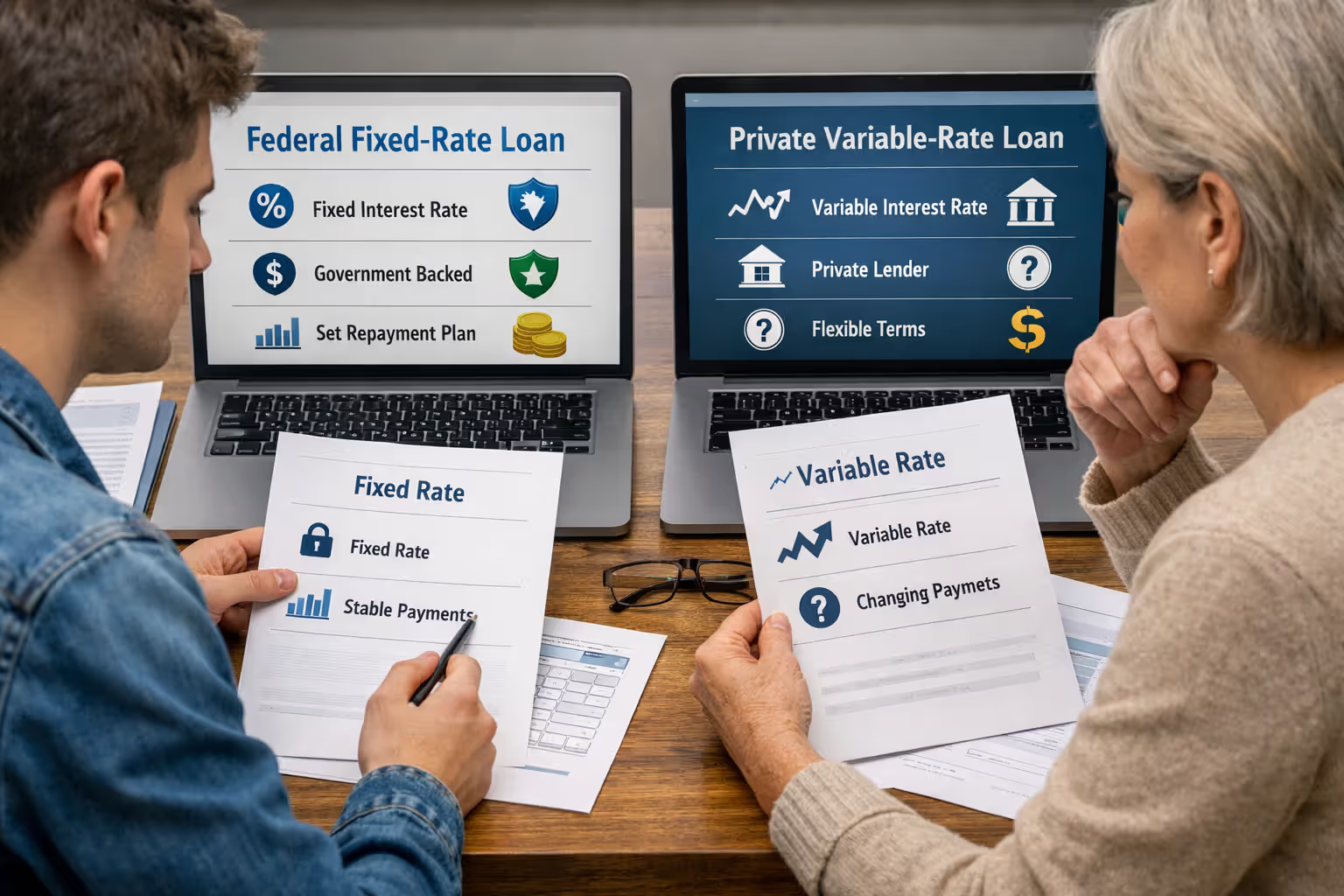
Federal rates stay locked in forever—no adjustments, no market-based increases. For the current 2025-2026 academic year, undergrad Direct loans sit at 5.50%, graduate unsubsidized loans at 7.05%, and those PLUS loans at 8.05%.
Author: Danielle Pierce;
Source: sonicmusic.net
Private Student Loans
These fill the gap when federal aid hits its annual limits and you still need money for college costs. But you're trading federal protections for potentially lower rates (if you have excellent credit).
Banks and alternative lenders write their own rules for eligibility, rates, and terms. Students rarely qualify alone—you'll probably need a parent or relative with solid credit to cosign, which makes them equally liable for repayment. That loan shows up on both credit reports.
Private loans come in two rate flavors: fixed and variable. Variable rates track market indexes like SOFR or Prime. They might start attractively low—sometimes below federal rates—but they can climb substantially over 10-15 years. Fixed rates cost more upfront but guarantee your rate never changes.
Don't expect income-driven repayment plans. Private lenders might grant temporary forbearance if you lose your job, but terms vary wildly between companies. There's no equivalent to Public Service Loan Forgiveness for private debt.
The application process skips FAFSA entirely. You'll apply directly through lender websites, where algorithms evaluate credit scores, income verification, existing debt loads, and employment stability. Shopping around matters enormously—I've seen rate quotes differ by 3 percentage points between lenders for the same borrower.
Author: Danielle Pierce;
Source: sonicmusic.net
How to Apply for Loans for College Students
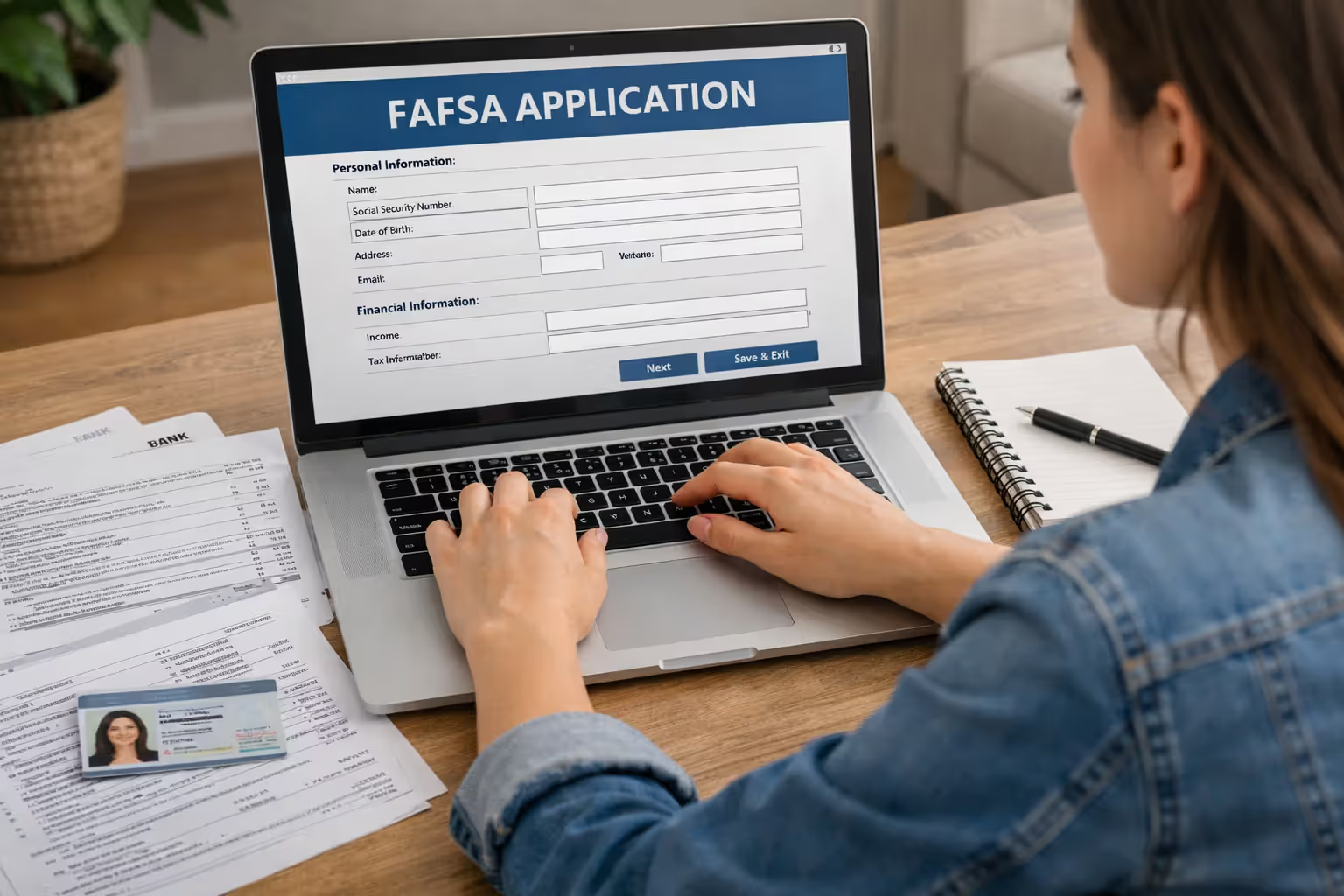
FAFSA—the Free Application for Federal Student Aid—unlocks access to federal loans, Pell Grants, and work-study jobs. You must resubmit it every single year, even when you're convinced your family makes too much for need-based aid. Why? Many colleges require FAFSA completion for their own merit scholarships, and some states funnel their aid programs through FAFSA data.
The application window opens each October for the next fall semester. Filing in October or November beats waiting until spring—some aid programs distribute money first-come, first-served until funds run dry. Gather these documents before starting: Social Security number, driver's license number, two-year-old tax returns (the 2026-2027 FAFSA needs your 2024 taxes), W-2 forms, current bank statements, and investment account records. Dependent students will also input parent financial data.
After FAFSA processing, you'll receive a Student Aid Index (formerly called Expected Family Contribution). This number doesn't represent what your family will actually pay—it's a formula result that colleges use for aid calculations. Schools mail award letters between March and May, breaking down your grant money, scholarship offers, work-study eligibility, and loan options. Here's what many students miss: these letters present offers, not requirements. You can decline loans, accept partial amounts, or request adjustments.
Accepting federal loans requires two steps: complete entrance counseling (explains borrower rights and obligations) and sign a Master Promissory Note through StudentAid.gov or your financial aid office. That promissory note is legally binding—you're committing to repay borrowed funds according to program terms.
Private loans operate completely separately. After reviewing your financial aid award and identifying any remaining cost gap, you'll apply directly through bank or online lender websites. Many provide instant prequalification using soft credit pulls that won't ding your credit score. Final approval requires hard credit inquiries and typically takes 3-5 business days. Funds usually go straight to your school's bursar office, but only after you've maxed out cheaper federal options.
Timing creates headaches if you're not careful. Federal aid typically disburses when each semester starts. Private loan timing varies by lender and might not align perfectly with tuition deadlines. Missing payment deadlines can trigger late fees or course drops, so build in buffer time.
Comparing College Loan Options
Interest rates tell part of the story. Smart borrowers evaluate the complete package—fees, flexibility, and what happens during financial emergencies. This student loans for college guide breaks down critical differences:
| Feature | Federal Student Loans | Private Student Loans |
| Interest Rates | Locked at Congressional rates (currently 5.50%–8.05% depending on loan type) | Fixed or variable; credit-determined (typically 3.00%–14.00%) |
| Eligibility | Most require no credit check; based on enrollment status and dependency | Credit evaluation mandatory; most students need cosigners |
| Repayment Flexibility | Four income-driven plan options; generous deferment and forbearance terms | Limited hardship forbearance; rigid payment schedules |
| Forgiveness Programs | PSLF after 120 qualifying payments; income-driven forgiveness after 20-25 years; Teacher Loan Forgiveness available | Forgiveness programs don't exist |
| Cosigner Requirements | Never needed for Direct Subsidized/Unsubsidized undergraduate loans | Required for most students lacking credit history |
Federal loans deserve first priority because those income-driven repayment plans alone provide massive value. Imagine losing your job or switching to a lower-paying field—your federal loan payments can drop to match your reduced income. Private lenders won't budge.
That said, private loans occasionally make strategic sense. Graduate students heading into high-earning careers (medicine, law, dentistry) might secure private rates below the 8.05% federal PLUS loan rate if they or their cosigner have excellent credit. Some borrowers refinance federal loans to private loans after graduation and landing stable, well-paying jobs—but this permanently eliminates federal protections, so it's a one-way door.
Interest rates only tell part of the cost story. Origination fees matter significantly. Federal Direct Subsidized and Unsubsidized loans deduct a 1.057% fee from each disbursement for 2025-2026. PLUS loans take a bigger bite: 4.228%. Most private lenders skip origination fees entirely, creating an initial cost advantage, but higher interest rates over 10-20 year repayment periods usually overwhelm that upfront savings.
Repayment structures differ fundamentally. Federal loans offer Standard 10-year plans, Graduated plans (payments increase biennially), Extended plans (up to 25 years for borrowers with $30,000+), and four income-driven variants. Private lenders typically provide 5, 10, 15, or 20-year fixed payment terms. Shorter terms mean larger monthly bills but substantially less total interest paid.
How Much Can You Borrow in Student Loans for College?
Education is a debt due from present to future generations
— George Peabody
Federal programs cap borrowing amounts based on your dependency status (whether your parents claim you on taxes), year in school, and degree level. These limits prevent catastrophic over-borrowing but might not cover costs at expensive private colleges.
Dependent undergraduate students face these annual limits: - Freshman year: $5,500 total ($3,500 maximum subsidized) - Sophomore year: $6,500 total ($4,500 maximum subsidized)
- Junior, senior, and fifth-year: $7,500 annually ($5,500 maximum subsidized)
Total undergraduate borrowing cannot exceed $31,000, with subsidized loans capped at $23,000.
Independent undergraduate students (those 24+, married, supporting dependents, or whose parents can't obtain PLUS loans) get higher limits: - Freshman year: $9,500 total ($3,500 maximum subsidized) - Sophomore year: $10,500 total ($4,500 maximum subsidized) - Junior year onward: $12,500 annually ($5,500 maximum subsidized)
Independent undergrads max out at $57,500 total, including no more than $23,000 subsidized.
Graduate and professional degree students can borrow up to $20,500 yearly in unsubsidized loans, with a lifetime cap of $138,500 (this includes any undergraduate borrowing). Grad students can also take Grad PLUS loans covering full cost of attendance minus other financial aid received.
Private lenders set their own maximums, usually up to the school's published cost of attendance minus other aid. Some cap undergrad borrowing at $100,000-$150,000, with higher limits for graduate and professional programs reaching $250,000+. Just because lenders will approve these amounts doesn't mean you should borrow them—remember that every dollar borrowed costs you $1.50-$2.00+ when you include interest over standard repayment periods.
Here's a practical borrowing guideline: keep your total student loan debt below your anticipated first-year salary after graduation. Planning to teach elementary school with a $42,000 starting salary? Try to graduate with less than $42,000 in total loans. This ratio keeps monthly payments manageable as a percentage of income. Borrowers exceeding this threshold frequently struggle with payments and end up needing income-driven plans or extended repayment terms.

Author: Danielle Pierce;
Source: sonicmusic.net
Repayment Plans and Forgiveness Programs
College financing with student loans extends decades beyond your graduation ceremony. Federal programs offer multiple repayment structures matching different financial circumstances:
Standard Repayment Plan divides your debt into 120 equal monthly payments (10 years). This approach minimizes total interest costs but requires higher monthly payments than alternatives.
Graduated Repayment Plan starts with smaller payments that increase every two years, still completing in 10 years. This matches borrowers expecting steady salary increases early in their careers, but you'll pay significantly more total interest than standard repayment.
Extended Repayment Plan stretches payments across 25 years for borrowers owing $30,000+ in Direct Loans. Monthly payments drop considerably, but total interest paid can double or triple compared to standard 10-year repayment.
Income-Driven Repayment (IDR) Plans calculate your monthly bill based on discretionary income (the gap between your income and 150% of poverty guidelines) and family size. Four IDR options exist:
- Revised Pay As You Earn (REPAYE): Payments equal 10% of discretionary income; remaining balance forgiven after 20 years (undergrad debt) or 25 years (grad school debt)
- Pay As You Earn (PAYE): Payments equal 10% of discretionary income, capped at standard 10-year payment amount; forgiveness after 20 years
- Income-Based Repayment (IBR): Payments equal 10-15% of discretionary income depending on when you borrowed; forgiveness after 20-25 years
- Income-Contingent Repayment (ICR): Payments equal lesser of 20% of discretionary income or what you'd pay on a fixed 12-year plan; forgiveness after 25 years
Income-driven plans provide critical safety nets when you're unemployed, switching careers, or earning low salaries. Your payment can drop to $0 if you're making under 150% of poverty level for your family size. Any debt remaining after 20-25 years of qualifying payments gets forgiven, though currently that forgiven amount counts as taxable income (legislation keeps proposing to change this).
Public Service Loan Forgiveness (PSLF) erases remaining federal Direct Loan balances after you make 120 qualifying monthly payments while working full-time for government agencies or 501(c)(3) nonprofits. PSLF forgiveness is completely tax-free. Teachers might qualify for separate Teacher Loan Forgiveness worth up to $17,500 after five consecutive years teaching at low-income schools.
Deferment and forbearance temporarily stop payments during financial hardship, returning to school, unemployment, or other qualifying situations. Deferment might pause interest accumulation on subsidized loans, while forbearance always lets interest keep accruing on all loan types. Use these options sparingly—unpaid interest capitalizes when you resume payments, permanently increasing your total debt.
Private loans rarely offer income-driven repayment or any forgiveness. Some lenders grant 3-6 months of forbearance during hardship, but terms are far less generous than federal alternatives. This inflexibility makes private loans riskier when you're facing income uncertainty.
Common Mistakes When Choosing College Financing with Student Loans
Borrowing for education carries high stakes and decades-long consequences. These frequent errors cost borrowers tens of thousands of dollars and years of financial stress:

Author: Danielle Pierce;
Source: sonicmusic.net
Accepting maximum loan offers without calculating actual expenses. Your financial aid office lists the maximum borrowing you're eligible for, not what you actually need. Many students click "accept" on full amounts and blow excess funds on spring break trips or new laptops. Instead, calculate your real costs—tuition bills, mandatory fees, required textbooks, reasonable housing and food—then borrow only that figure. You can return unused loan money within 120 days of disbursement without owing interest.
Jumping to private loans before exhausting federal options. Some students completely skip FAFSA and head straight to bank websites, missing out on subsidized loans, Pell Grants, and federal protections. Others borrow private and federal simultaneously when they could cover all costs with federal loans alone. Always max out federal borrowing before considering private alternatives.
Letting interest pile up during school years. Unsubsidized and private loans accumulate interest charges while you're taking classes. A $20,000 unsubsidized loan at 5.50% interest grows by roughly $4,400 over four years if you never make payments. That $4,400 capitalizes when repayment starts, meaning you'll owe interest on the interest. Making interest-only payments during school—maybe $100 monthly—prevents this capitalization and saves thousands long-term.
Confusing subsidized and unsubsidized loans. Plenty of borrowers don't realize the government-paid interest on subsidized loans represents real savings. When you're offered both types, accept subsidized loans first, unsubsidized second.
Losing track of cumulative borrowing across four years. Students often forget what they borrowed sophomore year by the time they're seniors. Create a simple spreadsheet tracking each disbursement, its interest rate, and which servicer holds it. The National Student Loan Data System (NSLDS) shows all federal loans, but you'll need to track private loans separately through lender websites and credit reports.
Choosing colleges based on prestige instead of return on investment. A $200,000 English degree from a private liberal arts college sounds impressive. But if typical starting salaries in your field hover around $38,000, you're setting yourself up for decades of financial suffering. Research average salaries in your intended career field using Bureau of Labor Statistics data. Then pick schools where total expected debt aligns with realistic earning potential. State flagship universities often deliver excellent education at one-third the price of private institutions.
Ignoring loan servicer emails and letters after graduation. Your servicer sends crucial information about when repayment starts, which plan you're on, and how much you owe monthly. Treating these as spam leads to missed payments, late fees accumulating, and serious credit score damage. Update your contact information whenever you move, and read every servicer communication within 48 hours of receiving it.
Overlooking employer student loan repayment programs. Some companies now offer student loan repayment assistance as an employee benefit, contributing anywhere from $50-$200 monthly toward your loans. Federal law allows employers to contribute up to $5,250 annually tax-free through 2026. Ask about these benefits during salary negotiations—it's essentially free money reducing your debt.
Frequently Asked Questions About Student Loans for College
Financing college through loans demands balancing your educational ambitions against financial reality 10-20 years down the road. This shouldn't be an automatic decision you rush through during summer orientation. Start by hunting down every dollar of free money available—federal and state grants, private scholarships, work-study earnings—before you even consider borrowing.
When loans become unavoidable, federal programs deserve your attention first because of their borrower protections, predictable fixed rates, and income-based repayment safety nets. Know the difference between subsidized loans (government pays interest during school) and unsubsidized loans (interest accumulates from day one), and always accept subsidized money first. Calculate your actual semester costs instead of automatically accepting maximum loan offers, and seriously consider making interest payments during school to prevent capitalization.
Pick your college and major with career earnings in mind. Look up median salaries in your intended field through Bureau of Labor Statistics or PayScale data, and keep total borrowing below what you'll realistically earn in year one after graduation. A prestigious private school degree isn't worth 30 years of financial stress if a quality state university offers similar career outcomes at half the price.
Track every loan throughout college in a simple spreadsheet, maintain current contact information with all servicers, and fully understand your repayment obligations before walking across that graduation stage. Research whether employers in your field offer student loan repayment assistance, and don't hesitate to use income-driven repayment plans if your post-college salary comes in lower than expected. Most critically, treat student loans as the serious multi-decade financial commitments they are—they deserve the same careful analysis you'd give a mortgage or car loan.
The right borrowing approach transforms student loans from crushing debt into a worthwhile investment in your earning potential. With realistic planning, conservative borrowing, and disciplined repayment, you can fund your education without sacrificing financial stability for decades afterward.
Related Stories

Read more

Read more




The content on this website is provided for general informational and educational purposes only. It is intended to offer guidance on student loan topics, including federal and private student loans, interest rates, repayment plans, loan forgiveness programs, deferment, forbearance, consolidation, and related financial matters. The information presented should not be considered legal, financial, tax, or professional lending advice.
All information, articles, explanations, and program discussions published on this website are provided for general informational purposes. Student loan programs, repayment options, forgiveness eligibility, and financial assistance policies may change over time and may vary depending on government regulations, loan servicers, lenders, borrower eligibility, income level, school status, and individual loan terms. Details such as interest rates, repayment schedules, eligibility for forgiveness programs, and application requirements may differ between federal and private lenders and may change without notice.
While we strive to keep the information accurate and up to date, this website makes no guarantees regarding the completeness, reliability, or accuracy of the content. The website and its authors are not responsible for any errors, omissions, or actions taken based on the information provided here.
Use of this website does not create a financial advisor–client, legal, or professional relationship. Visitors are encouraged to review the official documentation provided by the U.S. Department of Education, student loan servicers, and private lenders, and to consult with a qualified financial advisor, loan specialist, or legal professional before making decisions regarding student loans, repayment strategies, or financial obligations.